كتاب
تغذيه الوليد
- الرضاعه الطبيعيه
یعتمد الطفل في غذائھ خلال الأشھر الأولى من عمره على ثدي أمھ، وتعتبر الرضاعة الطبیعیة امتدادا لمسئولیة الأم في تغذیة طفلھا عن طریق الحبل السري وھو جنین، لترضعھ ثدیھا وھو ولید. ولذا یجب تشجیع الأمھات على) الرضاعة الطبیعیة المطلقةدون أي إضافات خارجیة حتى نھایة الشھر السادس، وبإضافات خارجیة حتى نھایة العام الثاني من عمر الطفل.
تركیب الثدي :
ھي عبارة عن غدد لبنیة یتكون كل ثدي من مجموعات من الحویصلات یحیط بھذه الغدد اللبنیة نسیج عضلي، وأیضًا الدھون التي تعطي الشكل الخارجي للثدي.
تخرج من كل حویصلة قنوات رفیعة تتحد بالقنوات الأخرى من كل مجموعة من الحویصلات لتكون قناة لبنیة ١٥- ٢٠ - فتحة). رئیسة تتجه نحو الحلمة بفتحة صغیرة، ویكون عدد ھذه الفتحات من تنتفخ ھذه القنوات قبل نھایتھا لتكون خزانات اللبن ) جیوب لبنیة )، وتقع ھذه الخزانات خلف الجزء الداكن من.(Areola) الجلد الموجود حول الحلمة والمسمى بالھالة یوجد على الھالة غدد مونتجمري والتي تفرز مادة لترطیب الثدي طبیعیًا.
فسیولوجیة الرضاعة :
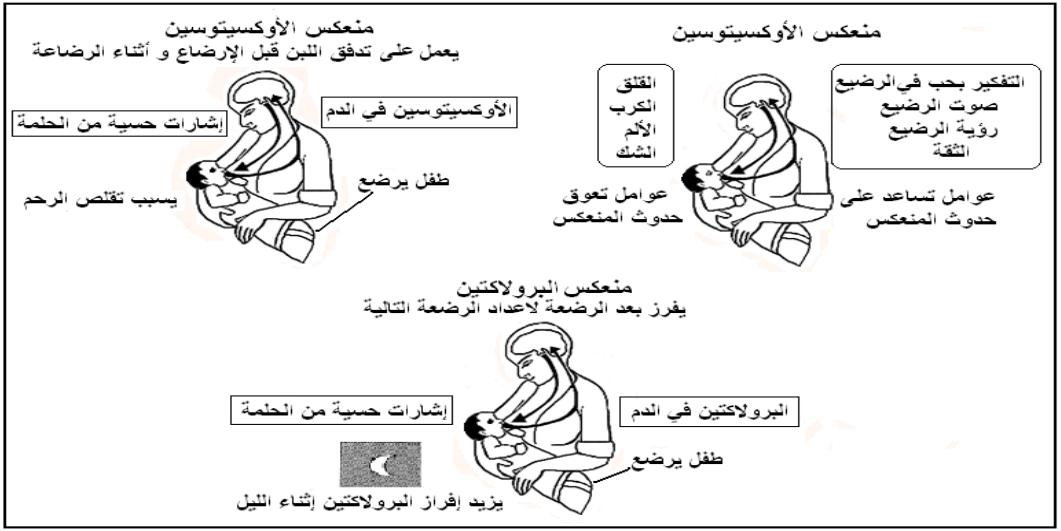
یعتبر مص الولید لثدي أمهالمؤثر الأول والأقوى لإنتاج وإفراز اللبن، حیث ینشأ رد فعل عصبي منعكس یؤثر على الغدة النخامیة، فتقوم بدورھا بإفراز ھرموني البرولاكتین والأوكسیتوسین (
(Prolactin reflex) منعكس البرولاكتین
یقوم ھرمون البرولاكتین الذي یفرز من الفص الأمامي للغدة النخامیة بالتأثیر على الغدد اللبنیة بالثدي لتقوم بإنتاج اللبن، ویزداد إفراز ھذا الھرمون لیلاً.
(Let down reflex) منعكس الأوكسیتوسین
یساعد ھرمون الأوكسیتوسین الذي یفرز من الفص الخلفي للغدة النخامیة على انقباض الخلایا العضلیة المحیطة بحویصلات الغدد اللبنیة، مما یؤدي إلى اندفاع اللبن لفم الرضیع، ویتأثر إفراز ھذا الھرمون بحالة الأم الجسمانیة والنفسیة.
التحكم الموضعي: مثبطات لبن الأم(Feed back inhibitors of lactation)
إذا تراكم اللبن في الثدي، یقوم الثدي بافراز مثبطات لإیقاف الخلایا عن إفراز المزید، مما یساعد على حمایة الثدي من الامتلاء المفرط باللبن.
مراحل لبن الأم :
(Colostrum) اللبأ أو لبن السرسوب
یفرزه الثدي في الأیام الأولى بعد الولادة، وھو سائل أصفر اللون، أكثر كثافة من اللبن الناضج، ویحتوي على كمیة أكبر من البروتینات والأجسام المضادة للعدوى. له أثر ملین معتدل، لذا فھو یساعد على الوقایة من (الیرقان الصفراء( یمثل كل ما یحتاجه الولید قبل نزول اللبن الناضج، ویستمر إفرازه ثلاثة أیام تقریبا، وتكون كمیته صغیرة ثم تزداد حتى تصل إلى٤٠- ٦٠مللیلتر یومیًا.
اللبن الناضج
· یتحول لبن السرسوب إلى اللبن الناضج تدریجیًا بعد أسبوعین، فتزداد كمیته ویختلف مظھره وتركیبه لیصبح أخف قوامًا مائلاً للزرقة ویتكون من:
· الماء ویشكل حوالي ٨٧ ٪ من اللبن الناضج، ولذلك فإن لبن الأم یكفي احتیاجات الرضیع من الماء.
· الدھنیات الضروریة لنمو مخ الولید. ویحتوي لبن آخر الرضعة علي كمیة من الدھون أكثر من لبن أول الرضعة، ویكون غنیاً بالسعرات، لذا یجب علي الأم أن ترضع ولیدھا حتى یفرغ الثدي، كي یحصل على كفایته من لبن آخر الرضعة الغني بالدھنیات.
· البروتینات سھلة الھضم والبروتینات المضادة للعدوى. ویعد توازن الأحماض الأمینیة في لبن الأم مثالیًا لنمو الرضیع.
· الكربوھیدرات حیث یمثل سكر اللاكتوز عنصر الكربوھیدرات الرئیسي في اللبن، وھو من المغذیات الھامة للنمو.
· الفیتامینات والأملاح:
▘ لبن الأم مصدر رئیس وھام للفیتامینات.
▘ بالرغم من أن كمیة الحدید الموجودة في لبن الأم تعتبر قلیلة، لكنھا تمتص بنسبة ٥٠ ٪، لذلك فالرضیع الذي یتغذى على لبن الأم یحصل على كفایته من الحدید بالفعل، ومن ثم یتمتع بالحمایة من أنیمیا نقص الحدید حتى نھایة الشھرالسادس من عمره، كما أن عنصر الكالسیوم یمتص أیضًا بنسبة ٧٠ ٪، وھذه النسبة كافیة لنمو الرضیع.
· الإنزیمات التي تجعل لبن الأم أسھل في الھضم.
أساسیات ممارسة الرضاعة الطبیعیة :
تشجیع ملامسة الجلد بین الأم وولیدھا، والبدء المبكر للرضاعة الطبیعیة
فى أغلب الحالات، لا یحتاج المولود الى إنعاش بعد الولادة، ویكون الوضع الطبیعى لھذا المولود على جسم أمھ "الجلد ملامس الجلد"، حیث یُوضع الولید فور إخراجه من رحم الأم على صدرھا وتكون رأسھ بین ثدییھا، وتسنده الأم بذراعیھا. یتم قطع الحبل السري في ھذا الوضع، ویُنشف الولید بسرعة، الرأس قبل الجسم، ثم تُبعد الفوط المبللة. یتجه الولید بمفرده فى اتجاه الثدي، ویبدأ المص بمفرده ویسمى ھذا "الاتصال الذاتي".
وتعتبر عملیة "الجلد ملامس الجلد" و"الاتصال الذاتى" من أھم معاییر نجاح الرضاعة الطبیعیة، لذا یجب تشجیع كل الأمھات على التلامس المبكر للجلد بین الأم والولید معًا، وبدء الرضاعة مبكرًا خلال النصف ساعة من الولادة، لما في ذلك من مزایا:
· نجاح عملیة الرضاعة الطبیعیة واستمرارھا مع تقلیل المشاكل التي تعوق ھذه العملیة.
· قوة الترابط العاطفي بین الأم وولیدھا.
· استعداد الولید للرضاعة، حیث یكون الولید على درجة عالیة من الیقظة والاستجابة في النصف ساعة الأولى من الولادة، ولدیھ الاستعداد للرضاعة والاتصال بالثدي بسھولة قبل استغراقھ في النوم بعد حوالي ساعتین من الولادة.
· الوقایة من انخفاض السكر، الجفاف، والیرقان (الصفراءالولیدي).
· استفادة الولید من لبن السرسوب ذي القیمة العالیة.
· تنشط الرضاعة إفراز ھرمون الأوكسیتوسین، الذي یساعد على نزول المشیمة وتجنب النزیف بعد الولادة.
تجنب إعطاء الولید الجلوكوز أو الأعشاب في الساعات المبكرة بعد الولادة
حیث یؤدي ذلك إلى إعاقة عملیة الرضاعة المبكرة، إلى جانب رفض بعض الموالید للرضاعة الطبیعیة بعد ذلك.
مشاطرة الغرفة ( المساكنة) (Rooming in)
تعني أن یبقى الرضیع في نفس الغرفة التي بھا أمه ٢٤ ساعة في الیوم.
مزایا المساكنة:
o تمكین الأم من الاستجابة لولیدھا وإرضاعه كلما أراد الرضاعة عند الطلب، وھذا یساعد على إنجاح الرضاعة الطبیعیة وتنمیة الارتباط بینھما.
o ازدیاد رغبة الأمھات بالرضاعة من الثدي .
o استمرار الرضاعة لفترة أطول بعد خروج الأم من المستشفى
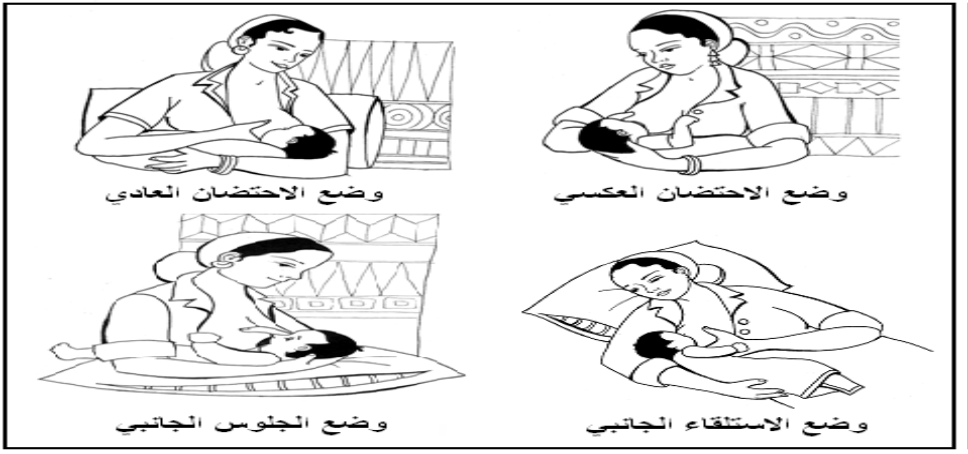
أوضاع الرضاعة الصحیحة :
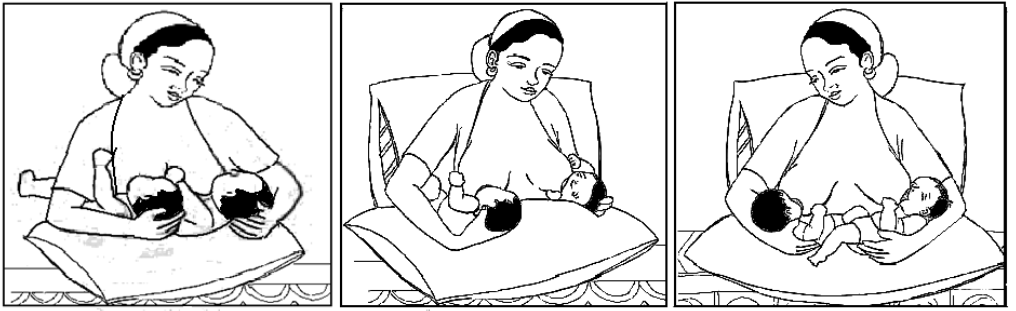
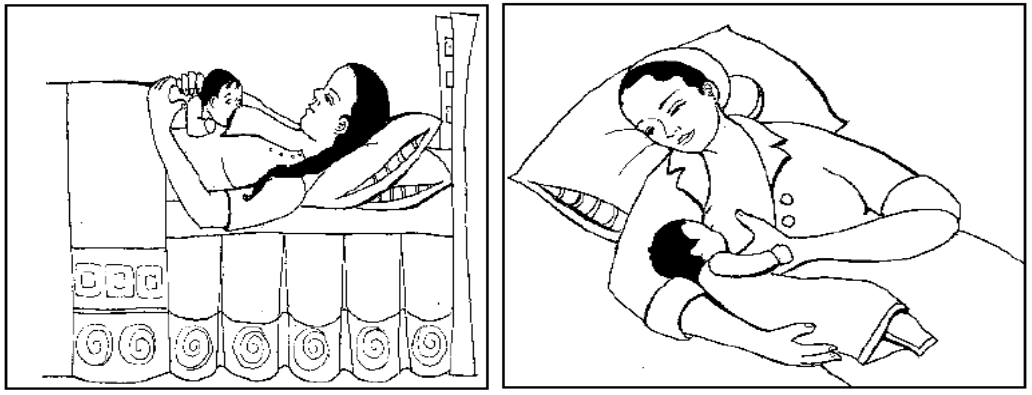
الأم : یجب أن تكون في وضع مریح. یمكن اسناد ذراع الأم أو الرضیع على وسادات بحیث ترفع الولید لمستوى الثدي
لابد أن تكون بطن الرضیع مواجھة لبطن الأم، ویكون الرضیع مسنودًا، ومستقیمًا، وموازیًا لجسم الأم
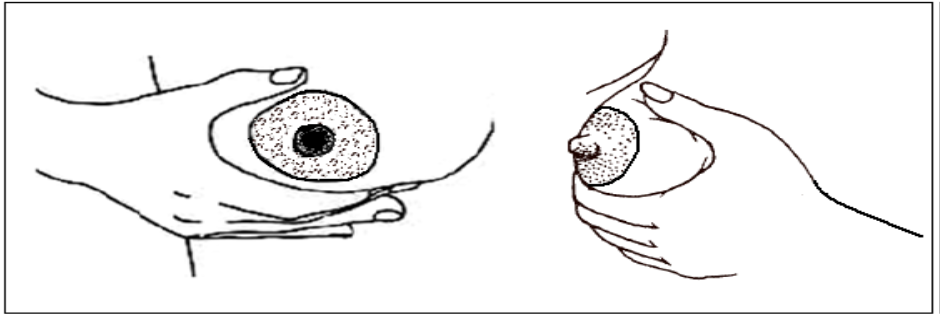
الطریقة الصحیحة لإمساك الثدي :
عندما تلامس حلمة الثدي خد أو ،‘’C’’ تضع الأم الابھام فوق الثدي وباقي الأصابع تحت الثدي على شكل حرف الشفة العلیا للرضیع، فإنھ یستدیر تلقائیًا ویفتح فمه، فترفع الأم الرضیع إلى ثدیھا بسرعة
علامات تعلق الرضیع الجید بالثدي :
o فتح الرضیع فمه واسعًا تمامًا.
o ذقن الرضیع ملاصقة للثدي وتضغط علیه.
o انقلاب شفته السفلي نحو الخارج.
o رؤیة الھالة فوق فم الرضیع أكثر من أسفله.
o استدارة خدي الرضیع أثناء الرضاعة.
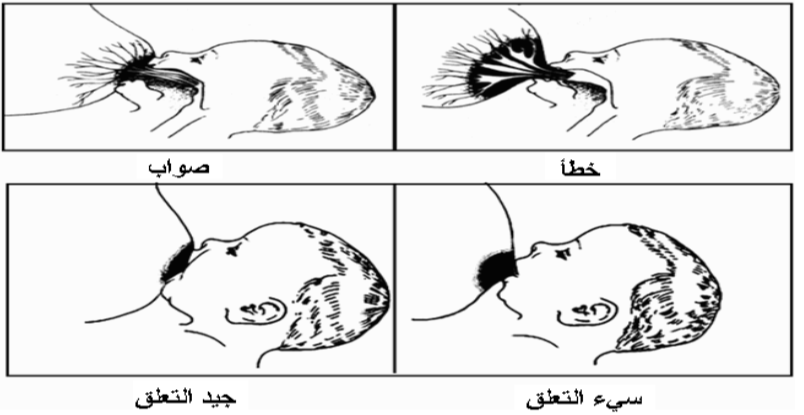
علامات الرضاعة بفاعلیة :
مَصَّات بطیئة وعمیقة یلیھا بلع الرضیع، وأحیاناً یمكن سماع صوت البلع.
متابعة مدى كفایة كمیة لبن الأم:
– حساب عدد مرات التبول للرضیع: أكثر من ٦ مرات یومیًا بعد الیوم الرابع
– حساب عدد مرات التبرز للرضیع: مرتین أو أكثر یومیًا بعد الیوم الرابع
یفقد الولید ٥ - ٧٪من وزنه خلال أول أسبوع، ثم یزید الوزن بمعدل ٢٥- ٣٥ جم یومیًا معدل زیادة الوزن
طریقة الرضاعة :
· لكي یفتح الرضیع فمه؛ یُلمس خده القریب من الثدي بالحلمة أو بأصبع الأم النظیف، فیدیر رأسه نحو الثدي، فیتم إدخال الحلمة ومعظم الھالة في فمه، وإذا كان الثدي كبیرًا أو ممتلئًا، یُضغط قلیلاً بإصبع الأم لسھولة تنفس الرضیع.
· حیث یحصل الرضیع على ٩٠ ٪ من اللبن خلال الخمسة دقائق الأولى، – یُفرغ الرضیع الثدي خلال ٥ - ٢٠ دقیقة
· ومع ذلك ندعه یرضع حتى یترك الثدي بنفسھ. وفي حالة عدم تركه الثدي تلقائیًا، لا یشد الثدي من فمه، ولكن یُوضع إصبع الأم النظیف في ركن الفم ویتم الضغط برفق على الذقن لأسفل.
· یجب أن یُفرغ الرضیع ثدي واحد على الأقل أثناء الرضعة، حتى یستفید من الدھون الموجودة بالجزء الأخیر من اللبن، وأیضًا لضمان استمرار إدرار اللبن بالثدیین.
· تكریع الرضیع: بعد انتھاء الرضاعة، یُحمل الرضیع منتصباً فوق كتف أمه ویُربت على ظھره برفق لإخراج الھواء من معدته، وھذا ضروري بعد كل رضعة.
· بعد تكریع الرضیع، یتم ووضعه على جانبه الأیمن أو على ظھره.
· یجب مسح فم الرضیع بقطعة شاش معقمة مغموسة بمحلول الملح، للوقایة من تكاثر الفطریات.
· تبدأ الرضعة التالیة بالثدي الذي انتھت به الرضعة السابقة، إذا لم یكن قد أُفرغ تماماً.
الرضاعة عند الطلب :
تعني الإرضاع كلما رغب الرضیع، أو أبدى علامات الجوع، أو إذا أحست الأم بامتلاء صدرھا.
علامات الجوع لدى الرضیع:
· یحرك الرضیع رأسه من جانب إلى آخر
· یفتح فمه أویخرج لسانه
· یضع أصابعهوكفه في فمه
· یقوم ببعض الأصوات الھادئة
· یحرك شفتیه وكأنه یرضع
· یحك أنفه في صدر أو كتف الأم أثناء حملھا له
· إذا لمس أي شيء خده، یحرك فمه ناحیته
· أخیرًا البكاء: لا یجب على الأم أن تنتظر حتى یبكي رضیعھا جوعًا
· مزایا الرضاعة عند الطلب:
· بدء إدرار اللبن مبكرًا
· زیادة وزن الرضیع بمعدل أسرع
· قلة حدوث الصعوبات التي تواجھ الرضاعة كاحتقان الثدي
· ضمان استمراریة الرضاعة
الرضاعة الطبیعیة المطلقة :
· الرضاعة الطبیعیة المطلقة تستمر حتي نھایة الشھر السادس وھي تعني:
– عدم إعطاء الرضیع أي سوائل أو أغذیة مثل الجلوكوز، یانسون، كراویة، أو لبن صناعي غیر لبن الثدي.
– عدم إعطائه أي نوع من الحلمات الصناعیة )ببرونة بحلمة صناعیة) أو لھایة (تیتینا أو سكاتة(
· عدم تحدید عدد مرات أو مدة الرضاعة، وعادًة ما یرضع الولید من ٨– ١٢ مرة خلال ٢٤ ساعة ، بما في
ذلك الرضاعة لیلاً.
· مشاكل الحلمات الصناعیة:
– التلوث مما یعرض الولید للأمراض.
– التباس الحلمة: حیث أن حركة اللسان ومسكة الحلمات الصناعیة مختلفة عن حركة اللسان ومسكة الثدي،فتجعل الرضیع مرتبكًا وملتبسًا علیھ كیفیة الرضاعة من الثدي، مما یؤدي إلى تشققات الحلمة، واحتقان الثدي، ورفض الرضیع لثدي أمه.
العنایة بالثدي :
· یُكتفى بالاستحمام أو غسل الثدي مرة یومیًا مع تجنب مسح الحلمة والھالة بالصابون أو الكحول، فذلك یزیل الزیوت الطبیعیة التي تفرزھا الھالة.
· بعد إرضاع الولید، یمكن تعصیر بعض نقاط اللبن وتركھا على الھالة والحلمة لتجف، ولا داعي لاستخدام زیوت أو مراھم.
الرضاعة الطبیعیة وبعض الحالات الخاصة :
التوأم : تستطیع الأم التي لھا توأم إرضاع ولیدیھا من ثدییھا في نفس الوقت، لأن كمیة اللبن التي ینتجھا الثدي
تعتمد أساسًا على امتصاص الولید للثدي وتفریغ اللبن منه
الولادة القیصریة : تستطیع الأم إرضاع ولیدھا بعد الإفاقة من المخدر العام في وضع مریح كالاستلقاء
تعصیر لبن الثدي :
الدواعي
· تجمیع اللبن للولید الذي لا یستطیع الرضاعة مباشرةً من الثدي، كالولید المحجوز في الحضانة، وذلك لضمان استمرار تكوین اللبن.
· تجمیع اللبن لتقدیمھ إلى الرضیع في غیاب الأم العاملة أو المریضة.
· تخفیف احتقان الثدي.
· زیادة ادرار لبن الأم، فمص الولید أو إفراغ الثدي ھو أھم عامل للحفاظ على تكوین لبن الأم وزیادته
یجب مراعاة النقاط التالیة عند تعصیر لبن الثدي
· یتم جمع لبن الثدي باستخدام الأسالیب المانعة للتلوث، وأن یحفظ في مكان معقم.
· یجب غسل الأیدي بمطھر، ووضع اللبن الناتج في أوعیة معقمة.
· في حالة استخدام مضخة الثدي، ینبغي غسل كل مكونات المضخة التي تتصل باللبن، وذلك بواسطة ماء ساخن
· یحتوي على الصابون بعد كل استخدام، على أن یتم تطھیرھا أوتعقیمھا یومیًا.
إختیار أوعیة الحفظ
تُستخدم الأوعیة الزجاجیة، ولا یفضل استعمال الأوعیة أو الأكیاس البلاستیكیة، ولابد من غسل الوعاء بالصابون وشطفه جیدًا بالماء الساخن وتعقیمه، خاصةً للموالید المبتسرین.
الطرق المختلفة لتشفیط اللبن :
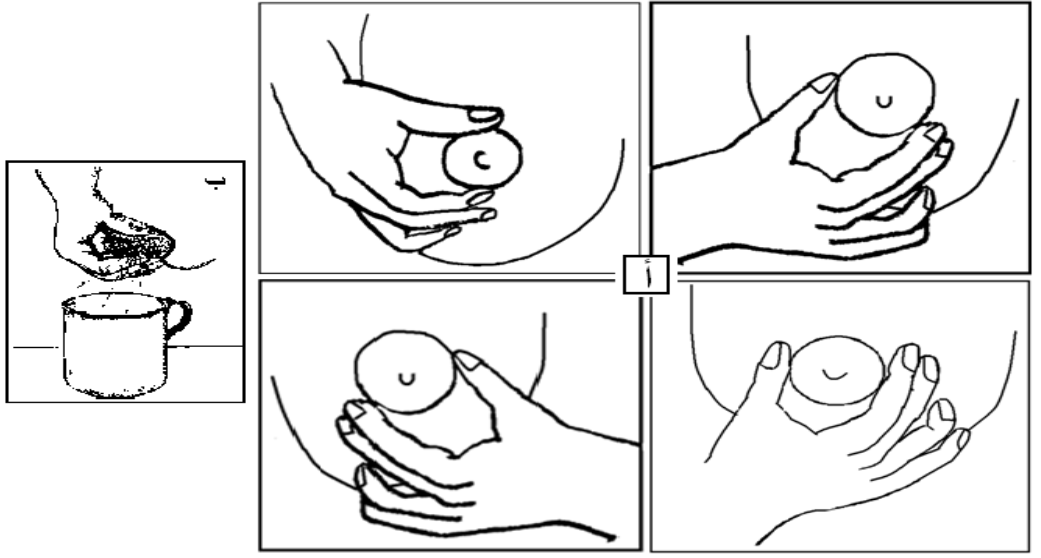
الطریقة الیدویة :
المزایا : طریقة طبیعیة ومریحة وبدون تكلفة.
الخطوات: بعد الرضاعة بساعة على الأقل، تجلس الأم في مكان ھادئ وتفكر في رضیعھا، تنظر لصورته، أو
ترضعه من ثدیھا الأخر في حالة وجوده معھا.
· غسل الأیدي جیدًا بالماء والصابون.
· وضع كمادات دافئة أو الاستحمام بماء دافئ.
· تدلیك الثدي بحركات دائریة والیدین متقابلتین من أعلى وأسفل، ومن جانبي الثدي
· یوضع الإبھام في وضع مقابل للأصابع الأخرى ٣ - ٤ سم خلف الحلمة عند التقاء الھالة السمراء بالجلد الفاتح مع تخیل الھالة كالساعة، ووضع الإبھام في موضع الساعة ١٢ والسبابة في موضع الساعة ٦
· یُضغط الإبھام والسبابة إلى الداخل قلیلاً في اتجاه القفص الصدري، مع تجنب الضغط الزائد خشیة انسداد قنوات اللبن.
· تحرك الأصابع على جلد الھالة ضاغطةً بخفة في اتجاه الحلمة، مع مراعاة عدم حك جلد الھالة.
· تكرر الحركة عدة مرات، ثم تغییر وضع الأصابع في عدة اتجاھات بعد تدلیك الثدي.
· قد لا ینزل اللبن في البدایة، ولكنھ یأخذ في التقاطر بعد الضغط بضع مرات، وقد ینساب في خیوط متتابعة إذا كان منعكس الأوكسیتوسین نشطًا.
· تبدیل الثدي في حالة انخفاض كمیة اللبن.
· تختلف كمیة اللبن المعصرة من مرة إلى مرة.
· یتم تعصیر إحدى الثدیین مدة ٣– ٥ دقائق. یستغرق الحصول على كمیة كافیة من اللبن من٢٠ – ٣٠ دقیقة
· )أو حتى تقل سرعة تدفق اللبن( ثم تعصیر الثدي الآخر مع تكرار تعصیر الثدیین.
· التعصیر الیدوي لا یؤلم، وإذا شعرت الأم بالألم، دل ذلك على خطأ في الطریقة.
· یتم تعصیر نقطة لبن وتدھن بھا الحلمة عند نھایة التعصیر.
شفاط الثدي :
· یكون تعصیر الثدي إما عن طریق الشفاطات الیدویة أو الكھربائیة.
· یراعى عند استعمال شفاط الثدي النقاط التالیة:
– قراءة تعلیمات التنظیف والتشغیل
– غسل الأیدي
– اتباع عوامل زیادة اندفاع اللبن
– مسح الثدي بقطعة قطن مبللة
– وضع الحلمة في وسط الأنبوبة
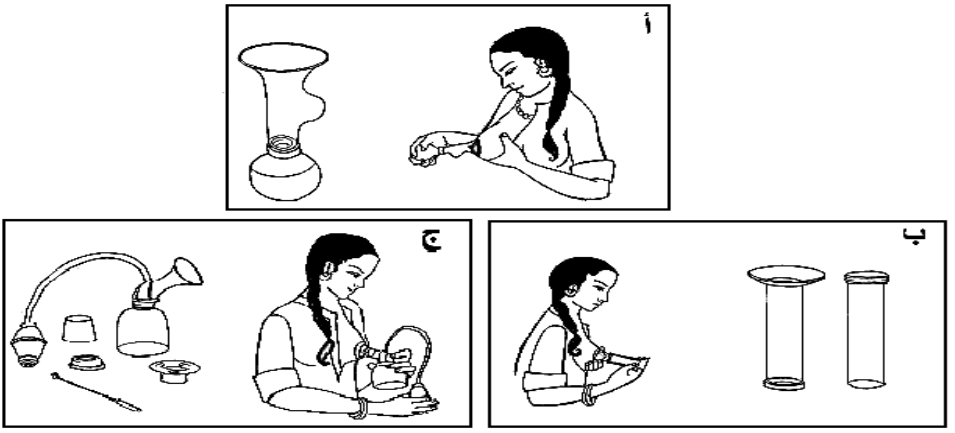
الشفاطات الیدویة
رخیصة الثمن وسھلة الاستعمال، لكنھا مؤلمة ولا یمكن الاعتماد علیھا وحدھا لادرار اللبن لفترة طویلة
لصعوبة التحكم في قوة الشفط ولصعوبة تعقیمھ
ملحوظة: ینصح بعدم استعمال النوع المرسوم في الصورة
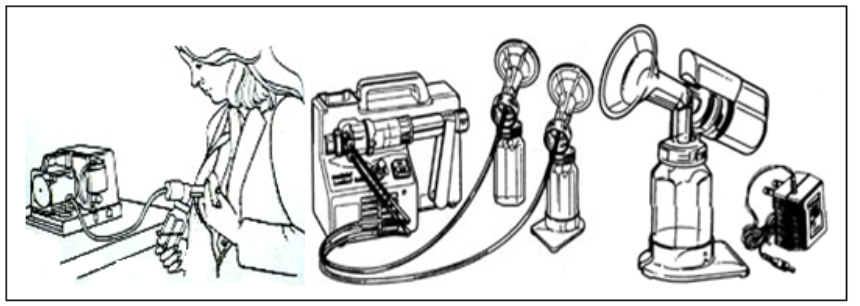
الشفاطات الكھربائیة
فعالة في ادرار اللبن، ولكنھا مرتفعة الثمن.
نقل وتخزین اللبن المُعصَّر
⊠ یتم نقل اللبن المعصرفي عبوة نظیفة ومحاطة بالثلج.
⊠ یحفظ اللبن المعصر في أكواب نظیفة بغطاء مدون علیھ تاریخ وساعة تعصیره.
⊠ ینصح بوضعه في الثلاجة فور التعصیر.
⊠ يجب ان يحفظ اللبن فى درجة حرارة (4) مئوية لمدة اقصاها 48 ساعة ولمدة اسبوع فى حالة وضعة بالفريزر وفى حالة التجميد عند درجة حرارة (-20)درجة مئوية يمكن ان تصل مدة الحفظ من 3الى 6 اشهر
⊠ ) لتقلیل الفاقد عند إعادة استخدامه, یقسم اللبن بكمیات صغیرة ) ١٠٠ –٥٠ مللیلتر)
⊠ یترك مساحة فوق اللبن للسماح بتمدده إذا وضع في الفریزر.
طریقة استعمال اللبن المُعصَّر المثلج
⊠ یترك اللبن في الثلاجة لمدة یوم واحد لإذابته
⊠ یوضع كوب اللبن عند الاستعمال في حمام ماء فاتر، مع التقلیب بملعقة نظیفة لتقلیب دھون اللبن.
⊠ لا یجب تسخین اللبن أو غلیه، ولا یوضع في المیكرویف حتى لا تفسد مكوناته.
⊠ لا یعاد استخدام أو حفظ أي كمیة من اللبن تتبقى بعد الرضاعة.
⊠ إذا تم إذابة اللبن المثلج لا یعاد تجمیده، بل یجب استعماله خلال ٢٤ ساعة.
⊠ یراعى استعمال اللبن الذي تم تعصیره أولاً، أي من الأقدم إلى الأحدث.
⊠ یمكن أن یتغیر شكل اللبن بالحفظ أو یكون طبقات، ولا یوجد ضرر من ذلك.
وسیلة إعطاء الرضیع اللبن المعُصر :
التغذیة باستخدام أنبوبة التغذیة
⊠ یفضل إعطاء اللبن بسرعة حتى لا تعلق الدھون بجدار الأنبوبة. في حالة استعمال مضخة المحالیل لإعطاء اللبن، یُراعى رفع مقدمة السرنجة إلى أعلى لضمان خروج الدھون أولاً.
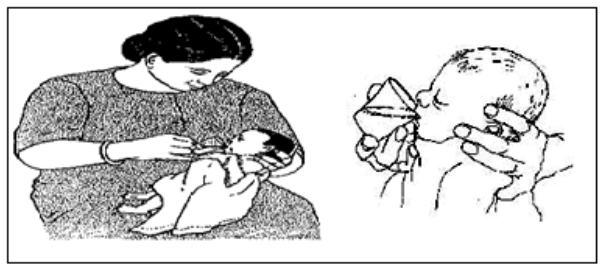
⊠ یستطیع الطفل حدیث الولادة، حتى الولید المبتسر، شرب اللبن من الكوب
⊠ یوضع الولید في الوضع جالسًا.
⊠ یملأ على الأقل نصف الكوب باللبن.
⊠ یوضع الكوب على الشفة السفلى للولید وھي مفتوحة للخارج لیلامس اللبن الجزء الداخلي منھا.
⊠ یترك الكوب في ھذا الوضع حتى یبدأ الولید یلعق اللبن بلسانه
استخدام الكوب أو الملعقة أو القطارة أو السرنجة لإعطاء الولید اللبن
یلاحظ توجیھھا إلى أحد جانبي فم الولید لتجنب الشرقة.
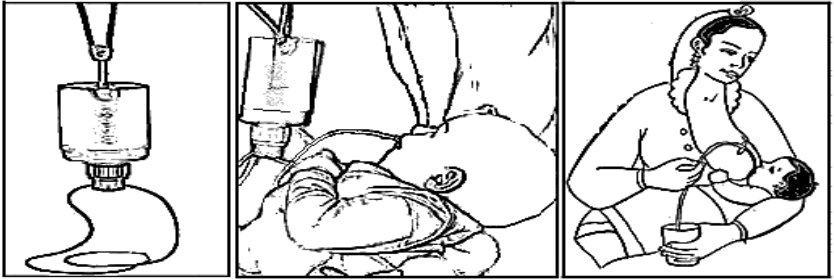
الجھاز التكمیلي
وھو عبارة عن زجاجة تعلق في رقبة الأم ویخرج منھا أنبوبة رفیعة تثبت على ثدي الأم، بحیث یكون طرف الأنبوبة على طرف حلمة الأم ویسحب الرضیع اللبن من الثدي والجھاز في آن واحد. یمكن استعمال أنبوبة تغذیة موصلة بسرنجة أوكوب كبدیل أرخص لھذا الجھاز. وفوائده:
- یصل إلى الرضیع كمیة كافیة من اللبن، مع مص الرضیع من الثدي، مما یساعد على زیادة إدرار اللبن.
- یمكن وضع ھذه الأنبوبة الرفیعة على إحدى الأصابع، وتُعطى للرضیع في حالة غیاب الأم.
الببرونة
ممنوع منعًا باتًا استعمالھا.
تغذیة الأم وراحتھا أثناء الرضاعة :
الغذاء الجید یجب أن یكون متنوعًا ومحتویًا على العناصر الغذائیة المختلفة.
⊠ تشرب الأم ما یكفیھا من السوائل )تشرب الأم عندما تشعر بالعطش دون الالتزام بكمیة معینة من السوائل(
⊠ أخذ قسط وافر من الراحة والنوم.
⊠ ینصح بتناول الأم للحلبة والشمر، حیث أنھما یساعدان على إدرار اللبن.
⊠ یجب على الأم عدم تناول الأدویة إلا بأمر الطبیب.
بعض المشاكل الشائعة أثناء الرضاعة الطبیعیة :
اكتئاب ما بعد الولادة
یعاني كثیر من الأمھات من تغیرات مزاجیة أو من اكتئاب بعد الولادة، وتبدأ ما بین الیومین الثاني والثالث بعد الولادة، وقد تستمر لمدة ٣ - ٤ أسابیع، وعادةً ما تكون في صورة بسیطة ولا تحتاج إلى العلاج، لذا یجب أن تكون الممرضة على –درایة كاملة بوسائل المشورة المختلفة لدعم الأم أثناء ھذه الفترة حتى تتم عملیة الرضاعة الطبیعیة بنجاح.
الامتلاء الطبیعي للثدي
حین یبدأ نزول اللبن بكثرة بین الیوم الثالث إلى السادس، تشعر الأم بامتلاء شدید في الثدیین، ویقل ھذا الامتلاء في خلال 2-3 أسابیع. إذا لم یتم سحب ھذا اللبن باستمرار، یصل ھذا الامتلاء إلى درجة الاحتقان.
تحجر أو إحتقان الثدي
یحدث امتلاء شدید في الثدي، مع ألآم واحمرار، ویمكن حدوث ارتفاع في درجة الحرارة. ویتبع ھذا أن تصبح ھالة الثدي مشدودة، وغیر مرنة، ویصعب مص الرضیع، كما یصبح نزول اللبن صعبًا ومؤلمًا، وقد یصاب الثدي بالتقیحات والعدوى، وبمرور الوقت تقل كمیة اللبن.
الوقایة :
⊠ تصحیح وضع الرضیع على الثدي وتعلقه بالحلمة أثناء الرضاعة.
⊠ الرضاعة المستمرة طوال النھار واللیل.
⊠ تجنب إعطاء الرضیع بدیل للبن الأم، أو أي حلمات صناعیة.
العلاج :
⊠ عمل كمادات دافئة قبل الرضاعة أو التعصیر.
⊠ تجربة أوضاع مختلفة للرضاعة.
⊠ تعصیر اللبن المُتجمع بالثدي لتسھیل نزول اللبن أثناء الرضاعة.
⊠ تدلیك الثدي.
⊠ عمل كمادات باردة بین الرضعات لتقلیل التورم.
⊠ الاستمرار في الرضاعة حتى في حالة وجود التھاب بالثدي.
الحلمة المؤلمة أو المتشققة :
الرضاعة الصحیحة من الثدي غیر مؤلمة، ولكن من الطبیعي أن تشعر بعض الأمھات بآلام بسیطة في الحلمة عند وضع الرضیع على الثدي في الأیام الأولى بعد الولادة.
الأسباب :
⊠ وضع الرضیع وتعلقه بالحلمة بأسلوب خاطئ في حالات الحلمة المقلوبة، احتقان الثدي أو اللسان المربوط للولید
⊠ استعمال الحلمات الصناعیة، أو الاستعمال الخاطىء لشفاط الثدي
⊠ حساسیة من كریمات الحلمة
⊠ الالتھابات الفطریة للحلمة
⊠ بدایة ظھور الأسنان عند الرضیع
الوقایة :
⊠ تعلیم الأمھات الأوضاع الصحیحة للرضاعة، وطریقة تعلق الرضیع بالحلمة.
⊠ تجنب الحلمات الصناعیة.
⊠ تُوضع بعض نقط اللبن على الحلمة وتترك حتى تجف بعد كل مرة رضاعة.
العلاج :
⊠ البدء بالرضاعة من الثدي الأقل ألمًا.
⊠ اختیار أوضاع مختلفة لوضع الرضیع على الثدي، لتغییر نقط الضغط على الحلمة.
⊠ مراعاة نظافة الحلمة وتركھا جافة بعد الرضاعة لمساعدة الإلتئام.
⊠ دھن الحلمتین بمرطب خفیف وھادئ مثل )اللانولین النقي(Pure lanolin أو تعصیر لبن في آخر الرضعة ، ودھن الحلمات به وتركھ لیجف.
⊠ تھویة الحلمتین بین الرضعات وتجفیفھما بشكل جید.
⊠ في حالة وجود فطریات؛ استخدام الدھانات الموضعیة للفطریات مثل النیستاتین أو المیكونازول وحسب اوامر الطبيب
⊠ الإرضاع بشكل متكرر لإبقاء الثدیین فارغین قدر الإمكان، لأن ھذا من شأنه أن یخفف الألم، وإذا لم تتحمل الأم
⊠ عملیة الإرضاع بسبب الألم الشدید، فیمكن تعصیر الثدیین وإخراج اللبن بشفاط الثدي، ومن ثم إعطاء اللبن
للرضیع عند الحاجة.
ملحوظة : بلع نقط الدم من جروح الحلمة غیر ضار بالرضیع ولايتم ايقاف الرضاعه الطبيبعيه.
الحلمة المسطحة أو المقلوبة
لیست مشكلة، حیث أن الولید یرضع من الثدي ولیس الحلمة.
العلاج بعد الولادة :
⊠ قد تحتاج الأم لبعض الوقت لتمكین الرضیع من الرضاعة، ویمكن اتباع الآتي:
⊠ تدلیك الحلمة: ویتم بوضع كل إبھام على جانبي الحلمة، ثم الضغط وإبعاد الإبھامین عن بعضھما. تكرر المحاولة
في إتجاھات مختلفة.
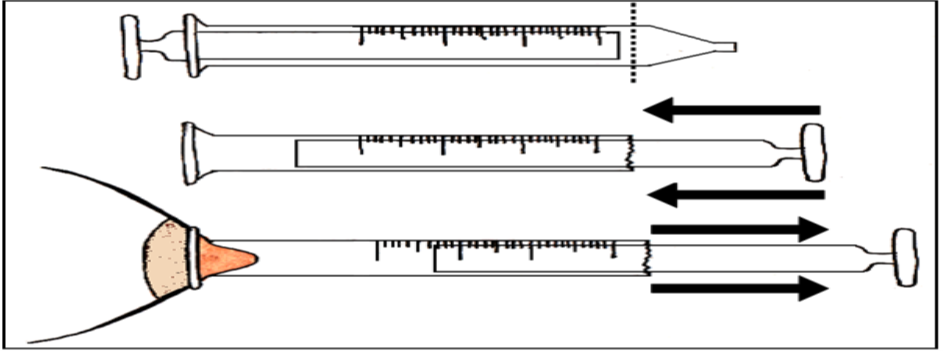
⊠ استعمال السرنجة المقلوبة: تقطع السرنجة بالعرض قرب نھایتھا ناحیة السن وینتج عن ذلك فتحة خشنة، یوضع المكبس في ھذه الفتحة وتوضع الفتحة الناعمة على الحلمة، ویتم سحبھا بسحب المكبس برفق لمدة ٣٠-٦٠ ثانیة
⊠ إلي أن یستطیع الولید أخذ الثدي مباشرةً بعد عدة أیام، یمكن إعطاؤه لبن الثدي المعصر بدون استعمال حلمات صناعیة ویكرر ذلك من٥- ٨ مرات قبل كل رضعة.