
Book
Birth Injuries
- Neck and Shoulder Injuries
Clavicle Fracture
A clavicle fracture occurs due to forceful pulling of the baby’s arm or shoulder during delivery, whether the head or breech is delivered first.
Symptoms:
- The newborn is unable to move the affected arm.
- Pain when the arm is touched or moved.
- A cracking sound (crepitus) at the fracture site.
- Absence of the Moro reflex on the affected side.
- Formation of a bone callus at the fracture site between days 7-10.
Nurse’s Role:
- Request an X-ray for diagnosis.
- Immobilize and prevent movement of the affected arm and shoulder for 7-10 days.
Brachial Plexus Injury (Erb’s Palsy)
This condition involves paralysis of the upper limb muscles, resulting from a brachial plexus nerve injury during birth. It may also affect the diaphragm, as it shares the same nerve supply from the 5th and 6th cervical vertebrae.
Symptoms:
- The affected newborn is usually large and may have experienced birth asphyxia.
- The affected arm lies limply at the baby’s side and cannot be raised, flexed at the elbow, or rotated outward.
- The arm takes a characteristic posture:
- Shoulder is lowered.
- Arm is rotated inward.
- Elbow is extended.
- Wrist is flexed, with the hand turned inward and backward.
- Breathing difficulties may appear due to diaphragm paralysis.
Nurse’s Role:
- Immobilize the affected arm for one to two weeks, keeping it in a position opposite to the affected posture.
- Call a specialist for physiotherapy sessions after two weeks, continuing for up to three months to maintain muscle and joint flexibility.
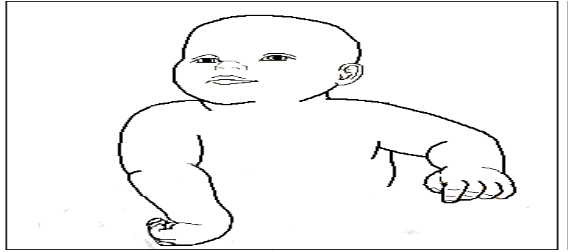
Erb’s Palsy
