
كتاب
the Diagnosis and Treatment of Familial Mediterranean Fever during Childhood and Adolescence
- Annexes
Annex Table 1.
Declaration of Conflict of Interests
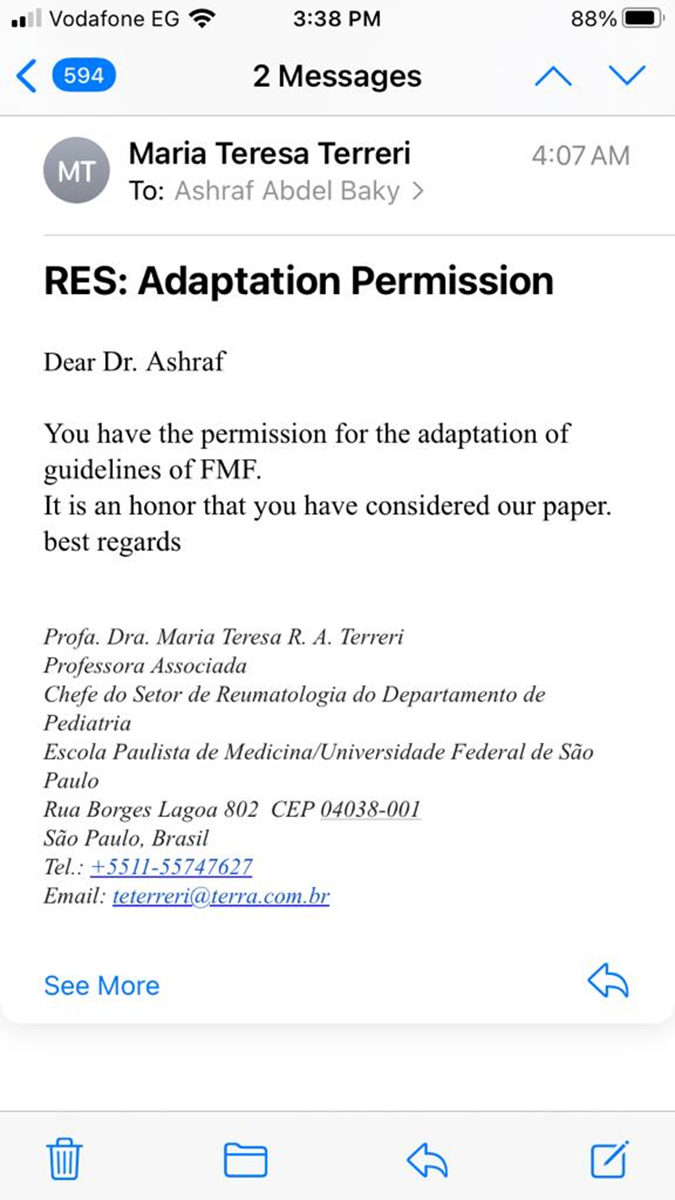
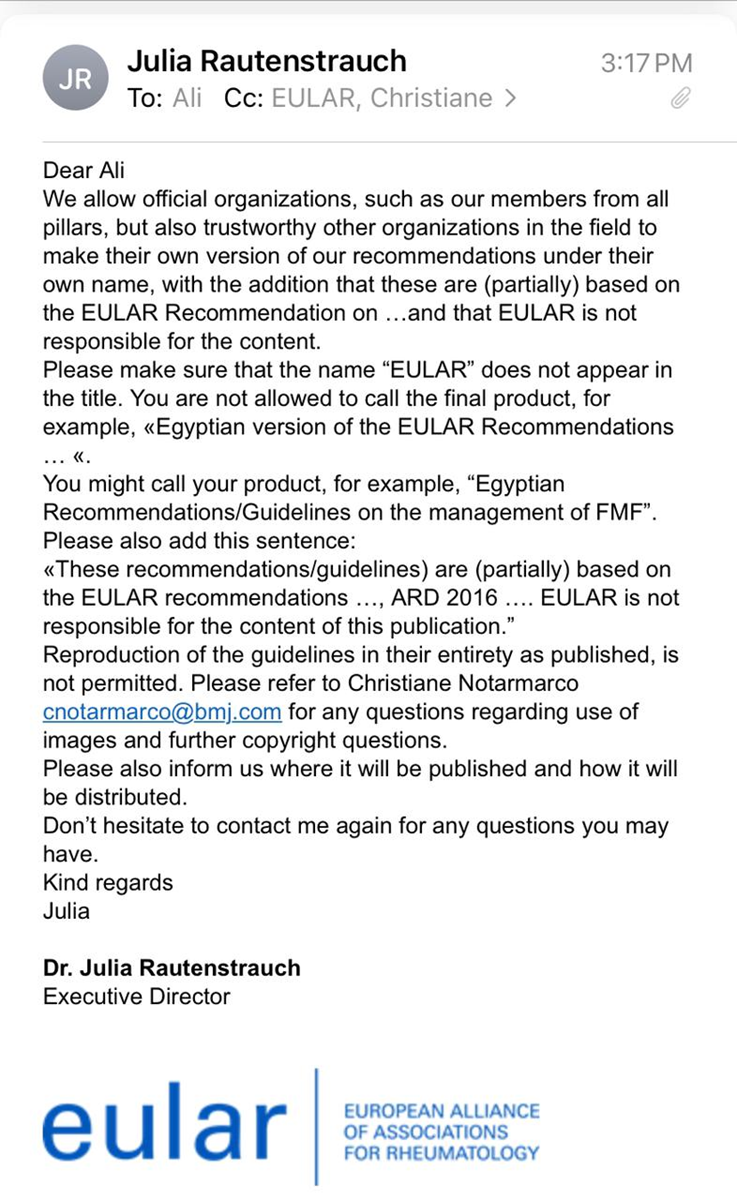
The members of the guideline development/ adaptation group and the external review group have no academic, financial, or competing interests to declare and none of them were involved in the development of the original source guideline(s).
Any identified potential COI has been reported below.
|
Egyptian Pediatric Clinical Practice Guidelines Committee (EPG) Guideline Adaptation Group (Clinical subgroup) |
|||
|
Name |
Affiliation, Area of expertise / Role, Country / Primary location [work] |
Declaration of interests |
|
|
Interest identified |
Management plan & decision |
||
|
|
|
None |
Not Applicable |
|
|
|
None |
Not Applicable |
|
Guideline Adaptation Group (Methodology Subgroup) |
|||
|
Prof. Tarek Omar |
Professor of Pediatrics Alexandria University, Egypt |
None |
Not Applicable |
|
Dr. Yasser Sami Amer |
1. Pediatrics Department and Clinical Practice Guidelines and Quality Research Unit, Quality Management Department, King Saud University Medical City, Riyadh, Saudi Arabia; 2. Research Chair for Evidence-Based Health Care and Knowledge Translation, King Saud University, Riyadh, Saudi Arabia; 3. Chair, Adaptation Working Group, Guidelines International Network (GIN), Perth, Scotland 4. Department of Internal Medicine, Ribeirão Preto Medical School, University of São Paulo (FMRP-USP), Ribeirão Preto, São Paulo, Brazil. |
None |
Not Applicable |
|
External Review Group |
|||
|
|
|
None |
Not Applicable |
|
|
|
None |
Not Applicable |
|
|
|
None |
Not Applicable |
|
External Reviewer for methodology |
|||
|
|
|
|
|
|
International Peer Reviewers |
|
|
|
|
|
|
None |
Not Applicable |
|
|
|
None |
Not Applicable |
|
|
|
None |
Not Applicable |
Web annexes
The following annexes can be added as a package of standalone supplementary documents.
➡️Keywords: The MeSH terms for "Guideline for the prevention and management of Familial Mediterranean Fever" on PubMed are:
Familial Mediterranean Fever, FMF.
Annex Table 2. Results of the AGREE II assessment of the three source guidelines for FMF
|
Guidelines |
Domain 1 Score % |
Domain 2 |
Domain3 |
Domain4 |
Domain5 |
Domain6 |
Decision |
||||||
|
EULAR |
82% |
90% |
84% |
93% |
79% |
96% |
INCLUDED |
||||||
|
BRASILIAN |
74% |
57% |
56% |
81% |
43% |
72% |
INCLUDED |
||||||
|
FRENCH |
63% |
54% |
42% |
54% |
19% |
56% |
NOT INCLUDED |
||||||
Annex Table 3. Annex Nurses and Parents Educational Guide in Arabic
برنامج تعليمى لمرضى حمى البحر الأبيض المتوسط
المقدمة
حمى البحر الأبيض المتوسط (FMF)هو مرض وراثي يتميز بنوبات متكررة من الحرارة وألم في البطن أو الصدر والتهاب المفاصل وطفح وتقرحات في الغشاء المخاطي للفم. وعادة تحدث هجمات المرض نتيجة عدة عوامل مرتبطة بالإجهاد العاطفي والجسدي. وأما عن سبب التسمية فلأنه (FMF) أكثر شيوعا بين الناس من حوض البحر الأبيض المتوسط (مثل اليهود غير الأشكناز، الأرمن، العرب، اليونان، والأتراك) وأيضا في بلدان أخرى، ولكن المعلومات عن معدلات انتشارها لا تزال محدودة جدا. ويظهر في معظم المرضى قبل سن 30 (60٪ قبل 10 سنوات و90٪ قبل 20 سنة من العمر).
وتشخيص مرض حمى البحر الأبيض المتوسط هو أساسا تشخيص اكلينيكي ويمكن عمل الاختبار الجيني لدعم التشخيص الاكلينيكي والتحاليل المعملية ليس لها دور تشخيصي لهذا المرض ولكن قد يكون هناك ارتفاع في سرعة الترسيب، رد الفعل البروتينيCوالاميلويد بروتين (SAA)أثناء النوبات الحادة من هذا المرض، و قد تكون هناك مستويات عالية حتى بين النوبات وقد تكون مستويات SAA مفيدة في مراقبة فعالية العلاج.
وتعرف النوبات النموذجية المكتملة بأنها متكررة (≥3 من نفس النوع)، ومصحوبة بحرارة (درجة حرارة المستقيم 38 درجة مئوية أو أعلى)، وقصيرة (تتراوح بين 6 ساعات و3 أيام). ولا توجد اي أعراض بين النوبات.
وتعرف النوبات غير المكتملة بأنها نوبات مؤلمة ومتكررة تختلف عن الهجمات النموذجية في واحدة أو اثنتين، على النحو التالي:
درجة الحرارة طبيعية أو أقل من 38 درجة مئوية.1
النوبات أطول أو أقصر من المحدد (ولكن ليس أقصر من 6 ساعات أو أكثر من أسبوع).2
لا يتم تسجيل أي علامات التهاب بريتوني حاد خلال نوبات الم البطن.3
نوبات ألم البطن مركزة في أماكن محددة ولا تشمل البطن كله..4
التهاب المفاصل يؤثر على مفاصل أخرى غير الورك والركبة والكاحل.5
التشخيص الجيني
وترتبط حمى البحر الأبيض المتوسط مع طفرات في جين MEFVالذي يقع في الكروموسوم 16 p13.3 وتم التعرف عليه لأول مرة في عام 1997. وما يقرب من ثلث المرضى لديهم إما طفرة جينية واحدة أو لا توجد أي طفرات. وهذه الطفرة تؤدي إلى التهابات مستمرة وتم تحديد مئة من الطفرات ولكن الطفرات الخمسة الأساسية هي: E148Q و M680I و M694I و M694V و V726A. واشد الحالات واسرعها ظهورا مرتبطة عادة بالطفرةM694V.
وعلى عكس الأنماط الجينية أحادية المنشأ الأخرى مرض حمى البحر الأبيض المتوسط ليس اضطرابا متنحيا تلقائيا عاديا فقد تم رصد أنماط غير متجانسة جينيا (heterozygous) في حوالي ربع المرضى الذين تم تشخيصهم اكلينيكيا.
الأعراض والمضاعفات
لقد تم رصد العديد من الأمراض الالتهابية والمناعة الذاتية في مرضي حمى البحر الأبيض المتوسط. وقد تمت دراسة مجموعة كبيرة من المرضى الأطفال ولوحظ أن ما يقرب من خمسهم يعانون من أمراض إضافية وكان أكثرها شيوعا التهاب المفاصل مجهول السبب، فرفرية هينوش شونلين ، التهاب العنبية (مرض بهجت)، وأمراض الأمعاء الالتهابية، التهاب القولون الدوديلكن أخطر مضاعفات مرض حمى البحر الأبيض المتوسط هو الداء النشواني الذي هو ترسب لبروتين غير قابل للذوبان يسمى الأميلويد A وهو أحد متفاعلات الالتهاب الحادة الذي ينتجه الكبد مع أي التهاب حاد في الجسم. وتأخر التشخيص أوعدم العلاج لمرضي حمي البحر الأبيض المتوسط مع استمرار الالتهاب الإكلينيكي يؤدي الي حدوث الداء النشواني وترسب الأميلويد A في الكلى مما يؤدي الي فشل كلوي وقد يحدث الداء النشواني أيضا في الكبد أو الأمعاء أو القلب لكن زيادة الوعي بالمرض مع السيطرة الجيدة على الالتهاب، والمتابعة الدقيقة مع الاستخدام الرشيد للكولشيسين أو حتى العلاج البيولوجي يمكن أن تمنع إلى حد كبير تطور الداء النشواني.
العلاج
الكولشيسين هو العلاج الأساسي لحمي البحر الأبيض المتوسط ويعمل علي منع نوبات المرض وتقليل الالتهابات بين النوبات وبالتالي تقليل المضاعفات بالداء النشواني. ويجب بدء العلاج فور التشخيص الأكلينيكي وجرعة الكولشيسين تختلف باختلاف العمر والوزن. والعلاج يجب ان يستمر طوال العمر كما يجب متابعة تأثير العلاج عن طريق الاعراض الاكلينيكية ومدي السيطرة عليها وكذلك عن طريق مستوي بروتين الاميلويد (أ) ومستوي متفاعلات الالتهابات الحادة في الدم. كما يجب متابعة المريض خوفا من حدوث مضاعفات من العلاج نفسه فبالرغم من ان الكولشيسين عقار آمن الا ان بعض الأعراض الجانبية قد تحدث مع الأستعمال مثل اضطرابات الجهاز الهضمي وارتفاع مستوي انزيمات الكبد وتساقط الشعر وانخفاض عدد كرات الدم البيضاء وتقليل الجرعة او تقسيمها في هذه الحالات يقلل بشكل كبير من هذه الأعراض الجانبية. وفي النوبات الحادة للمرض لا يتم زيادة جرعة الكولشيسين ولكن يمكن اضافة بعض الادوية المسكنة مثل الايبوبروفين او حتي بعض الكورتيزون لتقليل الألم والألتهابات ولا يتأثر الحمل أو الأنجاب سواء في الذكور أوالأناث بعقار الكولشيسين ولذا لا يوقف قبل او اثناء الحمل او بعد الولادة واثناء الرضاعة الطبيعية.
وقد لا يستجيب بعض المرضي للعلاج بالكولشيسين وهؤلاء نطلق عليهم مرضي مقاومون للكولشيسين ولكن قبل ان نضع المريض في هذا التصنيف يجب التاكد اولا ان الجرعات وصلت الي حدها الأقصي للعمر وان المريض منتظم علي العلاج وانه :
1- تحدث الهجمات اكثر من مره في الشهر الواحد بعد 6 اشهر من العلاج
2- هناك ارتفاع في مستويات متفاعلات الالتهابات الحادة في الدم بين النوبات الحادة.
3- هناك حدوث للداء النشواني في الكلي
وفي حالة حدوث ذلك يعتبر المريض مقاوما او غير مستجيب للعلاج بالكولشيسين وفي هذه الحالة يجب استشارة الطبيب المعالج فورا.
أسئلة شائعة :
1- كيف يتم تشخيص الحالة ؟
بعد تكرار حدوث نوبات من الحرارة وألم البطن التى قد يصاحبها أيضا ألم بالصدر و المفاصل وطفح جلدى أكثر من 3 مرات وكل مرة يستمر من 6-72 ساعة عندها يجب استشارة طبيب متخصص للتأكد من صحة التشخيص.
2- ما دور التحليل الجينى في التشخيص ؟
التشخيص يعتمد على تقييم الأعراض الاكلينيكية بواسطة طبيب متخصص ولا يعتمد على التحليل الجينى أو الاختبارات المعملية الأخرى.
3- ما فائدة عمل التحليل الجينى والفحوصات المعملية الأخرى ؟
التحليل الجينى قد ينبئ عن مدى شدة المرض واستجابته للعلاج.
أما الفحوصات المعملية الأخرى مثل سرعة الترسيب، رد الفعل البروتين- Cوالاميلويد بروتين فلها دور فى متابعة نشاط المرض ومدى استجابته للعلاج
4- ماهوالعلاج ؟
العلاج هو عقار الكولشيسين مدى الحياة.
5- ماذا لو لم يتم السيطرة على نشاط المرض بالكولشيسين ؟
بعد الوصول الى أعلى جرعة مسموح بها طبقا لعمر المريض وبعد فترة زمنية كافية للحكم على تأثير العقار (بحد أقصى 6 شهور) هنا يمكن اضافة العلاج البيولوجى حسب توصية الطبيب المتخصص.
6- ما هو علاج النوبات الحادة ؟
الاستمرار على نفس الجرعة من عقار الكولشيسين مع اعطاء أدوية مضادة للالتهاب حسب ما يوصى به الطبيب المتخصص.
7- كيف يتم متابعة المريض ؟
المتابعة تكون شهرية فى أول 3-6 شهور بعد تشخيص المرض والبدء بالعلاج(حسب استجابة المريض للعلاج) ثم تكون كل 3 شهور بعد ذلك لمتابعة الأعراض والفحوصات المعملية لمعرفة مدى استجابتها للعلاج ومعرفة أى تأثيرات جانبية للعلاج والتعامل معها.
8- ما هى تأثيرات المرض على المدى الطويل ؟
لا يوجد تأثيرات مرضية على المدى الطويل طالما كان نشاط المرض تحت السيطرة طول الوقت و يتم التعامل مع ما يستجد فى حينه بواسطة طبيب متخصص.
9- هل هناك علاج وقائى ؟
ليس هناك علاج وقائى ولكن اذا اكتشفنا أن أحد أفراد المريض يحمل نسختين من أحد الجينات المرتبطة بالنشاط المرضى العنيف مثل M694V يتم عمل متابعة لاحتمال ظهور أعراض في بدء العلاج.
Appendix Table 4. The RIGHT-Ad@pt checklist |
|||||
|
7 sections, 27 topics, and 34 items |
Assessment |
Page(s)* |
Note(s) |
||
|
BASIC INFORMATION |
|||||
|
Title/subtitle |
|||||
|
1 |
Identify the report as an adaptation of practice guideline(s), that is include "guideline adaptation", "adapting", "adapted guideline/recommendation(s)", or similar terminology in the title/subtitle. |
☒ Yes ☐ No ☐ Unclear |
|
|
|
|
2 |
Describe the topic/focus/scope of the adapted guideline. |
☒ Yes ☐ No ☐ Unclear |
|
|
|
|
Cover/first page |
|||||
|
3 |
Report the respective dates of publication and the literature search of the adapted guideline. |
☒ Yes ☐ No ☐ Unclear |
|
|
|
|
4 |
Describe the developer and country/region of the adapted guideline. |
☒ Yes ☐ No ☐ Unclear |
|
|
|
|
Executive summary/abstract |
|||||
|
5 |
Provide a summary of the recommendations contained in the adapted guideline. |
☒ Yes ☐ No ☐ Unclear |
|
|
|
|
Abbreviations and acronyms |
|||||
|
6 |
Define key terms and provide a list of abbreviations and acronyms (if applicable). |
☒ Yes ☐ No ☐ Unclear |
|
|
|
|
Contact information of the guideline adaptation group |
|||||
|
7 |
Report the contact information of the developer of the adapted guideline. |
☒ Yes ☐ No ☐ Unclear |
|
|
|
|
SCOPE |
|||||
|
Source guideline(s) |
|||||
|
8 |
Report the name and year of publication of the source guideline(s), provide the citation(s), and whether source authors were contacted. |
☒ Yes ☐ No ☐ Unclear |
|
|
|
|
Brief description of the health problem(s) |
|||||
|
9 |
Provide the basic epidemiological information about the problem (including the associated burden), health systems relevant issues, and note any relevant differences compared to the source guideline(s).
|
☒ Yes ☐ No ☐ Unclear |
|
|
|
|
Aim(s) and specific objectives |
|||||
|
10 |
Describe the aim(s) of the adapted guideline and specific objectives, and note any relevant differences compared to the source guideline(s). |
☒ Yes ☐ No ☐ Unclear |
|
|
|
|
Target population(s) |
|||||
|
11 |
Describe the target population(s) and subgroup(s) (if applicable) to which the recommendation(s) is addressed in the adapted guideline, and note any relevant differences compared to the source guideline(s). |
☒ Yes ☐ No ☐ Unclear |
|
|
|
|
End-users and settings |
|||||
|
12 |
Describe the intended target users of the adapted guideline, and note any relevant differences compared to the source guideline(s). |
☒ Yes ☐ No ☐ Unclear |
|
|
|
|
13 |
Describe the setting(s) for which the adapted guideline is intended, and note any relevant differences compared to the source guideline(s). |
☒ Yes ☐ No ☐ Unclear |
|
|
|
|
RIGOR OF DEVELOPMENT |
|||||
|
Guideline adaptation group |
|||||
|
14 |
List all contributors to the guideline adaptation process and describe their selection process and responsibilities. |
☒ Yes ☐ No ☐ Unclear |
|
|
|
|
Adaptation framework/methodology |
|||||
|
15 |
Report which framework or methodology was used in the guideline adaptation process. |
☒ Yes ☐ No ☐ Unclear |
|
|
|
|
Source guideline(s) |
|||||
|
16 |
Describe how the specific source guideline(s) was(were) selected. |
☒ Yes ☐ No ☐ Unclear |
|
|
|
|
Key questions |
|||||
|
17 |
State the key questions of the adapted guideline using a structured format, such as PICO (population, intervention, comparator, and outcome), or another format as appropriate. |
☒ Yes ☐ No ☐ Unclear |
|
|
|
|
18 |
Describe how the key questions were developed/modified, and/or prioritized. |
☐ Yes ☒ No ☐ Unclear |
|
|
|
|
Source recommendation(s) |
|||||
|
19 |
Describe how the recommendation(s) from the source guideline(s) was(were) assessed with respect to the evidence considered for the different criteria, the judgements and considerations made by the original panel. |
☐ Yes ☒ No ☐ Unclear |
|
|
|
|
Evidence synthesis |
|||||
|
20 |
Indicate whether the adapted recommendation(s) is/are based on existing evidence from the source guideline(s), and/or additional evidence. |
☐ Yes ☒ No ☐ Unclear |
|
|
|
|
21 |
If new research evidence was used, describe how it was identified and assessed. |
☐ Yes ☒ No ☐ Unclear |
NA |
|
|
|
Assessment of the certainty of the body of evidence and strength of recommendation |
|||||
|
22 |
Describe the approach used to assess the certainty/quality of the body/ies of evidence and the strength of recommendations in the adapted guideline and note any differences (if applicable) compared to the source guideline(s). |
☐ Yes ☒ No ☐ Unclear |
NA |
|
|
|
Decision-making processes |
|||||
|
23 |
Describe the processes used by the guideline adaptation group to make decisions, particularly the formulation of recommendations.
|
☒ Yes ☐ No ☐ Unclear |
|
|
|
|
RECOMMENDATIONS |
|||||
|
Recommendations |
|||||
|
24 |
Report recommendations and indicate whether they were adapted, adopted, or de novo. |
☒ Yes ☐ No ☐ Unclear |
|
|
|
|
25 |
Indicate the direction and strength of the recommendations and the certainty/quality of the supporting evidence and note any differences compared to the source recommendations(s) (if applicable). |
☒ Yes ☐ No ☐ Unclear |
|
|
|
|
26 |
Present separate recommendations for important subgroups if the evidence suggests important differences in factors influencing recommendations and note any differences compared to the source recommendations(s) (If applicable). |
☒ Yes ☐ No ☐ Unclear |
|
|
|
|
Rationale/explanation for recommendations |
|||||
|
27 |
Describe the criteria/factors that were considered to formulate the recommendations or note any relevant differences compared to the source guideline(s) (if applicable). |
☒ Yes ☐ No ☐ Unclear |
|
|
|
|
EXTERNAL REVIEW AND QUALITY ASSURANCE |
|||||
|
External review |
|||||
|
28 |
Indicate whether the adapted guideline underwent an independent external review. If yes, describe the process. |
☒ Yes ☐ No ☐ Unclear |
|
|
|
|
Organizational approval |
|||||
|
29 |
Indicate whether the adapted guideline obtained organizational approval. If yes, describe the process. |
☒ Yes ☐ No ☐ Unclear |
SNS & NEBMC |
|
|
|
FUNDING, DECLARATION, AND MANAGEMENT OF INTEREST |
|||||
|
Funding source(s) and funder role(s) |
|||||
|
30 |
Report all sources of funding for the adapted guideline and source guideline(s), and the role of the funders. |
☒ Yes ☐ No ☐ Unclear |
|
|
|
|
Declaration and management of interests |
|||||
|
31 |
Report all conflicts of interest of the adapted and the source guideline(s) panels, and how they were evaluated and managed. |
☒ Yes ☐ No ☐ Unclear |
|
|
|
|
OTHER INFORMATION |
|||||
|
Implementation |
|||||
|
32 |
Describe the potential barriers and strategies for implementing the recommendations (if applicable). |
☒ Yes ☐ No ☐ Unclear |
|
|
|
|
Update |
|||||
|
33 |
Briefly describe the strategy for updating the adapted guideline (if applicable). |
☒ Yes ☐ No ☐ Unclear |
|
|
|
|
Limitations and suggestions for further research |
|||||
|
34 |
Describe the challenges of the adaptation process, the limitations of the evidence, and provide suggestions for future research. |
☐ Yes ☒ No ☐ Unclear |
-- |
|
|