Book
the Prevention and Management of Iron Deficiency and Iron Deficiency Anemia in Infants, Children and Adolescents
- Implementation Tools and Considerations
To improve healthcare provision, quality, safety, and patient outcome, evidence-based recommendations must not only be developed, but also disseminated and implemented at national and local levels and integrated into clinical practice.
Dissemination involves educating related healthcare providers to improve their awareness, knowledge and understanding of the guideline’s recommendations. It is one part of implementation, which involved translation of evidence-based guidelines into real life practice with improvement of health outcomes for the patients.
Implementation requires an evidence-based strategy involving professional groups and stakeholders and should consider the local cultural and socioeconomic conditions. Cost-effectiveness of implementation programs should be assessed.
Specific steps need to be followed before clinical practice recommendations can be integrated into local clinical practice, particularly in low resource settings.
Steps of implementing ……… diagnosis, treatment, and prevention strategies into the Egyptian health system:
1. Develop a multidisciplinary working group.
2. Assess the status of nutritional care delivery, care gaps and current needs.
3. Select the material to be implemented, agree on the main goals, identify the key recommendations for diagnosis, treatment and prevention and adapt them to the local context or environment.
4. Identify barriers to, and facilitators of implementation.
5. Select an implementation framework and its component strategies.
6. Develop a step-by-step implementation plan:
▪️ Select the target populations and evaluate the outcome.
▪️ Identify the local resources to support the implementation.
▪️ Set timelines.
▪️ Distribute the tasks to the members.
▪️ Evaluate the outcomes.
7. Continuously review the progress and results to determine if the strategy requires modification.
Guideline implementation strategies will focus on the following: -
1. For Practitioners
▪️ Educational meetings: conferences, lectures, workshops, grand rounds, seminars, and symposia.
▪️ Educational materials: printed or electronic information (software).
▪️ Web-based education: computer-based educational activities.
▪️ A trained person meets with providers in their practice setting to provide information with the intention of changing the provider’s practice. The information may include feedback on the performance of the provider(s).
▪️ Reminders: the provision of information verbally, on papers or on a computer screen to prompt a health professional to recall information or to perform or avoid a particular action related to patient care.
▪️ Optimize professional-patient interactions, through mass media campaigns, reminders, and education materials.
▪️ Practice tools: tools designed to facilitate behavioral/practice changes, e.g., flow charts.
2. For Patients and care givers
▪️ Patient education materials (Arabic booklet): Printed/electronic information aimed at the patient/consumer, family, caregivers, etc.
▪️ Reminders: the provision of information verbally, on papers or electronically to remind a patient/consumer to perform a particular health-related behaviors.
▪️ Mass media campaigns.
3. For Nurses
▪️ Educational meetings: lectures, workshops or traineeships, seminars, and symposia.
▪️ Educational materials: printed.
▪️ A trained person meets with nurses in their practice setting to provide information with the intention of changing the provider’s practice.
▪️ Reminders: the provision of information verbally, on paper or on a computer screen to prompt them to recall information or to perform or avoid a particular action related to patient care.
▪️ Practice tools: tools designed to facilitate behavioral/practice changes.
4. For Stakeholders
Plans have been made to contact with all the health sectors in Egypt including all sectors of the Ministry of Health and Population, National Nutrition Institute, University Hospitals, Ministry of Interior, Ministry of Defense, Non-Governmental Organizations, Private sector, and all Health Care Facilities.
▪️ Information and communication technology: Electronic decision support, order sets, care maps, electronic health records, office-based personal digital assistants, etc.
▪️ Any summary of clinical provision of health care over a specified period may include recommendations for clinical action. The information is obtained from medical records, databases, or observations by patients. Summary may be targeted at the individual practitioner or the organization.
▪️ Administrative policies and procedures.
▪️ Formularies: Drug safety programs, electronic medication administration records.
5. Other activities to assist the implementation of the adapted guideline’s recommendations include:
▪️ International initiative: Dissemination of the presented adapted CPG internationally via sending the final adapted CPG to the Guidelines International Network (GIN) Adaptation Working Group and contacting the CPG developers.
▪️ Gantt chart has been designed to manage the dissemination and implementation stages for the adapted CPG over an accurate time frame (Appendix).
➡️Guideline Implementation Tools
Educational materials based on this Adapted CPG for the Prevention and Management of Iron Deficiency and Iron Deficiency Anemia in Infants, Children and Adolescents have been made available in several forms including:
1. Table summarizing guideline recommendations for health care workers
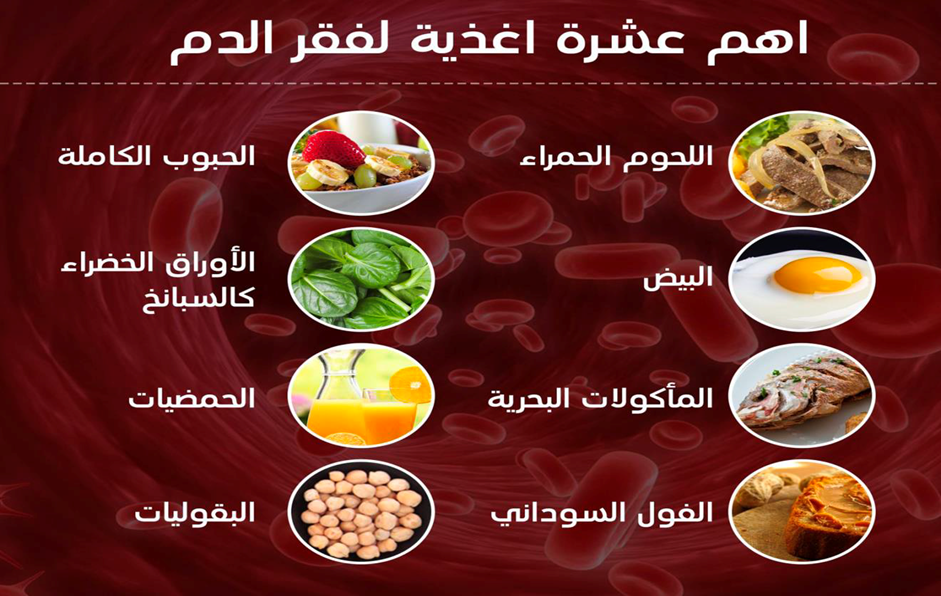
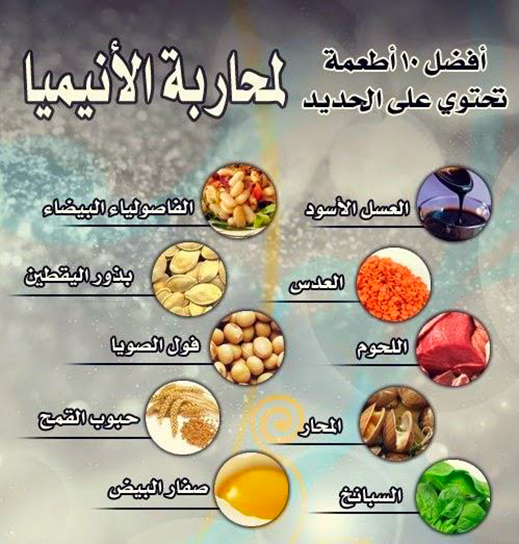
2. Tables for healthcare workers demonstrating : clinical presentation, risk factors, normal age- and gender-related red cell indices, lower limits for hemoglobin and hematoctrit values, dietary reference intake for iron, foods to increase iron intake and iron absorption, tips to optimize oral iron therapy, monitoring response to treatment.
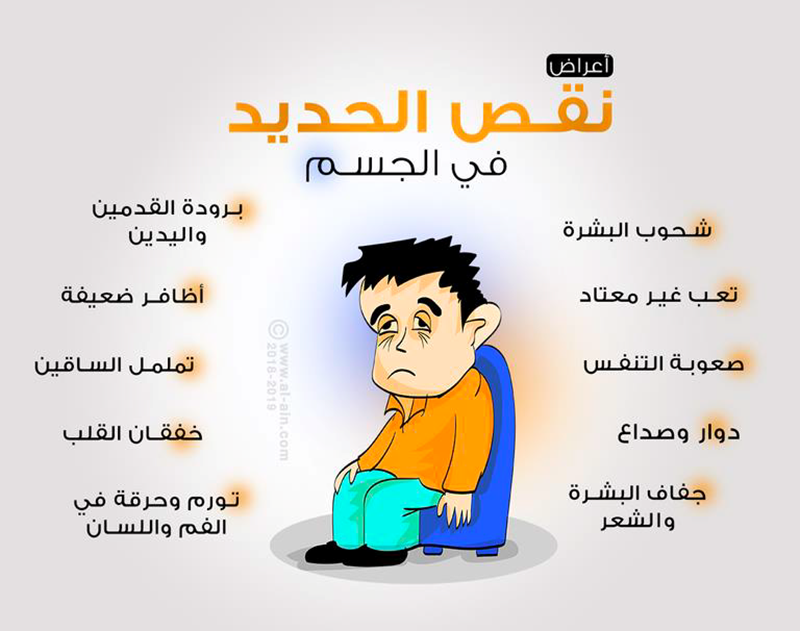
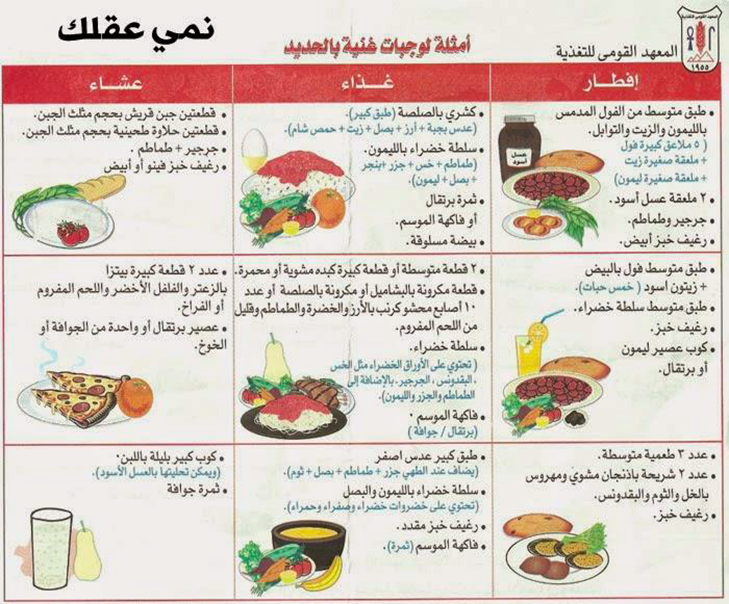
3. Arabic Educational materials for nurses and mothers
Table 1: Summary of recommendations of the Egyptian pediatric clinical practice guidelines Prevention and Management of Iron Deficiency and Iron Deficiency Anemia in Infants, Children and Adolescents.
|
Screening |
|
Clinical screening for symptoms and signs of iron deficiency anemia, in infants and children, done by the primary health care professional/ pediatricians in primary health care setting/ OPC, improves the early detection of IDA and the neurodevelopmental outcome. |
|
Clinical screening for symptoms and signs of iron deficiency anemia, in adolescent females, at yearly school visit, done by the primary health care professional/ pediatrician in primary health care setting/ OPC, improves the early detection of IDA. |
|
Routine dietary history checklist, for iron containing food in infants, children and adolescents, without non-iron related comorbidities, done by the primary health care professional/ pediatrician in primary health care setting/ OPC, helps identify dietetic problems, improve the early detection of ID/IDA and neurodevelopmental outcome. |
|
- There is no one test considered gold standard for diagnosing iron deficiency or IDA, so official recommendations vary. - There is no sufficient evidence to recommend specific screen tests for IDA. No studies evaluating the benefits or harms of screening programs for asymptomatic children. |
|
- Laboratory screening of the general population for ID/IDA is not recommended. Laboratory testing of infants, children, and adolescents at high risk (identified by clinical screening i.e., symptoms and signs) is recommended. |
|
Diagnosis** |
|
Anemia is diagnosed if hemoglobin level is below the cut-off level for age and sex. |
|
Microcytosis is diagnosed if mean corpuscular volume is below -2 SD for age related reference range. |
|
Iron deficiency is considered if serum ferritin level is below 12 ug/L in all age groups in the absence of infection/ inflammation. |
|
Iron deficiency is considered if serum ferritin level is below 30 ug/L in all age groups in the presence of infection/ inflammation. |
|
Treatment |
|
Oral iron therapy: Dose: 3-6 mg/kg / day for all ages Forms: syrup; tablets (each preparation contains different elemental iron dose) (not exceed maximum dose) Time: 1hour before or 2 hours after meals with Vitamin C at daytime Monitoring: after one month by CBC and reticulocytic count, then at 3, 6 months. If no response after one month: revise dose, compliance, tolerability, type of formula and consider change of formula for another month. Duration: for 3 months after recovery of hemoglobin. Tips for Oral iron intake - Lower and intermittent dose may be as effective and better tolerated. - To avoid gastric upset, can be taken at night, and increasing dose gradually. - Teeth staining can be avoided by brushing teeth and taking with water.
|
|
- If oral iron is ineffective or is not tolerated, consider other causes of anemia, and refer to Hematologist (avoid parenteral iron therapy).
Packed RBCs should be considered after Hematologist opinion. |
|
Nutritional support with iron rich formulas, solid food, and oral iron support 1-2 mg/kg/day elemental iron should be used to treat asymptomatic iron deficiency anemia in infants. |
|
Referral |
|
Referral to hematologist should be considered in cases of severe anemia, history of recurrent bleeding or with failure of increase in the hemoglobin concentration after proper iron dose and proper way of administration |
|
Prevention of ID and IDA |
|
Daily iron supplementation of 10-12.5 mg elemental iron daily (Drops/syrups) for three consecutive months is recommended as a public health intervention in infants and young children aged 6-23 months, living in settings where anemia is highly prevalent****. |
|
Daily iron supplementation of 30 mg elemental iron daily (Drops/syrups/tablets) for three consecutive months is recommended as a public health intervention in preschool children aged 24 to 59 months, living in settings where anemia is highly prevalent****. |
|
Daily iron supplementation of 30-60 mg elemental iron daily (Drops/syrups/tablets) for three consecutive months is recommended as a public health intervention in school aged children aged 5-12 years, living in settings where anemia is highly prevalent*****. Daily iron supplementation 30–60 mg elemental iron daily (Tablets), for three consecutive months in a year, is recommended as a public health intervention in menstruating adult women and adolescent girls, living in settings where anemia is highly prevalent*****, for the prevention of anemia and iron deficiency.
|
|
Dietary prevention · Start complementary feeding with iron rich food. · Avoid cow milk, goat milk, soy to infants under12 months of age. · From 12 months, cow milk should not exceed 500 ml per day. · For non-breast-fed infants, iron fortified formula can play a role in prevention and treatment of IDA.
|
Adapted from: “World Health Organization. (2016). Guideline: daily iron supplementation in adult women and adolescent girls. World Health Organization. https://apps.who.int/iris/handle/10665/204761”, “Guideline: Daily iron supplementation in infants and children. Geneva: World Health Organization; 2016.”, “National Blood Authority (NBA) (2016). Patient Blood Management Guidelines: Module 6 – Neonatal and Paediatrics. NBA, Canberra, Australia.”
Table 2: Clinical findings in iron deficiency/iron deficiency anemia.
|
Skin Pallor
|
Nails Koilonychia |
|
Musculoskletal system Decreased effort capacity Exercise limitation |
Increased absorption of heavy metals Lead intoxication
|
|
Cardiovascular system Increased cardiac output Tachycardia Cardiomegaly
|
Gastrointestinal system Loss of appetite Angular stomatitis Atrofic glossitis Dysphagia Pica Gluten enteropathy Plummer-Vinson syndrome
|
|
Central nervous system Irritability-malaise
Fainting Breath holding spell Sleep disturbance Attention deficit Learning difficulty Behavioral disorder Decrease in perception functions Retardation in motor and mental developmental tests
|
Immune
system disorders T lymphocyte and polymorphonuclear leukocyte dysfunction
|
Aladhadhi AM, Etaiwi ST, Alqahtani KM, Bajafar AA, Nono AF, Aldrees SA, Almutawa SM, Alghraibi SA. Pediatrics Iron deficiency anemia from diagnosis to treatment. The Egyptian Journal of Hospital Medicine (October 2018) Vol. 73 (8), Page 7268-7273
Table 3a: Risk factors for IDA by cause.
|
3.1 Increased iron demands · Prematurity · Infancy · Adolescence, especially in females Pregnancy · Lactation · Regular blood donation · Competitive athletics
3.2 Diminished iron supply · Prolonged breastfeeding without iron supplementation beyond the fourth month of life · Consumption of infant formula low in iron · Introduction of fresh cow’s milk before the first birthday · Daytime bottle use beyond the twelfth month of life · Bottle use in bed · Preferred consumption of poultry over red meat, vegan and vegetarian diets
3.3 Blood loss · Traumatic or operative blood loss · Gastrointestinal bleeding: Inflammatory bowel diseases (IBDs), stomach cancer, colon cancer, colonic polyps, non-steroidal anti- inflammatory drugs, chronic Helicobacter pylori infection, hookworm infection, angiodysplasia · Gynecological bleeding: Menorrhagia, uterine fibroids, endometrial carcinoma, use of intrauterine devices over contraceptive pills for birth control · Urological bleeding: Schistosomiasis, bladder cancer, glomerulonephritis, kidney trauma · Pulmonary bleeding: Lung tuberculosis, congenital lung malformations, lung cancer, idiopathic pulmonary hemosiderosis, Goodpasture’s syndrome, etc. · Bleeding diathesis (congenital or acquired)
3.4 Malabsorption of iron · Celiac disease (gluten sensitive enteropathy) · Atrophic gastritis, gastric surgery · Decreased gastric acidity (e.g., antacids, H2 blockers, protein-pump inhibitors) · Iron Refractory Iron Deficiency Anemia (IRIDA) |
Mantadakis E, Chatzimichael E, Zikidou P. Iron Deficiency Anemia in Children Residing in High and Low-Income Countries: Risk Factors, Prevention, Diagnosis and Therapy. Mediterr J Hematol Infect Dis. 2020 Jul 1;12(1):e2020041. doi: 10.4084/MJHID.2020.041. PMID: 32670519; PMCID: PMC7340216.
Table 3b: Main risk factors for IDA in low-income and developed countries.
|
Low-income countries |
Developed countries |
|
Prolonged breastfeeding without iron supplementation beyond the 4th month of life |
Gastrointestinal bleeding of any etiology as per Table 3a |
|
Limited consumption of meat and fish |
Genitourinary bleeding of any etiology as per Table 3a |
|
Diets rich on cereal, or legume-based flours, excess dietary fiber |
Iron malabsorption of any etiology as per Table 3a |
|
tea |
|
|
Multiparity |
|
|
Hookworm infestation |
|
|
Schistosomiasis |
|
|
Malaria (contributes to IDA by causing intravascular hemolysis
with hemoglobinuria) |
|
|
Chronic or repeated infections (functional iron deficiency due to chronic inflammation) |
|
Mantadakis E, Chatzimichael E, Zikidou P. Iron Deficiency Anemia in Children Residing in High and Low-Income Countries: Risk Factors, Prevention, Diagnosis and Therapy. Mediterr J Hematol Infect Dis. 2020 Jul 1;12(1):e2020041. doi: 10.4084/MJHID.2020.041. PMID: 32670519; PMCID: PMC7340216.
Table 4: Normal age- and gender-related red cell indices for children
|
|
Females and males |
females |
males |
|||||||
|
Age (years) |
1–1.9 |
2–4.9 |
5–7.9 |
8–11.9 |
12-14.9 |
15-17.9 |
>18 |
12-14.9 |
15-17.9 |
>18 |
|
RBC count Mean |
4.34 |
4.34 |
4.41 |
4.52 |
4.47 |
4.48 |
4.42 |
4.71 |
4.92 |
4.99 |
|
-2SD |
3.8 |
3.7 |
3.1 |
3.8 |
3.9 |
3.9 |
3.8 |
4.1 |
4.2 |
4.3 |
|
Mean Corpuscular volume Mean (fl) |
79 |
81 |
82 |
84 |
86 |
88 |
90 |
85 |
87 |
89 |
|
-2SD |
67 |
73 |
74 |
76 |
77 |
78 |
81 |
77 |
79 |
80 |
Based on the US second National Health and Nutrition Examination Survey (NHANES II) after excluding those with abnormal tests related to iron; Yip R, Johnson C, Dallman PR. Age-related changes in laboratory values used in the diagnosis of anemia and iron deficiency. American Journal of Clinical Nutrition, 1984, 39:427-436.
Table 5 : Lower limits for hemoglobin and hematoctrit values specified by the World Health Organization by age and gender
|
Hemoglobin Hematocrit (g/dL) (%) |
Hemoglobin Hematocrit (g/dL) (%) |
Groups by age and gender
|
|
33 |
11 |
Children aged between 6-59 months Children aged between 5-11 years Children aged between 12-14 years Girls aged >15 years |
|
34 |
11.5 |
Boys aged >15 years |
|
36 |
12 |
Children aged between 6-59 months Children aged between 5-11 years Children aged between 12-14 years Girls aged >15 years |
|
36 |
12 |
Boys aged >15 years |
|
39 |
13 |
Children aged between 6-59 months Children aged between 5-11 years Children aged between 12-14 years Girls aged >15 years |
Özdemir N. Iron deficiency anemia from diagnosis to treatment in children. Turk Pediatri Ars. 2015 Mar 1;50(1):11-9. doi: 10.5152/tpa.2015.2337. PMID: 26078692; PMCID: PMC4462328.
Table 6: Dietary Reference Intake for Iron
|
LIFESTAGE GROUP |
AI (mg/day) |
UL (mg/day) |
SELECTED FOOD SOURCES |
ADVERSE EFFECTS OF EXCESSIVE CONSUMPTION |
SPECIAL CONSIDERATIONS |
|
Infants |
|
|
Heme sources: meat, poultry, fish Nonheme sources: dairy, eggs, plant-based foods, breads, cereals, breakfast foods |
GI distress |
Persons with decreased gastric acidity may be at increased risk for deficiency. Cow's milk is a poor source of bioavailable iron and is not recommended for children <1 yr old. Neurocognitive deficits have been reported in infants with iron deficiency. RDA for females increases with menarche related to increased losses during menstruation. Vegans and vegetarians might require iron Supplementation or intake of iron fortified foods. GI parasites can increase iron losses via GI bleeds. Iron supplements can interfere with zinc absorption, and vice versa; if supplements are being used, the doses should be staggered. |
|
0-6 mo |
0.27 |
40 |
|||
|
7-12 mo |
11 |
40 |
|||
|
Children |
|
|
|||
|
1-3 yr |
7 |
40 |
|||
|
4-8 yr |
10 |
40 |
|||
|
Males |
|
|
|||
|
9-13 yr |
8 |
40 |
|||
|
14-18 yr |
11 |
45 |
|||
|
19-21 yr |
8 |
45 |
|||
|
Females |
|
|
|||
|
9-13 yr |
8 |
40 |
|||
|
14-18 yr |
15 |
45 |
|||
|
19-21 yr |
18 |
45 |
|||
|
Pregnancy |
|
|
|||
|
≤18 yr |
27 |
45 |
|||
|
19-21 yr |
27 |
45 |
|||
|
Lactation |
|
|
|||
|
≤18 yr |
10 |
45 |
|||
|
19-21 yr |
9 |
45 |
AI: Adequate Intake, mo: month(s), RDA: Recommended Dietary Allowances, UL: Tolerable Upper Intake Levels, yr: year(s)
Adapted from “Food and Nutrition Board, US Institute of Medicine: Dietary reference intakes for water, potassium, sodium, chloride, and sulfate (website). http://www.nap.edu/openbook.php?record_id=10925 ; and Ross AC, US Institute of Medicine, Committee to Review Dietary Reference Intakes for Vitamin D and Calcium: Dietary reference intakes: calcium, vitamin D, Washington, DC, 2011, National Academies Press, pp xv, 536.”
TABLE 7 : Foods to Increase Iron Intake and Iron Absorption
|
|
Elemental Iron, mg |
|
Cereals |
|
|
Baby food, brown rice cereal, dry, instant, 1 tbsp |
1.8 |
|
Baby food, oatmeal cereal, dry, 1 tbsp |
1.6 |
|
Baby food, rice cereal, dry, 1 tbsp |
1.2 |
|
Baby food, barley cereal, dry, 1 tbsp |
1.1 |
|
Table food, heme iron |
|
|
Clams, canned, drained solids, 3 oz |
23.8 |
|
Chicken liver, cooked, simmered, 3 oz |
9.9 |
|
Oysters, Eastern canned, 3 oz |
5.7 |
|
Beef liver, cooked, braised, 3 oz |
5.6 |
|
Shrimp, cooked moist heat, 3 oz |
2.6 |
|
Beef, composite of trimmed cuts, lean only, all grades, cooked, 3 oz |
2.5 |
|
Sardines, Atlantic, canned in oil, drained solids with bone, 3 oz |
2.5 |
|
Turkey, all classes, dark meat, roasted, 3 oz |
2.0 |
|
Lamb, domestic, composite of trimmed retail cuts, separable lean only, choice, cooked, 3 oz |
1.7 |
|
Fish, tuna, light, canned in water, drained solids, 3 oz |
1.3 |
|
Chicken, broiler or fryer, dark meat, roasted, 3 oz |
1.1 |
|
Turkey, all classes, light meat, roasted, 3 oz |
1.1 |
|
Veal, composite of trimmed cuts, lean only, cooked, 3 oz |
1.0 |
|
Chicken, broiler or fryer, breast, roasted, 3 oz |
0.9 |
|
Fish, salmon, pink, cooked, 3 oz |
0.8 |
|
Table food, nonheme iron |
|
|
Oatmeal, instant, fortified, cooked, 1 cup |
14.0 |
|
Blackstrap molasses,a 2 tbsp |
7.4 |
|
Tofu, raw, regular, ½ cup |
6.7 |
|
Wheat germ, toasted, ½ cup |
5.1 |
|
Ready-to-eat cereal, fortified at different levels, 1 cup |
∼4.5 to 18 |
|
Soybeans, mature seeds, cooked, boiled, ½ cup |
4.4 |
|
Apricots, dehydrated (low-moisture), uncooked, ½ cup |
3.8 |
|
Sunflower seeds, dried, ½ cup |
3.7 |
|
Lentils, mature seeds, cooked, ½ cup |
3.3 |
|
Spinach, cooked, boiled, drained, ½ cup |
3.2 |
|
Chickpeas, mature seeds, cooked, ½ cup |
2.4 |
|
Prunes, dehydrated (low-moisture), uncooked, ½ cup |
2.3 |
|
Lima beans, large, mature seeds, cooked, ½ cup |
2.2 |
|
Navy beans, mature seeds, cooked, ½ cup |
2.2 |
|
Kidney beans, all types, mature seeds, cooked, ½ cup |
2.0 |
|
Molasses, 2 tbsp |
1.9 |
|
Pinto beans, mature seeds, cooked, ½ cup |
1.8 |
|
Raisins, seedless, packed, ½ cup |
1.6 |
|
Prunes, dehydrated (low moisture), stewed, ½ cup |
1.6 |
|
Prune juice, canned, 4 fl oz |
1.5 |
|
Green peas, cooked, boiled, drain, ½ cup |
1.2 |
|
Enriched white rice, long-grain, regular, cooked, ½ cup |
1.0 |
|
Whole egg, cooked (fried or poached), 1 large egg |
0.9 |
|
Enriched spaghetti, cooked, ½ cup |
0.9 |
|
White bread, commercially prepared, 1 slice |
0.9 |
|
Whole-wheat bread, commercially prepared, 1 slice |
0.7 |
|
Spaghetti or macaroni, whole wheat, cooked, ½ cup |
0.7 |
|
Peanut butter, smooth style, 2 tbsp |
0.6 |
|
Brown rice, medium-grain, cooked, ½ cup |
0.5 |
a: Source of iron value was obtained from a manufacturer of this type of molasses.
Source of iron values in foods: US Department of Agriculture, Agricultural Research Service. USDA National Nutrient Database for Standard Reference, Release 20: Nutrient Data Laboratory home page. Available at: www.ars.usda.gov/ba/bhnrc/ndl.
Adapted from “Baker RD, Greer FR; Committee on Nutrition American Academy of Pediatrics. Diagnosis and prevention of iron deficiency and iron-deficiency anemia in infants and young children (0-3 years of age). Pediatrics. 2010 Nov;126(5):1040-50. doi: 10.1542/peds.2010-2576. Epub 2010 Oct 5. PMID: 20923825.”
Table 8 : Selected Good Vitamin C Sources to Increase Iron Absorption
|
Fruits |
Vegetables |
|
Citrus fruits (eg, orange, tangerine, grapefruit) |
Green, red, and yellow peppers |
|
Pineapples |
Broccoli |
|
Fruit juices enriched with vitamin C |
Tomatoes |
|
Strawberries |
Cabbages |
|
Cantaloupe |
Potatoes |
|
Kiwifruit |
Leafy green vegetables |
|
Raspberries |
Cauliflower |
Baker RD, Greer FR; Committee on Nutrition American Academy of Pediatrics. Diagnosis and prevention of iron deficiency and iron-deficiency anemia in infants and young children (0-3 years of age). Pediatrics. 2010 Nov;126(5):1040-50. doi: 10.1542/peds.2010-2576. Epub 2010 Oct 5. PMID: 20923825.
Table 9: Plant foods that reduce iron absorption.
|
Oxalate-rich foods
|
Beverages: Coffee, tea (especially black tea) Cereals: Wheat bran Chocolate Fruits: Strawberries Herbs: Rhubarb, oregano, basil, parsley Vegetables: Beans, beets (roots and leaves), celery, spinach, kale Nuts: Peanuts Oilseeds: Soybeans |
|
Polyphenol-rich foods
|
Beverages:
Coffee, green tea, black tea, red wine, cider Apples, blackberries, raspberries, blueberries, black currant, strawberry, kiwi, cherry, plum, pear, apricot, peach, black Fruits: grape, red grape Herbs: Rhubarb, peppermint, parsley Vegetables: Potato, red cabbage, yellow onion, tomato, broccoli, beans, green or white, chicory, artichoke, curly kale, leek, celery, capsicum pepper Nuts: Walnuts Oilseeds: Soybeans Spices |
|
Phytate-rich foods
|
Cereals: Wheat, oats, rice, corn (maize), barley, sorghum, rye, millet, soybean Nuts: Walnuts, peanuts, nuts Oilseeds: Soybeans, linseed, sesame seed, sunflower meal Vegetables: Dried beans, lentils, peas, chickpeas |
|
Calcium-rich foods
|
Fruits:
Figs |
Mantadakis E, Chatzimichael E, Zikidou P. Iron Deficiency Anemia in Children Residing in High and Low-Income Countries: Risk Factors, Prevention, Diagnosis and Therapy. Mediterr J Hematol Infect Dis. 2020 Jul 1;12(1):e2020041. doi: 10.4084/MJHID.2020.041. PMID: 32670519; PMCID: PMC7340216.
Table 10: TIPS FOR OPTIMIZING ORAL IRON THERAPY
|
· Calculation of dosage should always consider elemental iron content of product.
|
|
· To maximize absorption, iron supplements should:
o Be taken on an empty stomach with full glass of water or fruit juice, if appropriate (e.g., one hour before or two hours after meals). o Be taken in the morning or earlier in the day. o Be taken with a supplement or dietary source of Vitamin C (e.g., fruit juice, oranges, tomatoes). o NOT be taken with Calcium products (e.g.: supplements, certain antacids) or foods (e.g., dairy products such as milk, cheese, yogurt). o NOT be taken with high-oxalate foods (e.g., coffee, tea, spinach, kale, broccoli).
|
|
· Oral iron can cause nausea, vomiting, dyspepsia, constipation, diarrhea, metallic taste or dark stools. If your patient is experiencing GI based adverse effects, consider the following: o Start at a lower dose (e.g., one tablet once daily) and titrate up slowly (i.e., every four to five days). o Switch to liquid form for smaller dose titrations. o Switch to another preparation with less elemental iron. o Recommend taking iron with small snack or with meals (however food will decrease iron absorption by 40%). o Take at bedtime (however, iron absorption is lowest in evening when Hepcidin hormone levels are highest). o Could consider polysaccharide iron complex as an option however, it is more expensive and its effectiveness is no better than other iron salts.
|
Adapted from “Towards Optimized practice, Iron Deficiency Anemia, Clinical Practice Guidelines, March 2018. https://actt.albertadoctors.org/media/tc4lq52r/ida-cpg.pdf”
Table 11: MONITORING OF RESPONSE TO ORAL IRON THERAPY
|
Order a CBC and reticulocytes at two to four weeks to see if the patient is responding to replacement regimen.
|
|
Indicators of response to (i.e., targets for) iron therapy include: · Reticulocytosis in four days · Increasing hemoglobin >1gm/dl in four weeks
|
|
Correction of IDA should be observed within two to four months if appropriate iron dosages are administered, and underlying cause of iron deficiency is addressed. |
Adapted from “Towards Optimized practice, Iron Deficiency Anemia, Clinical Practice Guidelines, March 2018. https://actt.albertadoctors.org/media/tc4lq52r/ida-cpg.pdf”