Book
Protocols for the Most Common Diseases in Primary Healthcare Facilities
-Pediatric Clinic Nursing Protocols
Protocol Title | Child with Anemia | ||
Issue Date |
| Version Number | 1 |
Revision Date |
| Number of Pages |
|
Prepared by |
| ||
Head Nurse | Medical Director Approval | Unit Manager Approval | |
| |||
Nurse’s Role in Providing Nursing Care to a Child with Anemia
Patient Assessment:
- Perform a physical assessment of the different body systems, particularly the cardiovascular system, according to the patient’s complaint.
- Review the medication history for drugs that suppress the bone marrow.
- Assess pain and notify the physician if the pain score is 3 or higher.
- Perform a fall-risk assessment for adults and children.
- Conduct psychological, spiritual, and nutritional assessments.
- Assess children younger or older than 5 years of age.
Nursing Procedures:
- Measure vital signs (blood pressure, blood glucose, pulse, respiratory rate, and temperature).
- Measure height and weight and calculate body mass index.
- Monitor the growth chart.
- Develop and implement a nursing care plan.
- Provide the patient with health education appropriate to the condition.
- Complete electronic documentation of all nursing forms in the system.
Health Education:
- Explain anemia to the patient:
• Anemia is a condition in which the hemoglobin concentration in red blood cells is below the normal level for several possible reasons, such as bone-marrow dysfunction, increased destruction of red blood cells, or loss of large quantities of blood, as in hemorrhage.
- Explain the risk factors that contribute to the disease:
Modifiable risk factors:
• Nutritional deficiency, including insufficient intake of iron, vitamin B12, or vitamin C.
• Intestinal disorders: In intestinal disorders, iron is not absorbed from the small intestine in sufficient quantities, which affects red blood cell production.
• Bleeding, involving the loss of large quantities of blood components.
• Smoking.
• Chronic diseases, such as renal insufficiency or cancer.
• Menstruation and pregnancy.
Non-modifiable risk factors:
• Age.
• Sex.
• Genetic disorders, such as sickle cell anemia and thalassemia.
- Explain the symptoms of anemia to the patient:
• Yellowing of the eyes; in advanced cases of anemia, the eyes may become reddish.
• Pale, yellowish, and cold skin.
• Difficulty breathing.
• General weakness and muscle fatigue.
• Change in stool color.
• Fatigue, exhaustion, and dizziness due to reduced oxygen carried by hemoglobin molecules.
• Low blood pressure.
• Increased heart rate as the body attempts to pump more blood to compensate for reduced oxygen, with chest pain, palpitations, and cardiac edema.
- Educate the patient about preventing anemia:
Adopt a healthier lifestyle:
- Follow a healthy diet rich in iron, vitamin B12, and folic acid to support hemoglobin stores, including red and white meat, fava beans, dried beans, and whole grains.
- Eat foods rich in folic acid, such as green fava beans, leafy green vegetables, wheat germ, and oranges.
- Eat foods rich in vitamin C: citrus and other fruits (grapefruit, kiwi, oranges, lemons, mandarins, and strawberries) and fresh raw vegetables (broccoli, tomatoes, and bell peppers).
Eat foods that provide approximately 0.5–1.5 mg of iron:
• White meat • Green peas • Tomato juice
• Dried apricots • Broccoli • Strawberries
• Raspberries • Whole-wheat germ
Eat foods that provide approximately 1.6–3 mg of iron:
• Steak • Roast beef • Red liver
• Baked potato • Green beans • Oatmeal
• Raisins
Eat foods that provide approximately 3–12 mg of iron:
• Shellfish: 4 large, 6 medium, or 9 small pieces.
• Spinach.
• Fortified cereals.
- Use iron supplements correctly and avoid excessive use.
- Prevent constipation associated with iron supplements through exercise and drinking milk.
- Engage in regular physical activity for at least 30 minutes daily.
Attend regular medical follow-up for the required examinations and to prevent disease progression and worsening of the condition.
- Avoid smoking.
- Avoid psychological stress.
Prevention of iron-deficiency anemia in infants:
Feed the infant breast milk or iron-fortified formula during the first year. Cow’s milk is not a source of iron and is not recommended for infants under one year of age.
After 6 months of age, begin feeding the child iron-containing infant cereal or puréed meat at least once daily to improve iron intake.
For children over one year of age, ensure that the child does not drink more than 20 ounces (591 mL) of milk daily. Milk often replaces other foods, including iron-rich foods.
Explain the complications of anemia to the patient:
• Heart failure: An increased heart rate develops in an attempt to compensate for low oxygen levels, placing a greater burden on the heart muscle and progressively weakening it until it can no longer function effectively.
• Muscle numbness: This occurs because insufficient oxygen is delivered to the muscles.
• Delirium: This results from reduced oxygen delivery to the brain’s nerve cells and is a serious complication of worsening anemia.
References:
Rupasinghe, M., Reath, J., Cvetkovski, B., Smith, S., Bosnic-Anticevich, S., Kritikos, V., & Abbott, P. (2021). Have we got the right focus in asthma care in general practice? A qualitative study. Australian Journal of General Practice, 50(6), 410-415.
Protocol Title | Child with Obesity | ||
Issue Date |
| Version Number | 1 |
Revision Date |
| Number of Pages |
|
Prepared by |
| ||
Head Nurse | Medical Director Approval | Unit Manager Approval | |
| |||
Nurse’s Role in Providing Nursing Care to a Child with Obesity
Patient Assessment:
- Perform a physical assessment of the different body systems according to the patient’s complaint.
- Assess pain and notify the physician if the pain score is 3 or higher.
- Perform a fall-risk assessment for children.
- Conduct psychological, spiritual, and nutritional assessments.
- Assess children younger or older than 5 years of age.
Nursing Procedures:
- Measure vital signs (blood pressure, blood glucose, pulse, respiratory rate, and temperature).
- Measure height and weight and calculate body mass index (weight in kilograms / height in meters squared).
- Monitor the growth chart.
- Develop and implement a nursing care plan.
- Provide the patient with health education appropriate to the condition.
- Complete electronic documentation of all nursing forms in the system.
Health Education:
Explain the concept of obesity to the patient or caregiver:
Overweight and obesity are defined as abnormal or excessive fat accumulation that presents a health risk.
Educate the patient or caregiver about the health consequences of overweight and obesity:
The health consequences of overweight and obesity include:
- Cardiovascular disease, including heart disease and stroke, which was the leading cause of death in 2012.
- Diabetes mellitus.
- Musculoskeletal disorders, particularly osteoarthritis—a rapidly progressive joint disease that can cause disability.
- Certain types of tumors.
- Obesity has adverse health effects in women; it reduces the likelihood of pregnancy and increases miscarriage rates.
Explain the causes of overweight and obesity to the patient or caregiver:
- Eating excessive quantities of high-calorie, low-nutrient foods and not exercising.
- Physical inactivity and societal changes.
- Easy access to unhealthy foods and beverages because they are inexpensive.
- Foods containing high levels of sugar, fat, and salt, and their widespread marketing.
Educate the patient about interventions to reduce the risks of overweight and obesity:
ü Healthy weight loss is not limited to following a diet or health program; it requires long-term lifestyle changes in daily eating and exercise habits.
· Limit foods that are high in calories and low in nutritional value.
· Eat more fruits and vegetables and reduce foods high in fat and sugar.
· Make simple, manageable lifestyle changes: Gradually adopt a healthy diet that is low in fat, sugar, and salt.
· Use vanilla or cinnamon to add flavor when reducing sugar.
· Drink more water—at least 8 cups distributed throughout the day.
· Children should not watch television while eating.
· Limit children’s total television viewing to less than two hours per day.
· Support breastfeeding.
· Increase physical activity, such as at least 10 minutes of walking three times daily, five days per week.
Children Under Two Years of Age:
Provide the mother with health education about the importance of breastfeeding.
⮘ Benefits of breastfeeding for the infant:
❑ Benefits of colostrum:
● Despite its small quantity, colostrum fully meets the newborn’s needs during the first few days by providing adequate
calories, protein, and vitamin A.
● Colostrum is highly beneficial in protecting the infant from many infectious diseases that may occur early in life because it contains high levels of antibodies against numerous bacteria and viruses.
● Colostrum has a laxative effect.
❑ Breast milk is ideal for preterm infants. It is rich in protein, antibodies, and lactoferrin, which help protect preterm infants from serious infections.
❑ Breast milk contains proteins that are easy to digest and metabolize.
❑ Breast milk contains antibodies (immunoglobulins), immune cells (macrophages), and immune-modulating substances (cytokines).
❑ Breast milk promotes the growth of beneficial bacteria in the infant’s intestines (Lactobacillus bifidus)—a prebiotic effect.
❑ Breast milk helps protect the child from obesity because it contains leptin, which promotes satiety and helps prevent excess weight gain.
❑ Breast milk contains a unique combination of nutrients and growth factors that support physical development and neurological maturation of the brain during the first six months by stimulating the growth and maturation of many nerve cells and nerve myelination.
❑ Breast milk contains lactose, which provides the infant with energy during growth and contributes to development of the nervous system.
❑ The iron in breast milk is sufficient for the infant’s needs during the first six months because breast milk contains lactoferrin and adequate vitamin C, which enhance iron absorption and help protect the infant from anemia.
❑ Breast milk helps protect the infant from rickets because it facilitates more effective absorption of vitamin D despite its low concentration and provides calcium and phosphorus in adequate, balanced proportions.
❑ Breastfeeding contributes to the child’s psychological stability and is reflected in the child’s behavior.
❑ Breastfeeding creates close contact and strengthens the bond of affection between the infant and mother.
❑ It supports the child’s cognitive and emotional intelligence, which increases with continued breastfeeding for two years.
● All these benefits are more effective when breastfeeding begins early, is exclusive during the first six months, and continues for at least two years.
⮘ Important Advice:
▪ The mother should begin breastfeeding immediately after birth because this positively affects milk production. Exclusive breastfeeding should continue for six months.
▪ Colostrum is produced for approximately three days after birth, after which milk production increases. If the breasts are not emptied regularly, the mother may experience breast pain, tingling, and swelling, sometimes accompanied by fever.
▪ Milk production increases with continued breastfeeding and is stimulated by the infant suckling at the breast.
Benefits of breastfeeding for the mother:
● Helps the uterus contract and return to its normal state.
● Helps reduce postpartum bleeding.
● Helps the mother regain her normal weight more quickly.
● Reduces breast engorgement and swelling and prevents related complications.
● Breastfeeding helps space pregnancies because prolactin suppresses ovarian activity and therefore inhibits ovulation. All three of the following conditions must be present to reliably prevent ovulation:
o The infant is less than six months old.
o Menstruation has not resumed.
o The infant breastfeeds regularly from both breasts, day and night—exclusive breastfeeding.
● Reduces the risk of breast and ovarian cancer.
● Breastfeeding is convenient, readily available, economical, and requires no heating or sterilization.
● Strengthens the emotional bond between mother and child.
⮘ Benefits of breastfeeding for the family:
x Saves the mother time, allowing her to care for the entire family.
x Saves money because it costs substantially less than formula feeding.
x Reduces the cost of healthcare for the infant.
⮘ Benefits of breastfeeding for the community:
▪ Reduces healthcare costs.
▪ Improves the health of the child and the community.
▪ Provides a natural method of family planning.
▪ Reduces government expenditure on infant formula.
Risks of Formula Feeding
❑ Formula feeding frequently leads to malnutrition because of errors in preparation and storage, contamination of artificial nipples, and use of unclean water to prepare feeding bottles. It may also involve incorrect practices, such as excessive dilution, adding sugar or starch, or failing to follow preparation instructions regarding the appropriate number of scoops for the infant’s age. These errors increase the risk that the newborn will receive insufficient milk and consequently develop malnutrition.
❑ Diarrheal diseases are more common—14 to 25 times more frequent—among formula-fed infants and 3 to 5 times more frequent among partially breastfed infants receiving mixed feeding.
❑ Mortality from diarrhea among formula-fed infants is 14 times higher than among exclusively breastfed infants.
❑ Even limited exposure to infant formula reduces the many benefits of breastfeeding. Formula alters the beneficial intestinal microbial environment (Lactobacillus bifidus), which supports absorption of the unique components of breast milk, particularly immune substances and micronutrients, and replaces it with an unfavorable microbial environment involving E. coli. This increases colic and damages the internal immune lining of the intestine under the influence of casein in formula.
❑ Respiratory diseases are more common among formula-fed infants, and mortality is four times higher in these children. Otitis media is six times more common and may lead to hearing loss and delayed learning.
❑ Bacterial and viral infections are markedly more common among formula-fed infants, who experience higher rates of serious conditions such as bacteremia, hepatitis, and meningitis than breastfed infants.
❑ Formula feeding increases the incidence of urinary tract and skin infections.
❑ Formula-fed infants are more susceptible to electrolyte disturbances, particularly during dehydration. Hypernatremia may lead to intracranial hemorrhage and seizures.
❑ Partial or complete feeding with formula or animal milk increases the future risk of diabetes mellitus, chronic intestinal inflammation, leukemia, hypertension, atherosclerosis, angina, and obesity.
❑ Allergy and asthma resulting from cow’s milk, which is used to prepare infant formula, are more common among formula-fed infants. In contrast, breastfeeding protects against gastrointestinal, respiratory, and skin allergies.
❑ Bottle feeding deprives the mother of the benefits of breastfeeding, increasing her risk of breast and ovarian cancer, and deprives both mother and child of emotional bonding.
❑ Formula feeding may reduce the child’s expected intelligence according to genetic potential and interfere with the emotional and psychological stability provided by exclusive breastfeeding. The difference may range from 5 to 12 intelligence-quotient points depending on gestational age, particularly in emotional and cognitive intelligence.
Correct Positioning
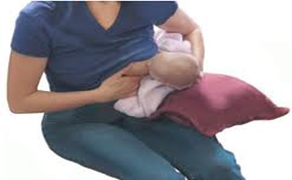
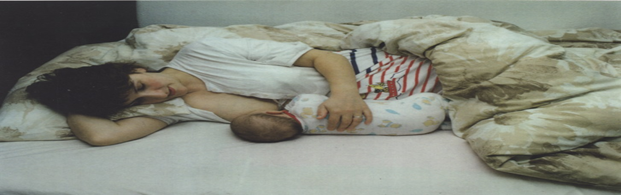
Correct positioning of the infant during breastfeeding:
The infant should face the breast while lying on one side, with the ear, shoulder, and hip aligned. The infant should be close to and facing the mother, with the buttocks supported.
Cradle Hold Cradle Hold |
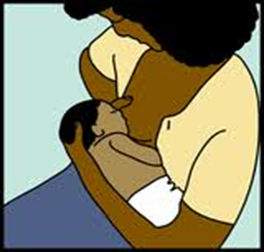
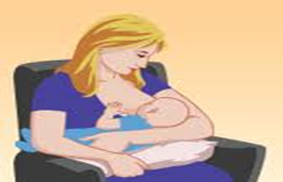
Cross-Cradle Hold Cross-Cradle Hold Side-Lying Position Side-Lying Position |
|
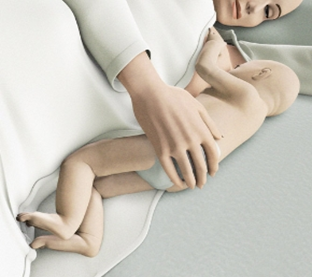
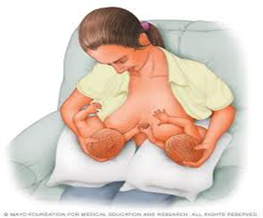
Underarm (Football) Hold Underarm (Football) Hold |
Good Attachment
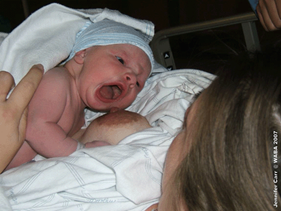
Correct attachment to the breast:

The mother should hold the infant so that the infant’s nose is level with the nipple, stimulating the rooting reflex. The infant’s lips should open widely to take in the areola from below. The mother should then bring the infant’s head toward the areola so that it enters the mouth toward the back of the palate. The infant’s chin should touch and press against the breast, and both lips should be flanged outward.
Breastfeeding should be on demand:
- This means feeding whenever the infant wants or shows readiness to breastfeed, day or night, or whenever the mother wishes to feed, such as when she feels that her breasts are full.
- The mother should begin feeding when the infant shows hunger cues, such as sucking movements, bringing the hand to the mouth, restlessness, or agitation, rather than waiting until the infant cries.
Benefits of breastfeeding on demand:
- Reduced occurrence of problems such as breast engorgement.
- Earlier and increased milk production.
- Faster and greater infant weight gain.
- Easier adaptation to breastfeeding.
- Stronger emotional bonding between the infant and mother.
- To achieve this, rooming-in should be practiced:
Keep the mother and infant together day and night.
Exclusive Breastfeeding
Exclusive breastfeeding continues through the end of the sixth month and means:
❑ Do not give the infant any liquids or foods other than breast milk.
❑ Do not give the infant any artificial nipples, such as a feeding bottle with a teat, or a pacifier.
❑ Breastfeed 8 to 12 times in 24 hours, including at night.
❑ Do not restrict the number or duration of feeds.
Note:
• Giving the infant liquids or foods before initiating breastfeeding negatively affects the success of exclusive breastfeeding.
• Use of infant formula may expose the infant to allergies.
• Using feeding bottles or pacifiers may cause the infant to reject the mother’s breast because of nipple confusion, making the infant unable to open the mouth widely enough to take in a large portion of the areola.
Signs That Breast Milk Is Sufficient
Advise the mother to observe and record the number of wet diapers—more than six times daily—and bowel movements—four or more times daily—to reassure her that the infant is receiving enough milk. However, actual adequacy should be confirmed by regularly monitoring the infant’s weight gain on the growth chart.
Expression of Breast Milk
Reasons for expressing breast milk:
1. To feed an infant who cannot breastfeed, such as a preterm or low-birth-weight infant.
2. To relieve breast engorgement.
3. To store milk for feeding the infant while a working mother is absent.
4. To maintain milk production during maternal illness.
5. To increase breast-milk production.
6. To relieve breast fullness caused by milk accumulation.
Method of expressing breast milk:
• Breast milk may be expressed manually or with a breast pump. A warm shower or warm compresses applied to the breast for 3–5 minutes are recommended to facilitate milk flow.
• Prepare a container with a tight-fitting lid that has been thoroughly washed with hot water and detergent.
• Wash hands thoroughly with soap and water.
• Place the thumb on the breast above the areola and the index finger below the areola, opposite each other.
• Press the breast backward toward the ribs, then compress to express the milk. Continue for 3–5 minutes or until milk flow slows. Then compress the breast vertically relative to the previous position to ensure drainage of the axillary tail. Begin expressing the other breast in the same manner and repeat expression of both breasts.
• Store milk in small quantities in special plastic storage bags or small plastic containers designed for breast-milk storage. Label each container with the date and number, and use container No. 1 before No. 2.
• For prolonged storage, place the milk on a refrigerator shelf or in the freezer.
• Give expressed milk by spoon, dropper, or cup. Never use a feeding bottle, because this may cause the infant to refuse the breast.
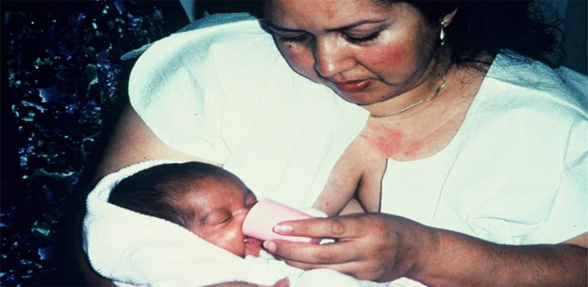
Essential Practices for Successful Breastfeeding
1. Initiate breastfeeding early, within the first hour after birth. After cesarean delivery, the mother should begin breastfeeding as soon as she has recovered from anesthesia.
2. Do not give the newborn any drink or food other than breast milk—exclusive breastfeeding—for six months.
3. Breastfeed on demand, day and night, without limiting the duration of feeds.
4. Keep the mother and infant together in the same room and at the bedside—rooming-in.
5. Bathing or washing the breasts once daily is sufficient. Avoid wiping the nipple and areola with soap or alcohol, because this removes the natural oils secreted by the areola that help the infant recognize the mother.
6. After breastfeeding, gently pat the breast dry or leave it uncovered for a few minutes to air-dry. Oils are unnecessary. A few drops of breast milk may be expressed onto the areola and nipple and left to dry.
Incorrect Breastfeeding Practices
1. Giving the newborn glucose or sugar-sweetened water after birth.
2. Giving the infant water, particularly during summer.
3. Giving the infant anise or caraway to relieve colic, which interferes with exclusive breastfeeding.
4. Stopping breastfeeding when the mother becomes ill or develops a fever.
5. Pacifiers may cause oral and dental deformities and promote oral fungal infection.
6. Scheduling breastfeeds, which conflicts with exclusive breastfeeding practices.
7. Introducing complementary foods before the sixth month.
8. Giving the infant complementary foods that are not appropriate for the infant’s age.
9. Not breastfeeding the infant at night because of the mistaken belief that the stomach needs rest.
Breastfeeding Assessment
⮘ What do you observe about the mother?
Her age, general health, nutrition, and social and financial circumstances.
⮘ What is the condition of the mother’s breasts?
Breast size and signs that the oxytocin reflex is active.
⮘ Also look for the following signs:
1. Fullness of the breast before feeding and softness afterward.
2. Persistent severe breast fullness, indicating that the infant is not removing milk from the breast.
3. Healthy appearance of the breast skin and nipples.
4. Redness of the skin or cracks in the nipple.
5. Nipple inflammation or a line appearing at the tip or side of the nipple when the infant releases the breast, which indicates poor attachment.
⮘ What do you observe about the infant?
Nasal obstruction, difficulty breathing, dehydration, tongue-tie, oral thrush, or cleft lip or palate.
⮘ How does the mother position the infant at the breast?
⮘ Does the infant appear to be well attached to the breast?
⮘ Is the infant suckling effectively?
⮘ How does the feed end, and does the infant appear satisfied?
The infant releases the breast spontaneously and appears satisfied and sleepy, or the mother removes the infant from the breast before the feed is complete. Infant feeding up to 6 months of age
x The infant should be exclusively breastfed through the end of the sixth month of life.
x Breastfeed according to the infant’s demand, day and night, at least 8 times in 24 hours.
x Breastfeed when the infant shows signs of hunger.
x At each feed, encourage the infant to empty one breast before moving to the other breast.
x Do not give the infant any food or liquids during the first six months, because breastfeeding meets the infant’s needs for both food and fluids.
Feeding the Child from 7 Months to the First Year of Life
● Continue breastfeeding according to the child’s needs.
● Begin complementary feeding at 7 months by offering small quantities. Introduce one food at a time and wait 3–4 days for the child to become accustomed to the new food. Do not reduce the number of breastfeeds in favor of family foods.
● Provide staple foods together with a variety of animal-source foods and other nutritious foods.
● Increase the quantity of food as the child grows older while continuing breastfeeding on demand.
1- At 6–8 months of age:
x Begin with 2–3 tablespoons of puréed or mashed food 2–3 times daily, gradually increasing the amount to half a cup.
2- At 8 months of age:
● Give small pieces that the child can pick up with the fingers. Allow the child to try self-feeding and provide assistance as needed.
3- At 9–11 months of age:
x Provide 3–4 meals daily of well-mashed foods and finger foods, with 1–2 small snacks between meals.
x Allow the child to eat from a separate plate.
x Help the child eat very slowly.
x When the child loses interest in food, address distracting environmental factors.
Note:
When complementary foods are introduced in the seventh month, the child requires additional water. Offer a cup of water after every meal.
❑ Feeding the Child from the First to the Second Year of Life
● Continue breastfeeding according to the child’s needs until 2 years of age.
● Continue offering 3–4 meals of nutritious mashed or puréed foods, from three-quarters of a cup to one cup per meal, together with 1–2 small snacks between meals.
● At each meal, give the child a staple food together with a variety of other nutritious foods.
● Feed the child from a separate plate and continue helping the child eat.
Feeding the Child from 2 to 5 Years of Age
- Give the child three family meals daily together with two nutritious snacks between meals.
- Offer a variety of foods. If the child refuses a new food, offer a taste several times, demonstrate that you enjoy the food, and do not force the child to eat.
- Offer reasonable quantities according to the child’s age, size, and activity level, increasing the quantities as the child grows.
Foods Recommended from 6 Months to 5 Years of Age
⮘ Continue breastfeeding until 2 years of age.
⮘ Staple foods provide energy and include grains and tubers.
⮘ Staple foods alone do not contain sufficient nutrients and should be accompanied by animal-source foods and other nutritious foods, such as:
◼ Animal-source foods: liver, meat, and eggs.
◼ Dairy products: cheese and yogurt.
◼ Legumes.
◼ Colorful leafy vegetables, including yellow and green vegetables.
◼ Fruit.
◼ Oils and fats.
◼ Ground nuts.
⮘ Give the child a variety of the foods listed above together with staple foods.
Preparing Safe and Hygienic Food
❑ Wash your hands with soap before preparing food, before feeding your child, and after using the toilet.
❑ Obtain clean drinking water and handle it safely. Boil the water for several seconds, then allow it to cool naturally without adding ice. This water is considered safe for the child to drink. Store it in clean, covered containers and serve it in a clean cup.
❑ Wash the child’s drinking cup and bowl thoroughly with soap and water or boil them.
❑ Do not use a feeding bottle, because it separates the child from the mother and is difficult to clean.
❑ Prepare food in clean utensils and feed the child with a clean spoon.
❑ Wash food-preparation surfaces with water, soap, and detergent after every use.
❑ Cook food thoroughly, particularly meat, poultry, eggs, and fish.
❑ Reheat cooked food thoroughly until it reaches boiling point.
❑ Cover leftover food or, preferably, refrigerate it. Discard food that has remained at room temperature for more than two hours.
❑ Avoid placing cooked food and raw food in the same container; use separate containers.
the breast before the infant has finished feeding.
References:
Alman, K. L., Lister, N. B., Garnett, S. P., Gow, M. L., Aldwell, K., & Jebeile, H. (2021). Dietetic management of obesity and severe obesity in children and adolescents: A scoping review of guidelines. Obesity Reviews, 22(1), e13132.
Stavridou, A., Kapsali, E., Panagouli, E., Thirios, A., Polychronis, K., Bacopoulou, F., ... & Tsitsika, A. (2021). Obesity in Children and Adolescents during COVID-19 Pandemic. Children, 8(2), 135.
Protocol Title | Child with Intestinal Parasites | ||
Issue Date |
| Version Number | 1 |
Revision Date |
| Number of Pages |
|
Prepared by |
| ||
Head Nurse | Medical Director Approval | Unit Manager Approval | |
| |||
Nurse’s Role in Providing Nursing Care to a Child with Intestinal Parasites
Patient Assessment:
- Perform a physical assessment of the different body systems according to the patient’s complaint.
- Assess pain and notify the physician if the pain score is 3 or higher.
- Perform a fall-risk assessment for children.
- Conduct psychological, spiritual, and nutritional assessments.
- Assess children younger or older than 5 years of age.
Nursing Procedures:
- Measure vital signs (blood pressure, blood glucose, pulse, respiratory rate, and temperature).
- Measure height and weight and calculate body mass index.
- Monitor the growth chart.
- Develop and implement a nursing care plan.
- Provide the patient with health education appropriate to the condition.
- Complete electronic documentation of all nursing forms in the system.
Health Education:
How are intestinal parasites transmitted from one child to another?
Children acquire intestinal worms through contact with soil contaminated by human feces from an infected person. Infection may occur when children ingest worm eggs, either by eating contaminated food—such as fruits and vegetables irrigated with water containing contaminated soil—or by directly ingesting contaminated soil. Children may also ingest the eggs of certain parasites through vegetables or meat that have not been thoroughly cooked, washed, or peeled, or through contaminated utensils and cooking equipment.
Symptoms of Intestinal Parasites
The child may have unexplained constipation or diarrhea. Parasites generally cause constipation more often than diarrhea, although some can alter the fluid balance in the intestines and cause diarrhea. Other possible signs include difficulty sleeping or waking repeatedly during the night; unexplained skin irritation or rash; grinding the teeth during sleep; abdominal, muscle, or joint pain; fatigue, exhaustion, depression, or recurrent apathy; and a diagnosis of iron-deficiency anemia.
Protecting the Child from Intestinal Parasites
Several measures can reduce the child’s risk of parasitic infection: Wash all fruits and vegetables with clean water before eating. Teach the child proper hygiene, including regular handwashing, especially before eating and after handling uncooked food, and handwashing after using the toilet. Cook food thoroughly, particularly meat and fish. Drink clean water, including bottled water. Avoid swallowing water from lakes or swimming pools and avoid swimming in unclean water. Do not use a microwave oven to cook meat, chicken, or fish.
References: Osorio-Pulgarin, M. I., Higuera, A., Beltran-Álzate, J. C., Sánchez-Jiménez, M., & Ramírez, J. D. (2021). Epidemiological and molecular characterization of Blastocystis infection in children attending daycare centers in Medellín, Colombia. Biology, 10(7), 669.
Assemie, M. A., Shitu Getahun, D., Hune, Y., Petrucka, P., Abebe, A. M., Telayneh, A. T., ... & Habtegiorgis, S. D. (2021). Prevalence of intestinal parasitic infection and its associated factors among primary school students in Ethiopia: A systematic review and meta-analysis. PLoS Neglected Tropical Diseases, 15(4), e0009379.