
Book
Safe Injection Practices
- Recommendations
|
Recommendations |
|
Prepare medications in a designated clean medication preparation area that is separated from potential sources of contamination, including sinks or other water sources (Strong recommendation, High grade evidence) |
|
Use aseptic technique when preparing and administering medications to avoid contamination of sterile injection equipment (Strong recommendation, High grade evidence) |
|
Disinfect the access diaphragms of medication vials before inserting a device into the vial (Strong recommendation, High grade evidence) |
|
Enter medication containers with a new needle and a new syringe, even when obtaining additional doses for the same patient. (Strong recommendation, High grade evidence) |
1.8.1 Remarks
Medication Preparation Area
Facilities should have a designated area in which medications are drawn up. The medication preparation area:
● Should be clean and away from possible sources of contamination such as sinks and other water sources.
● Should not contain any tool or equipment that may have come into contact with blood or body fluids as blood collection tubes, or needle holders.
● Should be cleaned and disinfected regularly by well trained staff.
● Should have hard, non-porous surface for preparation activities.
● Should contain and have readily accessible necessary supplies such as alcohol-based hand rub, needles and syringes in their sterile packaging, and alcohol wipes.
When drawing a medication
● Use aseptic technique to access parenteral medications:
o Use new sterile syringe and sterile needle.
o Prevent contact between the injection materials and non-sterile environment.
o Perform hand hygiene and wear clean gloves.
o Disinfect the rubber stopper of medication vials and the neck of glass ampules with sterile 70% alcohol before inserting a needle or breaking the ampule.
o Prepare an injection as close as possible to the time of administration to the patient.
o Use a new sterile syringe with new safety needle or a new sterile vial adaptor for each access.
o Avoid touch contamination of the needle or vial adapter prior to penetrating the rubber diaphragm.
o Consider using conventionally manufactured pre-filled syringes if pre-drawn syringes are needed.
o Avoid interrupting healthcare personnel who are drawing up medications.
o Use a quiet area for medication in the medication area.
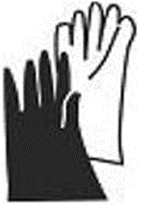
Table (3): Indications for glove use in health care ( For safe injection practice)
|
Key elements |
Indications |
Precautions |
|
Glove Use
|
Wear non-sterile, well-fitting, single-use gloves: ● When performing venipuncture or venous access injections, because of the potential for blood exposure at the puncture site ● If the health worker's skin is NOT intact (e.g. through eczema, or cracked or dry skin) ● If the patient's skin is NOT intact (e.g. through eczema, burns or skin infections). |
When undertaking injections, DO NOT use gloves: ● For routine intradermal, subcutaneous and intramuscular injections ● If the health worker's skin is intact ● If the patient's skin is intact. |
|
Recommendations |
|
Do not administer medications from a syringe to multiple patients, even if the needle or cannula on the syringe is changed. Needles, cannula and syringes are sterile, single-use items; they should not be reused for another patient nor to access a medication or solution that might be used for a subsequent patient (Strong recommendation, High grade evidence) |
|
Use needles and syringes for one patient only (this includes manufactured prefilled syringes and cartridge devices such as insulin pens). (Strong recommendation, High grade evidence)
|
|
Use fluid infusion and administration sets (i.e., intravenous bags, tubing and connectors) for one patient only and dispose appropriately after use. Consider a syringe or needle/cannula contaminated once it has been used to enter or connect to a patient’s intravenous infusion bag or administration set (Strong recommendation, Moderate grade evidence) |
1.8.2
Rationale (Annex 1. Safe Injection Myths CDC)
●
Spiking a bag, vial, or bottle of sterile fluid with a dispensing
device and leaving that device in place to withdraw medication for multiple
patients increases the risk for microbial contamination.
●
Never store needles and syringes unwrapped because sterility
cannot be ensured. Keep unwrapped syringes in the original package (e.g.,
intradermal syringes).
●
Place only pre-filled flush syringes (e.g., saline, heparin) that
are terminally sterilized by the manufacturer after packaging onto a sterile
field immediately after opening.
●
Never place items sterilized by manufacturers before final
packaging onto a sterile field (e.g., some types of IV tubing and pre-filled
syringes).
●
Never pool left over parenteral medications (vials or IV
solutions) for later administration.
➡️IV
Solutions
● Use an IV solution (e.g., bag, bottle) for only one patient, and then discard.
● Use needleless spiking devices to remove fluid from IV bottles/bags and vials and use for only one patient.
● Never use a container of IV solution (e.g., bag, bottle) to obtain flush solutions for more than one patient.
● Never use infusion supplies, such as needles, syringes, and administration sets, for more than one patient.
● Use needle free systems for all aspects of parenteral medication administration and transfer of solutions between containers.
● Avoid removing closed system transfer devices used for chemotherapy administration once attached. If a second medication needs to be administered, the device should remain on the port, and be flushed before connecting the second medication.
➡️Syringes and Needles
● Remove needle, cannula, syringe and/or accessory items from sterile packaging immediately before use.
● In the clinical setting, avoid using Pharmacy Bulk Packages of sterile unwrapped syringes whenever possible. These bulk packages are primarily intended for use under a Laminar airflow system for medication compounding. If used for a mass immunization clinic or allergy testing, open a new, sterile package and discard any remaining syringes at the conclusion of the activity. Do not save for later use.
● Do not prepare medication in one syringe to transfer to another syringe (e.g., Healthcare personal draws up solution into a syringe then transfers the solution to a syringe that has the plunger removed or injects it into the bevel of the syringe).
● Never use a syringe for more than one patient even if the needle has been changed between patients. (Annex 2. One and Only Campaign)
● Use a new sterile syringe and a new sterile needle for each entry into a vial or IV bag.
● Utilize sharps safety devices (needles/syringes) to administer injections whenever possible.
Discard syringes, needles, and cannulas in an approved sharps container/receptacle immediately after use and at the point of use. (Annex 3. One-hand scoop technique)
● Discourage the transporting of medication filled syringes in pockets or clothing.
●Draw up medication into a syringe as close to administration time as feasible.
●Label all syringes containing medication if not immediately administered.
|
Recommendations |
|
Ensure single-dose or single-use vials, ampules, and bags or bottles of parenteral solution are used for one patient only. Do not combine leftover contents for later use (Strong recommendation, High grade evidence) |
|
Use single-dose vials for parenteral medications whenever possible (Strong recommendation, High grade evidence) |
|
If multidose vials must be used, both the needle or cannula and syringe used to access the multidose vial must be sterile (Strong recommendation, High grade evidence) |
|
Dedicate multidose vials to a single patient whenever possible. If multidose vials are used for more than one patient, restrict the medication vials to a centralized medication area and do not bring them into the immediate patient treatment area (e.g., operating room, patient room/cubicle) (Strong recommendation, High grade evidence) |
|
Store multidose vials in accordance with the manufacturer’s recommendations; discard if sterility is compromised or questionable (Strong recommendation, High grade evidence) |
|
Consider the use of syringes with a sharps injury protection feature (SIP devices), as opposed to syringes without a sharps injury protection feature, by health care workers (HCWs) delivering intramuscular, subcutaneous or intradermal injectable medications to patients (Conditional recommendation, Moderate grade evidence) |
|
Consider the use of syringes with a re-use prevention feature (RUP devices), as opposed to devices without, by HCWs delivering intramuscular, subcutaneous or intradermal injectable medications to patients (Conditional recommendation, very low-quality evidence) |
|
Wear a surgical mask when placing a catheter or injecting material into the spinal canal or subdural space (i.e., during myelograms, lumbar puncture and spinal or epidural anesthesia) (Strong recommendation, Moderate grade evidence) |
1.8.3 Rationale
Outbreak can occur by unsafe injection practices such as syringe reuse and misuse of medications vials. The misuse of vials mainly involves the reuse of single-dose vials. These types of vials should only be used once for a single patient. Single-dose vials typically lack preservatives; therefore, using these vials more than once carries substantial risks for bacterial contamination, growth and infection.
Medication Vials (Annex 4. Single dose vial vs Multi dose vial)
● Always follow the manufacturer’s instructions for storage and use.
● Check the manufacturer’s expiration date on all medication vials prior to use.
● Inspect vials and discard if sterility is known or suspected to be compromised. Examine vials for particulate matter, discoloration, or turbidity; if present, do not use and discard immediately.
● Read the vial label carefully. Vial size does not indicate whether or not a vial is single- use or multidose.
● Store vials with same-colored labels and/or same medication with different dosages separately.
● Discard any vial that has been placed on a known or visibly contaminated surface or a used procedure tray.
● Following an emergency event, discard all opened or needle-punctured vials.
➡️Single-dose vials
● Single-dose/single-use vials (SDVs) should only be used for a single patient during a single patient encounter.
● Vials must be discarded after this single use. Never return vials after this single use to stock in medication rooms, to medication/drug carts, etc.
● A new needle and a new syringe must be used if a single-dose/single-use vial must be entered more than once during a single procedure for a single patient.
● Never pool, combine, or store the contents of single-dose/single-use vials.
➡️Multi-dose vials
● Only vials that are clearly labeled by the manufacturer as appropriate for multiple uses may be used more than once.
● Whenever possible, use multi-dose vials (MDVs) for only one patient to reduce the risk of contamination.
● Use a new needle and new syringe for every entry into a multi-dose vial.
● Do not leave needles or other objects in vial entry diaphragms between uses. Doing so increases the risk of contamination.
● Using an alcohol pad, disinfect the rubber septum of vials before piercing by scrubbing vigorously.
● Allow the septum to air dry before inserting a needle or other device into the vial.
● If a multi-dose has been opened or accessed (e.g., needle-punctured) the vial should be dated at the time it is opened or accessed and discarded within 28 days unless the manufacturer specifies a different (shorter or longer) date for that opened vial.
●Multi-dose vials should not enter the patient care area and should be stored outside the immediate patient care area and under manufacturer storage recommendations.
➡️Flushing
● Use single-use containers for flush solutions, whenever possible.
● If a multidose vial must be used, use it for only one patient and then discard it.
● Use a new, unused sterile needle and new, unused sterile syringe for each entry into the vial.
➡️Point-Of-Care Testing (e.g., Blood Glucose, Coagulation Studies)
● Lancets
o Use single-use, auto-retracting lancing devices for each patient.
o Dispose of all capillary tubes and sharp devices in a sharps container immediately after use and at the point-of-care.
o Dedicate pen-like lancing devices to one patient and label the device with the patient’s name; do not reprocess for use on other patients.
● Testing devices (e.g., blood glucose meters)
o Whenever possible, blood glucose meters should be assigned to an individual person and not be shared.
o If blood glucose meters must be used on more than one patient, ensure they are labelled by the manufacturer for multiple patient use and include adequate instructions for disinfection of the meter between patients.
o Clean and disinfect multiple patient use meters (specifically for bloodborne pathogens and other infectious agents) after each patient use, using manufacturer recommendations. If the manufacturer does not provide instructions for cleaning and disinfection, then the testing meter should not be used for more than one patient.
o Avoid handling test strip containers with soiled gloves to avoid contamination. If a new test strip is needed, discard soiled gloves and perform hand hygiene before obtaining a new test strip.
o Clean visible blood and dirt from meters before disinfecting.
o Use an Environmental Protection Agency (EPA) / Egyptian Ministry of Health and Population (MohP) approved disinfectant and follow manufacturer’s contact time when disinfecting meters between patients.
● Use a mask to contain respiratory droplets when preparing and injecting solution into an intracapsular space (joint), the spine and during lumbar puncture.
● Disinfect catheter hubs, needleless connectors, and injection ports before accessing. Use either an antiseptic containing port protector cap or vigorously apply mechanical friction with chlorhexidine/alcohol, sterile 70% isopropyl alcohol, or other approved disinfectant swab.
➡️Injection Safety Breaches
Some types of infection control breaches, including, but not limited to, medication injection practices pose a risk of blood borne pathogen transmission. Infection control breaches are divided into two categories based on the qualitative risk assessment:
● Category A errors correspond to gross mistakes in infection control practices, typically with identifiable risk. The risk assessment is based on documented bloodborne pathogen transmission in association with similar practices in the past, or the observed or very high likelihood of blood exposure as a result of the breach. Examples of Category A errors include: 1) reuse of needles or syringes between patients; and 2) reuse of contaminated syringes to access multi-dose medication vials or intravenous fluid bags.
● Category B errors correspond to breaches of infection control where the likelihood of blood exposure resulting from the breach is uncertain but thought to be less than would occur with a Category A breach.
1.9 Indicators for Monitoring
1.9.1 Facility-level injection safety
● KPI Definition:
Percentage of healthcare facilities where all therapeutic injections are given
with new, disposable, single-use injection equipment.
● What to measure:
This indicator assesses the implementation of policies to ensure that all
health facilities practice injection safety.
● Rationale:
This indicator is relevant in countries that experience outbreaks of healthcare
injection-associated HIV infection, that have a history of unsafe injection
practices (more than 0.25 unsafe injections/per person/per year) and/or that
have a prevalence of hepatitis C infection >2%.
● Numerator:
Number of sampled healthcare facilities where all therapeutic injections are
given with new, disposable, single-use injection equipment
● Denominator:
Number of facilities sampled
● Method of measurement: For the numerator and denominator. Health facility
survey
● Disaggregation:
Type of site.
1.10 Plan to Update this National Clinical Guideline
1.10.1 This guideline
will be reviewed and updated at least every three years, or when new evidence
emerges that is likely to influence the recommendations.
