
Book
Guidelines for Obstetrics and Gynecology Nursing Procedures
- Laparoscopic Techniques
- Open Access: A method developed by Hasson, used in the following cases:
- Patients who have had previous abdominal surgeries.
- Identification of unknown sources of bleeding during surgery.
- Umbilical hernia.
- Adhesions around the umbilicus.
This technique involves a Palmer test to determine the entry point, followed by trocar and cannula insertion. - Blunt Trocar Laparoscopy: Used when there are no adhesions around the umbilicus.
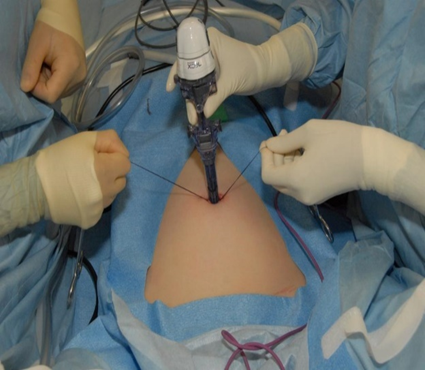
3. Contact Laparoscopy: A less common technique that involves inserting a Veress needle to insufflate the pelvis with carbon dioxide gas, followed by the insertion of a trocar and cannula.
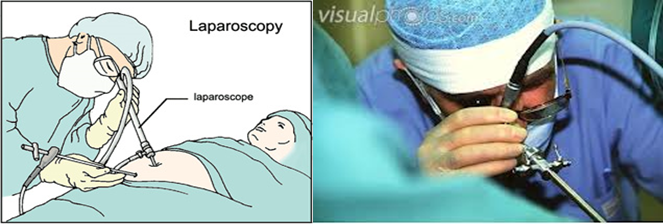
4. Panoramic Laparoscopy: A technique that provides a wide view during surgery, reducing the surgical time and helping to minimize bleeding. It also allows for surgical interventions to be performed at the time of diagnosis.
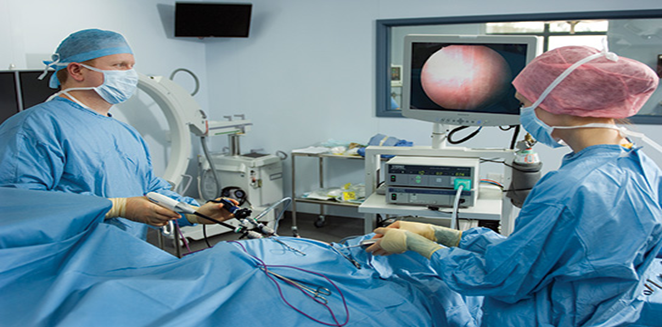
Laparoscopy Unit Contents
1- Camera and Monitor Unit:
a- Display Screen
b- Camera Unit
c- Recording Device
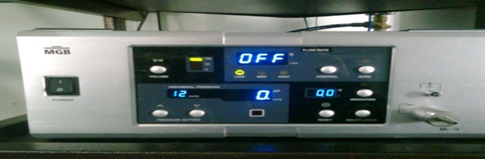
2- Air Pressure Device (Insufflator)
3- Light Source:
a- To improve visibility within the pelvic area
4- Cautery, Suction, and Irrigation Unit:
a- Cautery (Diathermy)
b- Suction Machine
c- Irrigation Machine
5- Anesthesia Equipment:
a- Anesthesia Machine
b- Device Supplies:
- Laryngoscope
- Suction Tubes
- Intravenous Cannulas
- Syringes of Various Sizes
- Air Tubes
- Electrocardiogram Electrodes
- Rubber Gloves
- KY Jelly for Improved Contact
- Adhesive Tape for Securing Cannulas and Tubes
6- Water Basin:
a- Two basins for sterilizing tools (using Cidex)
b- A basin for washing tools (using saline solution)
7- Protective Covers:
a- 3 covers for drapes
b- 6 Towels
c- 4 Surgical Gowns
d- Open Towel
e- Lens Support Tray
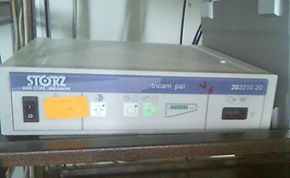
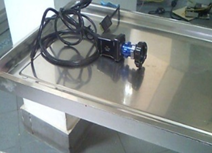
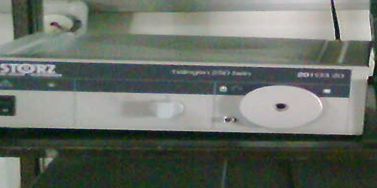
8- Video monitor camera unit
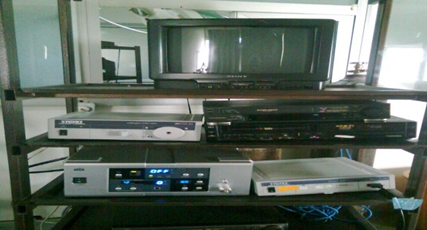
Includes:
A-Monitor (used with camera unit for reflect the image of intra-abdominal cavity)

B- Camera unit (for reflect the image of intra-abdominal cavity)
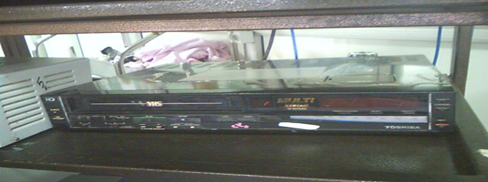
C-Vdeo (for record laparoscopy procedure)
2-Insufflators machine
3-Source of light
For good visualization of intra-abdominal cavity
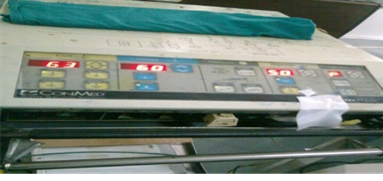
a - Electro Cautery or diathermy
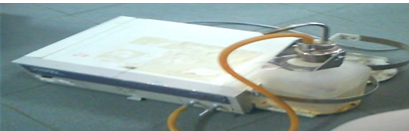
Suction and
Irrigation Device
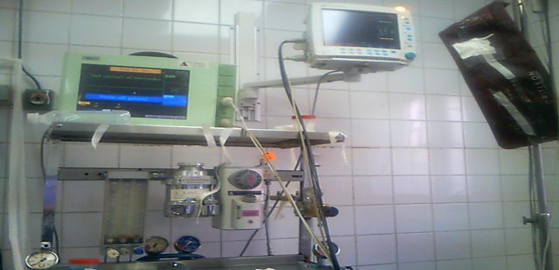
Anesthesia cart
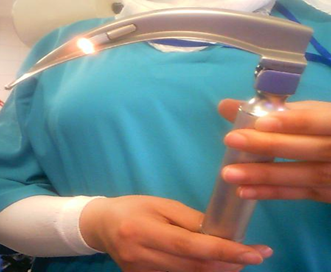
Laparoscopic Instruments:
- Vaginal Table
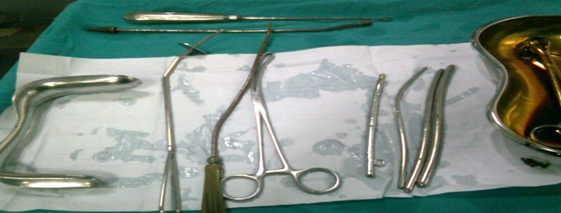
Vaginal Table Instruments
|
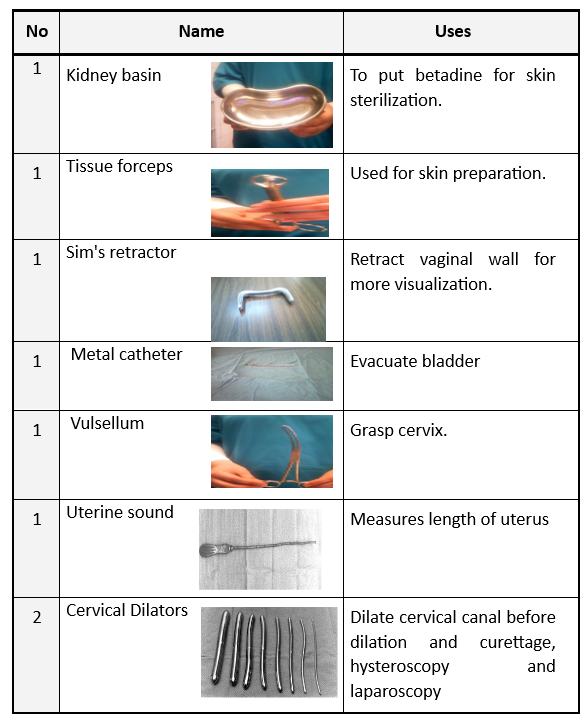
No. |
Name |
Usage |
|
1 |
Kidney Basin |
To apply betadine for skin disinfection. |
|
2 |
Tissue Forceps |
For skin preparation. |
|
3 |
Sims Scapel |
To retract the vaginal wall for improved visibility. |
|
4 |
Metal Catheter |
To empty the bladder. |
|
5 |
Valsalva |
To grasp the cervix. |
|
6 |
Uterine Sound |
To measure the length of the uterus. |
|
7 |
Cervical Dilators |
To dilate the cervical canal. |
|
8 |
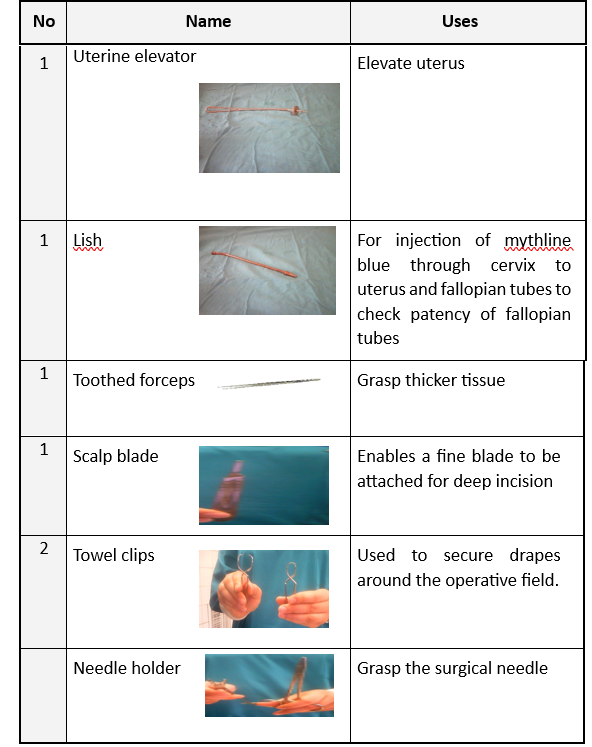
Uterine Manipulator |
To lift the uterus. |
|
9 |
Leech |
To inject blue dye into the cervix and fallopian tubes to check for patency. |
|
10 |
Serrated Forceps |
To grasp thick tissues. |
|
11 |
Scissors Blade |
To make deep incisions. |
|
12 |
Towel Clamps |
To secure drapes around the surgical area. |
|
13 |
Needle Holder |
To hold the surgical needle. |
|
14 |
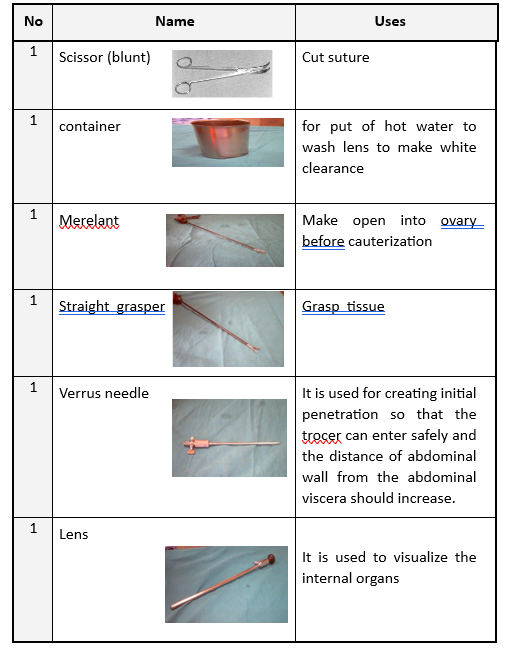
Blunt Scissors |
To cut sutures. |
|
15 |
Container |
To place warm water for cleaning the lens. |
|
16 |
Meriland |
To open the ovary before cauterization. |
|
17 |
Straight Forceps |
To grasp tissues. |
|
18 |
Veress Needle |
To safely penetrate the abdomen. |
|
19 |
Lens |
For viewing internal organs. |
|
20 |
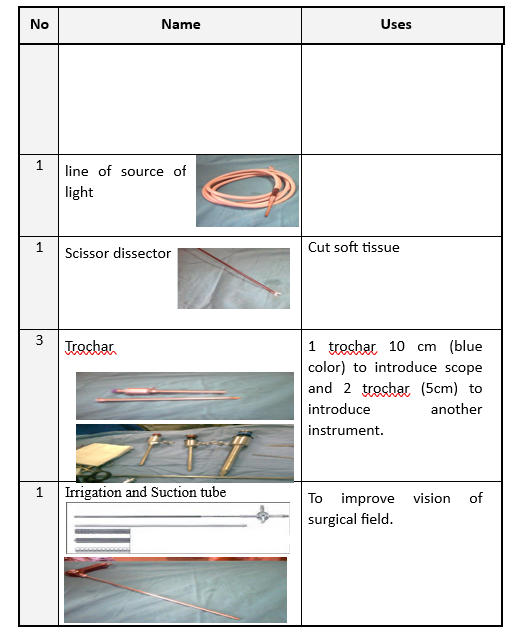
Light Source Cord |
To illuminate the surgical area. |
|
21 |
Dissector Scissors |
To cut soft tissues. |
|
22 |
Trocar |
To insert the cannula and trocar. |
|
23 |
Suction and Irrigation Tube |
To improve visibility of the surgical area. |
|
24 |
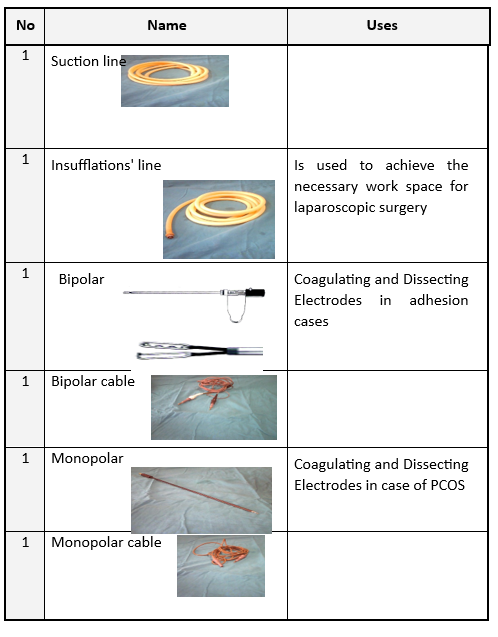
Suction Line |
|
|
25 |
Insufflation Line |
To provide necessary space for laparoscopic surgery. |
|
26 |
Bipolar Cautery |
To coagulate and divide tissues in cases of adhesions. |
|
27 |
Bipolar Cautery Cable |
|
|
28 |
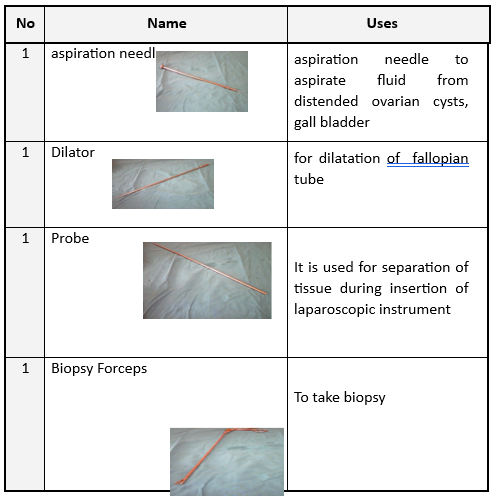
Aspiration Needle |
To aspirate fluid from ovarian cysts. |
|
29 |
Manipulator |
To dilate the fallopian tube. |
|
30 |
Probe |
To separate tissues when inserting laparoscopic instruments. |
|
31 |
Biopsy Forceps |
For obtaining a biopsy. |
Technique for Performing Laparoscopic Gynaecology
- Disinfect the skin with betadine in the lithotomy position.
- Cover the area.
- Place the Sims scapel.
- Empty the bladder using a metal catheter.
- Grasp the cervix with Valsalva.
- Measure the length of the uterus with a uterine sound.
- Dilate the cervix if necessary.
- Place the uterine manipulator and secure it with Valsalva.
- Change gloves and position the patient supine.
- Inject xylocaine and make an incision at the umbilicus.
- Perform an insufflation test and inflate the pelvis with carbon dioxide gas.
- Insert the trocar and cannula.
- Insert the second and third trocars.
- Test the blue dye, irrigation, and suction.
- Perform the surgery.
- Check for bleeding and remove the instruments.
- Close the incisions and clean them.
Advantages of Laparoscopic Gynaecology
- Rapid diagnosis of gynaecological conditions.
- Reduced complications.
- Smaller incisions.
- Less pain.
- Faster recovery.
Disadvantages of Laparoscopic Gynaecology
- Limited movement for the surgeon.
- Dependent on the surgeon’s expertise.
- High cost of instruments.
- Need for specialized training.
- Station-related complications.
Complications of Laparoscopic Gynaecology
Minor Complications:
- Nausea and vomiting.
- Mild infection.
- Mild bleeding.
- Chest and shoulder pain.
- Skin burns.
- Formation of painful cicatrix.
Major Complications:
- Vascular injury.
- Severe infection.
- Organ damage.
- Bowel injury.
- Gas explosion.
- Anesthesia complications.
- Nerve injury.
Nursing Management for Women Undergoing Laparoscopy
Preoperative Care:
- Assess the patient.
- Discontinue anticoagulant medications.
- Prepare the bowels.
- Prepare the bladder.
- Perform a preoperative shower.
- Provide patient education.
Caution When Handling Laparoscopic Instruments:
- Use the instruments only by trained nurses.
- Handle gently.
- Avoid stacking instruments.
- Clean the optical lenses.
