
كتاب
Pigeon Diseases
- Bacterial diseases
Paratyphoid- Salmonellosis
This very common and quite widespread is caused by a gram-negative bacterium which is flagellated, therefore mobile. It can be brought into a loft either through introduction of infected pigeons, by rodents, through inhalation of infected dust, on the soles of fancier’s shoes, by roaches, or through contact with wild pigeons. Often an adult bird that has overcome the disease remains a carrier and continues to produce infected droppings.
Clinical signs:
- Most adult birds will show rapid weight loss, along with somewhat loose, greenish droppings.
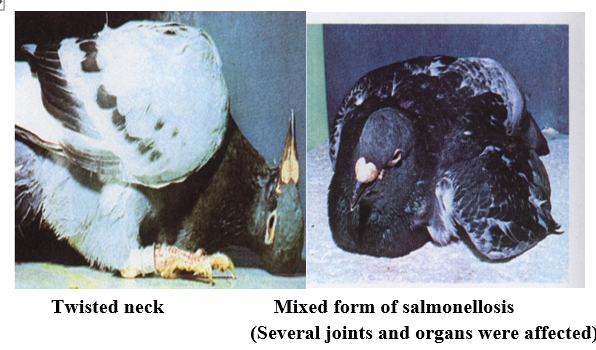
- Some birds may develop swelling in the leg joints or feet, or may develop wing boils.
- Other birds may have the "twisted neck" syndrome commonly associated with PMV.
- Baby birds will often show labored breathing or die in the nest before the second week after hatching.
Prevention
- Loft hygiene is critical, because salmonella flagellates can live in the droppings for some time. But once Antibacterial is given in the drinking water of the pigeons, the droppings will stop being infected with salmonella.
- Regular cleaning and disinfecting of lofts, feeders and drinkers is imperative.
- Minimizing contact with rodents, roaches and wild birds, quarantining newly acquired birds, and maintaining an acid pH level below 4.0 in lofts are all helpful steps in keeping this disease under control.
