
Book
Pigeon Diseases
- Chlamydophila's(ornithosis)
Ornithosis is an infectious disease that affects many bird species worldwide. It can also be transmitted to humans and other mammals. Ornithosis is a notifiable disease in pigeons caused by Chlamydia psittaci. Chlamydia are small, non-motile micro-organisms that invade cells parasitically. Infection occurs via inhalation of stirred-up dust containing the pathogen, uptake of fecal contaminated feed or water, or else billing or feeding of squabs.
Symptoms
Ornithosis occurs in 2 forms:
The acute form can be recognized in young pigeons from: wheezing noises, uni or bilateral conjunctivitis and muco-aqueous enteritis with diarrhea.
The chronic form is more often found in adult birds, which, however, show few or no signs of the disease. Pigeons that have recovered are a dangerous source of infection for young pigeons and for humans due to their latent shedding of the pathogen.
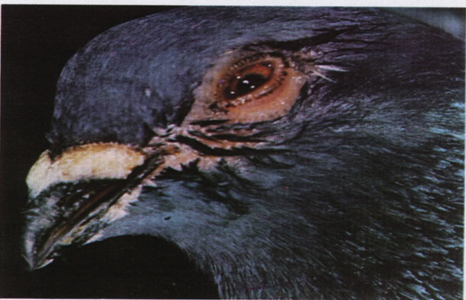
Severe conjunctivitis, weeping and sticking together of feathers
Diagnosis
The disease can be demonstrated in dead pigeons by microscopic examination of a smear or impression ("klatsch") preparation of spleen, liver, conjunctiva or air sac that has first been stained using the method according to Stamp. In live birds, the pathogen is demonstrated in feces, via a sink dab from the cloaca, or alternatively by serological identification of specific antibodies.
Treatment
Flocks are treated with chlortetracycline, which has been successfully used for many years to control ornithosis. In order to maintain effective blood levels, administration of chlortetracycline+ must not be interrupted during the 30-day treatment period.
