
كتاب
Pigeon Diseases
- E. coli or Collibacillosis
This disease, which is now thought to be more prevalent in pigeons than once suspected, is caused by gram negative bacteria's which can invade our lofts through infected dust particles, rodent droppings, and trough infected pigeon droppings coming into contact with eggs in the nest. Infected adult pigeons will emit the bacteria throughout a pigeon loft.
Clinical signs:
Since the E. coli bacteria can manifest themselves in any part of the pigeon's body, symptoms can be diverse. Most often young will die in the nest, adult birds will become listless and lose weight, and their droppings will become loose, mucous, and greenish-yellow in appearance. Sometimes the droppings will have a foul odor. Occasionally some birds may have nasal discharges and respiratory problems associated with this disease.
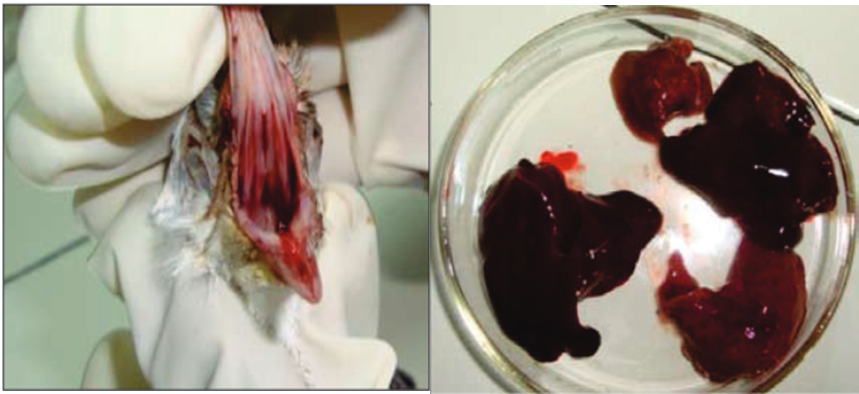
Bleeding from oral cavity (Left) and Post mortem lesions –necrosis of liver (Right).
Prevention
Maintaining good loft hygiene and keeping rodents away from feed and water are very important. Also keeping dust and ammonia levels down will help to control any outbreaks.
General Antibiotics
Any fancier would be well advised to have a good general antibiotic. They can be useful as "first choice" drugs if and when problems occur. General antibiotics are effective against a broad range of both gram positive and negative bacteria. But excessive use of them can really damage the microflora of the bird, therefore most veterinarian suggest a use of probiotic and will have the same effect that any antibiotic, but will leave the good bacteria and keep the balance of the pigeon intact.
