
كتاب
Pigeon Diseases
- Mycoplasmosis
The chronical form of catarrh in pigeons often is called "Mycoplasmosis". It is caused by a multiple infection with pathogens: bacteria (e.g. Cocci), viruses (e.g. Herpes) and pathogens which belong to the group of mycoplasma organisms. It is assumed that mycoplasma causes severe conditions only in the presence of other infections.
Etiology: Mycoplasma organisms are viable only for a short period (approx. 17 days at 20°C, but only 20 minutes at 50°C). Low temperatures favor their survival. Mycoplasma organisms are killed by almost all commonly used disinfectants, e.g. disinfectants. Transmission takes place through the feces, the drinking-water, feed, equipment and by droplet infection from pigeon to pigeon.
Clinical signs: Mucopurulent discharge from the nose, reduced flying performance, unwillingness to fly, flying awkwardly, throat inflammation, rattling and wheezing sound of respiration particularly noticeable by night. Air sac inflammation.
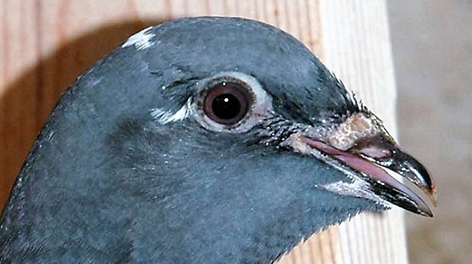
Acute mycoplasmosis,lachrymation, panting
P.M. examination: air sac inflammation
Prevention
Elimination of possible factors that reduce the bird's resistance to infection. Such factors may be: overcrowding in the loft, lack of cleanliness, latent infections (e.g. ectoparasites, worm infestations, coccidial infection),
