
Book
Pigeon Diseases
- Ectoparasites in pigeon
Ectoparasites are widespread in pigeon flocks.
Etiology:
Feather lice, scaly-leg mites and body mange mites live permanently on infested pigeons, leaving them only to seek new hosts. Pigeon ticks, bird ticks and red bird mites attack pigeons only periodically at night to suck blood. Otherwise, they conceal themselves in cracks in the loft. They can transmit pathogens.
Recognition of the disease:
Feather lice are visible in the pigeon's feathers with the naked eye. Infestation with body mange mites and scaly-leg mites can be confirmed by microscopic examination of a scraping from inflamed skin. Pigeon and bird ticks and red bird mites can be detected with the naked eye in cracks in the loft - ideally in the early hours of the morning, when the parasites leave the birds in search of a hiding place. They are also found under feeding troughs and nest bowls.
|
Pigeon lice |
Lice on the neck |
|
lice move to the surface of the feather. |
scaly mite infestation. |
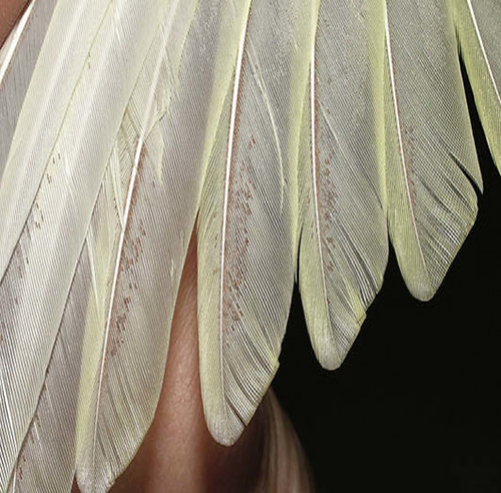
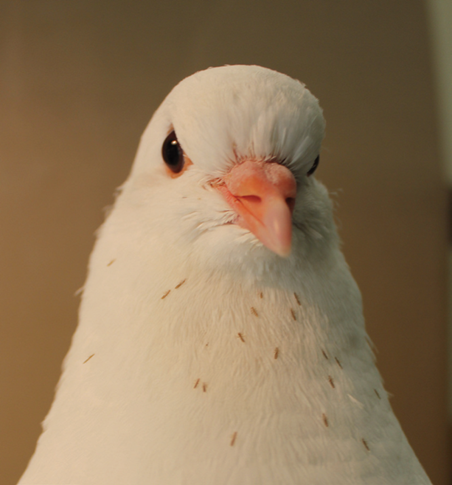
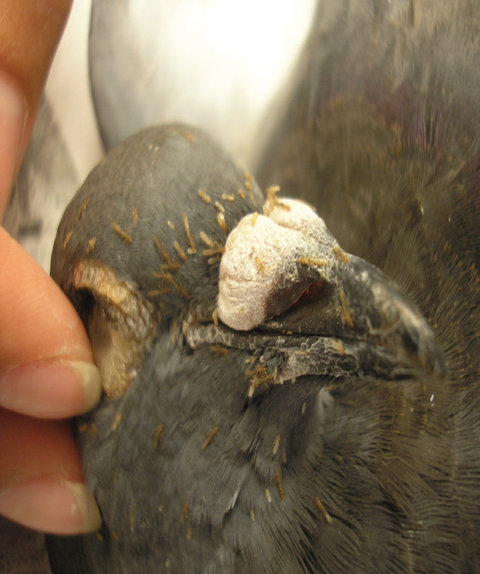
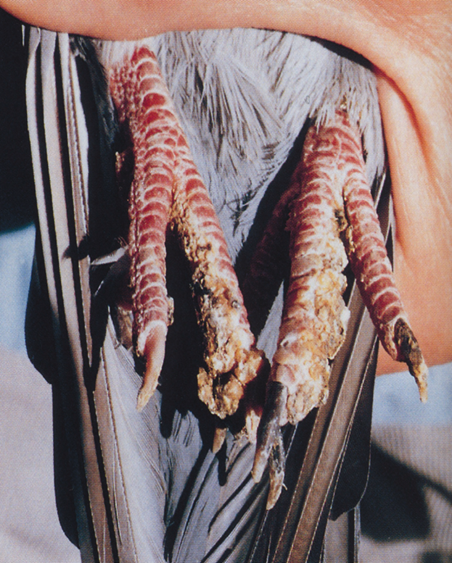
Ectoparasites on pigeon's feathers
Prevention
Clean feed and water vessels with hot water. Regular bathing in clean water at least once a week protects pigeons against parasite infestation
A- Long Louse
Found on feathers of the whole body. They feed on feather scuff and cause little damage.
Treatment: Dipping and dusting the loft and the birds with pesticides.
B- Small Louse
Do not like light and are found on the underside of the body feathers. They eat feather scurf and cause prickling and burning irritation.
Treatment: Dipping and dusting the loft and the birds with pesticides.
C- Feather Mite
Found on the feathers shaft of the flight feathers. Causes much irritation.
They appear as small black specks on the sides of the feather’s shafts.
Dipping and dusting the loft and the birds with pesticides.
D- Itch Mite
These mites cause feathers to fall out. They burrow through the feathers
shaft into the follicle. If feathers have a swollen root, it is probably Itch
Mite. The feather shaft swells and then the feather is shed. Small pale spots appear on the underside of the feathers on the breast, wings, back and neck.
Dipping and dusting the loft and the birds with pesticides.
E- Red Mite
These mites will note be found on the pigeon when examine it. The Red
Mite hides in small cracks and crannies during the day. They come out at
night to feed on the blood of the pigeon. The mite causes irritation and
damage through blood sucking.
Dipping and dusting the loft and the birds with pesticides.
