
Book
Infertility in she camel
- B. Early embryonic death (EED syndrome)
Early embryonic death (EED) refers to the fetal mortality, most probably not later than 50 days of gestation. Animals that refuse the male 2 weeks after mating as if they were pregnant; however, later on (> 30 days) they return to estrus and accept the male.
The loss is considered an early pregnancy loss if it occurs before 50 days of gestation. Usually, there are no generalized or obvious signs of loss, but when pregnancy is beyond or up to 35 days small amounts of fleshy tissue and fluid can be recognized near the manure mass. In several cases, the owner does not even recognize pregnancy and considers the female open because she may show signs of receptivity when there are mating animals or by the presence of any male in the zone. sometimes females do not develop abdominal distention or cushing in late gestation.
Causes of EED
Key factors attributed to EED issues in Camelidae include: -
• Genetic causes
• CL insufficiency
• Unreceptive uterine environment; nevertheless, no factor can be changed to promote embryo sustainability.
Heat stress, chromosomal abnormalities, or genetic factors (such as lethal genes, segregation, mutation, structural abnormality, aneuploidy, e.g., monosomy, trisomy, polyploidy, multiple numbers of haploid chromosomes, polyspermia, etc.), nutritional factors (such as a lack of proteins, vitamins, microminerals, the effect of toxins and nitrate poisoning, etc.), abnormal hormonal situations/endocrine factors (such as low progesterone), energy balance (an important factor in retaining pregnancy), genital infections (which may be specific or nonspecific), venereal diseases (such as Trichomiasis, Brucellosis, Trypanosomiasis, etc.), uterine environment, immunological factors (normally immune suppressors produced by mothers, if not produced, cause fetus rejection), effect of palpation (improper timing of palpation), improper timing of Artificial insemination (late AI aged embryo), twin pregnancy, effect of the male (such as lethal genes, abnormal chromosomes, venereal diseases, etc.), infectious causes, and other proper causes, such as older animals, are among the causes of EED in camels. Moreover, inbreeding of herds is considered one of the basic causes of fetal death. The rate of abortion due to infections varies from 10% to more than 70% in some areas of the world. In llamas and alpacas, the most common reasons for abortion are leptospirosis, chlamydiosis, and toxoplasmosis. Whereas, in camels of the Middle East and Africa, brucellosis and trypanosomiasis are considered major causes of infectious abortion.
◾ Maternal factors of early embryonic death in she camel
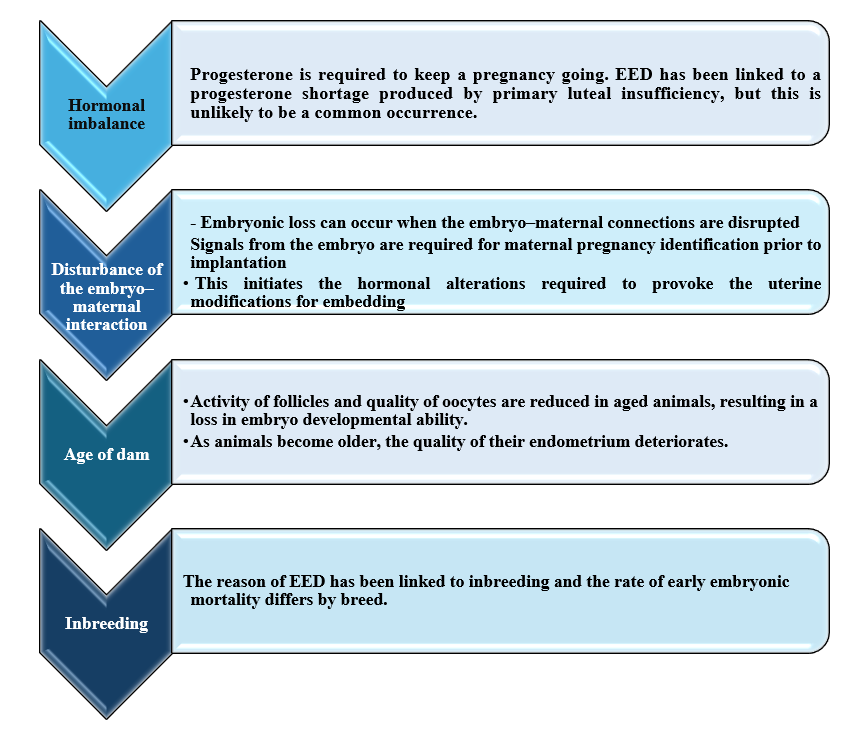
◾ External factors od early embryonic death in she camel
1. High environmental temperature
- Extreme temperature in the course of initial months of pregnancy might also be harmful to the embryo.
- Extreme uterine temperature has been shown to have a direct detrimental effect on the embryo, as well as the pushing of blood away from the uterus to the outside to maintain body temperature, result in a decreased nutrients load.
2. Specific nutritional deficiencies or malnutrition
- The embryo can be harmed by certain nutrient deficits or starvation.
- EED can be caused by a significant deficits of vitamins (vitamin A) or other nutrients (Cu, Zn, and I) that function as metabolic supervisors. Poor nutrition or a serious negative energy balance might impact follicular growth, oocyte quality, and oviduct secretory and motile activity, which is where the fertilization process takes place. Also, nutrition has an impact on the very early phases of conception.
3. Stress: Stress has a negative impact on animal reproductive performance. Stress-causing factors (such as transportation, mechanical trauma, isolation, pain, blood pressure alteration, etc.) impact reproductive function by acting on the hypothalamus (GnRH) or ovarian levels (progesterone).
4. Environmental toxicants, teratogenic compounds, and mycotoxins
- When taken during critical early stages of gestation, toxins in the environment, cancer-causing chemicals, and fungal toxins can have devastating consequences on embryonic life.
- In severe cases, acute endometritis has a direct influence on the embryonic environment following mating or artificial insemination and, in severe cases, is accompanied by the synthesis of luteolytic chemicals such as prostaglandins. Endometrial glands are surrounded by layers of fibrous tissue, resulting in a lack of functional glands, depriving the embryo of protein-rich exocrine secretion.
◾ Noninfectious causes of EED in she camel
- In animals, the primary reason for the failure of a pregnancy in its early stages is chromosomal abnormalities. The chromosomal abnormalities account for around 20% of overall embryonic and fetal loss.
