Book
Infertility in she camel
- E. Ovarian inactivity
Ovarian activity in dromedary camel increases during the breeding season in winter and spring months and depends on good food resources, climate conditions, and female body condition.
Causes:
- The adverse body condition.
- Insufficiency of production of gonadotropins from the anterior pituitary.
- failure of the ovaries to respond to gonadotropins.
- improper nutrition.
Clinical signs:
Female camels suffering from ovarian inactivity are usually presented to the clinic with a history of several matings without conception or refuse mating.
Diagnosis
- Trans-rectal palpation: Both ovaries are small, smooth, and firm, with no palpable follicles or corpus luteum, and the uterus is small and atonic.
- Trans-rectal ultrasonography: Absence of any phase of follicular development on the ovaries at two successive examinations with an interval of 7 days (Fig. 16).
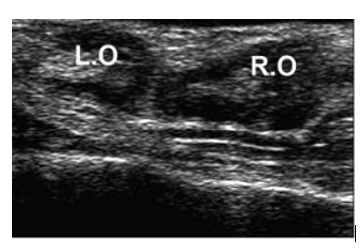
Figure 16. Ultrasound image shows a case of ovarian inactivity. R.O: right ovary; L.O: left ovary (Mansour and Karen, 2021).
Treatment of camel infertility
o For complete vaginal aplasia, females should be separated from males and discarded from the breeding.
o An imperforate hymen is corrected by making an incision through the tissue with a scalpel, however, potential genetic correlation and future breeding should be discussed with the owner.
o Incomplete perforation of the hymen (vestibular narrowing) is fairly common and may be managed successfully with bougienage.
o Vulvar aplasia is also relatively common and surgical repair is controversial.
o Ovarian inactivity: Using multivitamins and mineral supplementation for a week followed by an injection of 1500 IU eCG or using of intravaginal device CIDR for 10 days followed by injection of 1500 IU eCG are reliable protocols to treat the problem of ovarian inactivity in dromedary camels during breeding season (mineral and vitamin premix supplement which contains vitamins A, D, E, B1, B2, B6, B12, C, niacin and pantothenic acid and minerals such as calcium, phosphorus, magnesium, iron, copper, cobalt, iodine, manganese, zinc and selenium was orally administered daily for a week (Day 1-7) (Mansour and Karen, 2021).
o Endometritis:
- Uterine flushing with lactated Ringer’s solution (LRS) or a proprietary equine uterine lavage solution.
- Intrauterine antibiotic infusion, systemic antibiotic administration, or a combination: most antibiotics which can be used in utero can also or alternatively be used systemically and achieve very good concentration in uterine tissue.
- Administration of oxytocin may improve uterine clearance.
- Infusion with 30% DMSO solution or N-acetylcysteine prior to uterine lavage may be considered in chronic cases with thick mucopurulent discharge.
- Biofilm formation is a characteristic of many organisms found in endometritis and the addition of buffered chelating agents (tris-EDTA and Tricide®) may help dissolve the biofilm and improve antimicrobial action.
- A 4% metacresol-sulfonic acid and formaldehyde solution (Lotagen) has provided good results for the treatment of endometritis and metritis in camels.
- Chronic endometritis will lead to the development of degenerative changes or fibrosis. In these cases, the best option in valuable females is embryo transfer.
Success of treatment of endometritis depends on the duration of infection and females should be re-examined after a period of sexual rest.