
كتاب
Equine Laminitis
- The clinical Signs of laminitis
Laminitis can affect a single foot, all four feet, the forefeet alone, or less commonly, the hind feet alone.
A. Peracute form
Peracute laminitis is a severe, rapid onset form of laminitis, a painful inflammation of the laminae, the sensitive tissues in the hoof that connect the hoof wall to the coffin bone. The third phalanx (coffin bone) can start to rotate or sink within the hoof capsule within hours or a few days of the onset of lameness.
B. Acute form
1- Standing position
Very characteristic for laminitic horses.
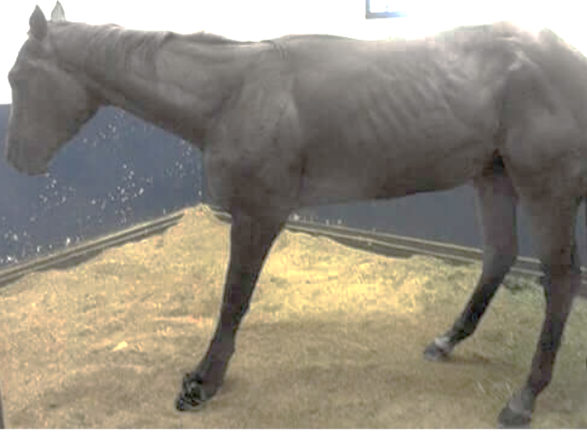
Fig.3 typical standing position of acute laminitic horse.
2- Lameness, especially when a horse is turning in circles; shifting lameness when standing.
3- Heat in the feet.
4- Digital pulse can fill in the feet (most easily palpable over the sesamoidal bone at the level of the fetlock).
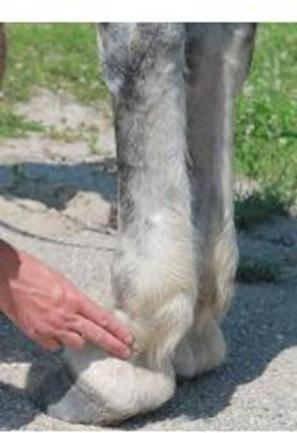
Fig.4 site of pulse detection.
5- Pain in the toe region when pressure is applied with hoof testers.
6- Reluctant or hesitant gait ("walking on eggshells").
A. in chronic form :
1- Rings in hoof wall that become wider as they are followed from toe to heel.
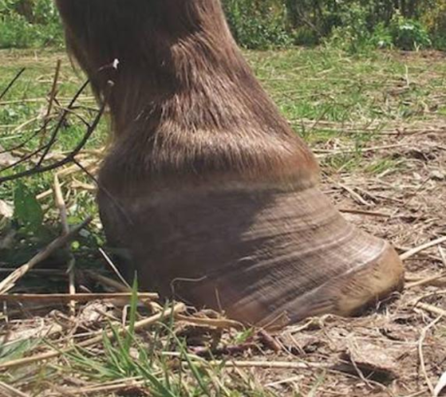
Fig.5 Rings in hoof wall in chronic case.
2- Bruised soles or "stone bruises."
3- Widened white line, commonly called "seedy toe," with occurrence of seroma (blood pockets) and/or abscesses.
4- Dropped soles or flat feet.
5- Thick, "cresty" neck.
6- Dished hooves, which are the result of unequal rates of hoof growth (the heels grow at a faster rate than the rest of the hoof, resulting in an "Aladdin-slipper" appearance).
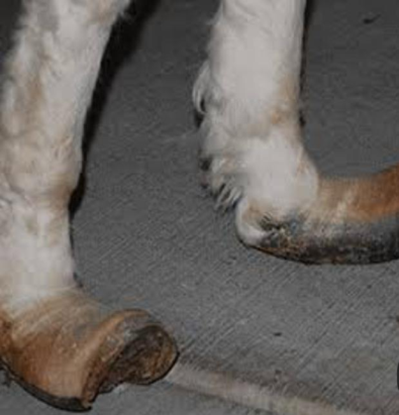
Fig.6 Aladdin-slipper appearance.
