
كتاب
Lumpy Skin Disease (LSD)
- Epidemiology
➡️Historical Background
LSD was first reported in Zambia in 1929 and spread throughout Africa in subsequent decades. In recent years, outbreaks have been reported in the Middle East, Southeast Europe, the Indian subcontinent, and Southeast Asia. LSD was first reported in Egypt in 1988.
➡️Transmission
LSD is primarily transmitted through mechanical vectors (arthropod-borne) such as:
· Biting insects (e.g., Stomoxys calcitrans, mosquitoes)
· Ticks (e.g., Rhipicephalus, Amblyomma)
· Other possible routes include direct contact, contaminated feed and water, and iatrogenic transmission via contaminated instruments.
➡️Risk Factors
· High stocking density of cattle
· Warm, humid climates favouring vector proliferation
· Cross-border or smuggling movement of animals
· Lack of vaccination or weak veterinary infrastructure
· The introduction of new animals to a herd,
· Movement of infected animals into disease-free areas.
· Common pasture and water sources
➡️Pathogenesis
After inoculation via an insect bite or skin lesion, the virus replicates locally and spreads via lymphatic and blood circulation to multiple organs. Viremia develops within 3–5 days post-infection. LSDV has tropism for the skin, lymph nodes, lungs, and reproductive organs. Lesions are characterized by severe vasculitis, necrosis, and granulomatous inflammation.
➡️Clinical symptoms
➡️Symptoms
· Incubation Period: 4 to 14 days.
· High fever (up to 41°C)
· Anorexia and depression
· Firm skin nodules (1–7 cm in diameter), particularly on the neck, limbs, perineum, and udder.
· Enlargement of superficial lymph nodes: Regional lymph nodes are swollen,
· Edema develops in the udder, brisket, and legs.
· Nasal and ocular discharge
· Infertility and abortion in breeding animals
· Decreased milk production
· Secondary bacterial infections of skin lesions and other organs
➡️The development of the characteristic nodules in LSD
· The nodules are well circumscribed, round, slightly raised, firm, and painful and involve the entire cutis and the mucosa of the GI, respiratory, and genital tracts.
· Nodules may develop on the muzzle and within the nasal and buccal mucous membranes. The skin nodules contain a firm, creamy-gray or yellow mass of tissue.
· Secondary infection sometimes occurs and causes extensive suppuration and sloughing; as a result, the animal may become extremely emaciated, and euthanasia may be warranted.
· The nodules either regress, or necrosis of the skin results in hard, raised areas (“sit-fasts”) clearly separated from the surrounding skin. These areas slough to leave ulcers, which heal and scar.
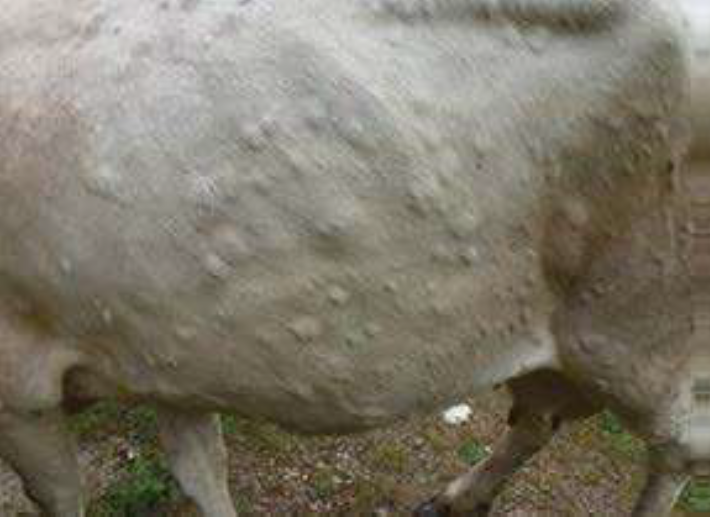
Severely case of LSD in a cow with nodular skin lesions covering the entire body, and enlarged lymph node (Al-Salihi, K. A., & Hassan, I. Q. (2015).
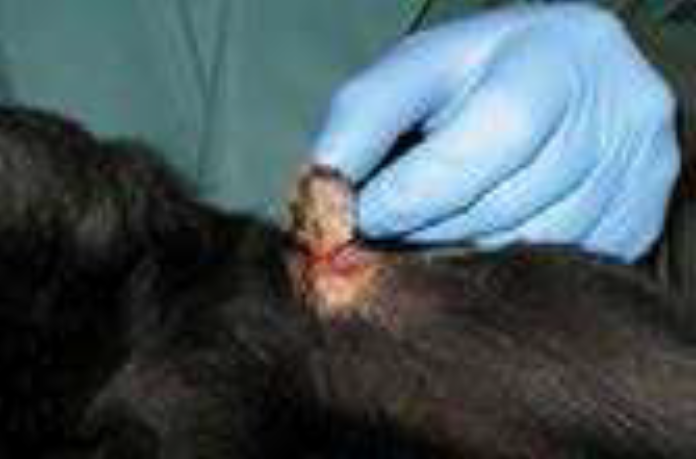
Core of necrotic tissue forms a plug (sit-fast) (Tuppurainen et al., 2017)
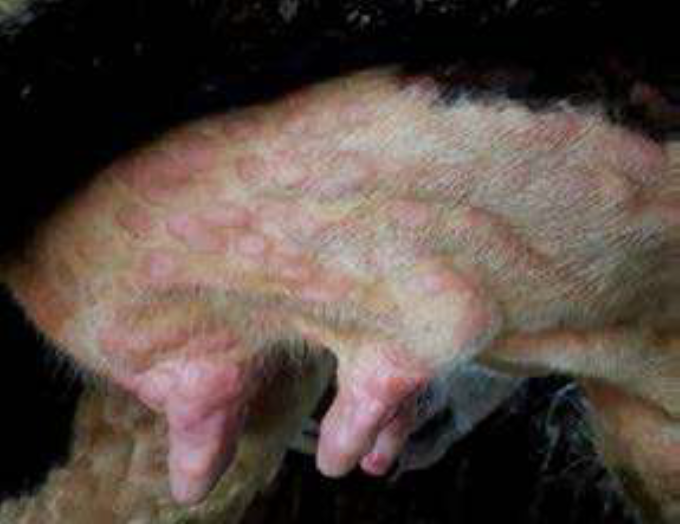
Severe case of LSD with skin nodules covering the udder and teats (Tuppurainen et al., 2017)
➡️Morbidity and Mortality
· Morbidity: 10% to 85%
· Mortality: usually 1% to 5%, higher in susceptible populations
➡️Economic Impact
LSD causes severe economic impact due to the following adverse effects:
· Loss of milk production
· Reduced weight gain and fertility
· Cost of vaccination and treatment
· Trade restrictions due to notifiable
status
In developing countries.
➡️Zoonotic Potential
· LSD is not a zoonotic disease and does not pose a direct risk to human health
