
Book
Stroke Treatment and Nursing Care
-Nursing Care for Patients with Altered Levels of Consciousness
Definition:
These are patients who have lost consciousness and do not respond to environmental stimuli such as touch, sound, or light.
Loss of consciousness is a medical emergency that may result from a wide range of causes, from mild conditions to life-threatening emergencies.
It is a state in which the person does not respond to events or stimuli in the surrounding environment and lacks full awareness.
Causes:
Loss of consciousness may result from various diseases, injuries, or medical emergencies, including:
· Head injuries: trauma resulting from accidents, falls, or blows to the head may cause loss of consciousness.
· Neurological diseases: stroke, encephalitis, or brain tumors may cause loss of consciousness.
· Cardiac disorders: conditions such as myocardial infarction or abnormal cardiac rhythm may lead to loss of consciousness.
· Low blood glucose: severe hypoglycemia may cause loss of consciousness.
· Poisoning: exposure to chemicals or medication overdose may lead to loss of consciousness.
· Hypoxia: airway obstruction or respiratory problems may reduce oxygen delivery and result in loss of consciousness.
· Syncope: this results from a sudden reduction in blood flow to the brain and may occur after standing abruptly or during severe psychological stress.
Signs and Symptoms:
- Pallor.
- Pulse rate below the normal lower limit, generally below 60 beats/minute.
- Low blood pressure.
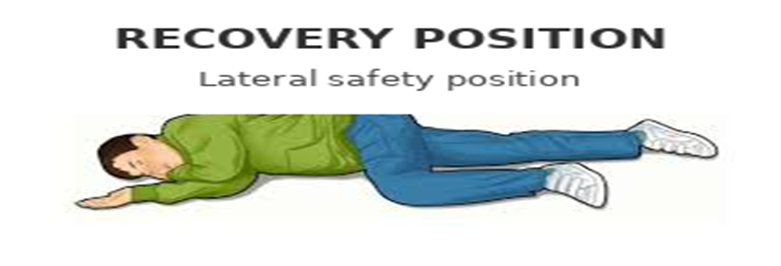
- The person may return to normal within a short period. During recovery, place the patient in an appropriate recovery position. If consciousness does not return, a full medical assessment is required.
During shock or coma:
Observe the pupils, breathing, movement, and level of consciousness.
Listen to the patient’s breathing, count the heart rate, and assess rhythm regularity.
Nursing Role:
1. Ensure that the airway is patent and breathing is adequate.
2. Monitor vital signs.
3. Place the patient in the shock or recovery position as clinically appropriate.
4. Initiate Ringer’s lactate solution or plasma infusion, if available and prescribed.
5. Connect the patient to a cardiac monitor.
6. Obtain an electrocardiogram (ECG).
7. Administer the prescribed medications.
8. Reorient the patient to the surroundings, location, and people present as consciousness returns.
Note: Most uncomplicated episodes of syncope require only an appropriate period of observation, after which the patient may be discharged from hospital accompanied by a family member or relative.
Life-threatening conditions include:
· Acute coronary thrombosis or acute myocardial infarction.
· Severe bradycardia or cardiac arrhythmia.
· Severe gastrointestinal bleeding.
· Pulmonary embolism.
· Renal failure.
· Medication toxicity causing severe cardiac and respiratory depression.
· Sepsis.
· Meningitis.
In such cases, the patient must be admitted for further investigations and appropriate treatment.