
Book
Traumatic disease in cattle
- Traumatic Pericarditis in Cattle
1. Introduction
Traumatic pericarditis is a serious condition commonly observed in adult cattle, especially dairy cows, resulting from the migration of a foreign object from the reticulum through the diaphragm into the pericardial sac. The resulting infection and inflammation impair heart function and may be fatal if not promptly treated. It is part of a broader condition known as traumatic reticuloperitonitis (TRP).
2. Etiology
- Primary cause: Ingestion of metallic foreign objects such as nails, wires, needles..
- Cattle are indiscriminate eaters and often ingest foreign materials while consuming hay or silage contaminated with metal debris.
- The object typically settles in the reticulum due to its weight and the hexagonal folds of reticular mucosa.
- With reticulorumen contractions, the object may penetrate:
- The reticulum wall
- The peritoneum
- The diaphragm
- The pericardium
3. Pathogenesis
1. Ingested metallic foreign body reaches the reticulum.
2. Reticular contractions push the object through the reticulum wall and peritoneum.
3. The object may:
▪️ Perforate the diaphragm
▪️ Enter the pericardial sac, leading to:
- Fibrinous pericarditis
- Purulent pericarditis
- Cardiac tamponade (pressure on heart due to accumulation of fluids in pericardium)
- Extension to pleura or lungs causing pleuropneumonia
4. Inflammatory exudate in pericardial sac leads to cardiac dysfunction, reduced cardiac output, and right heart failure.
4. Clinical Signs
Acute Stage:
- Fever (up to 41°C)
- Anorexia, milk drop
- Painful expression, grunting
- Abduction of elbows
- Arched back, reluctance to move
- Positive withers pinch test and pole test
- Tachycardia, muffled heart sounds
- Pericardial friction rubs (early), then splashing or washing machine sounds
- Jugular distension, brisket edema
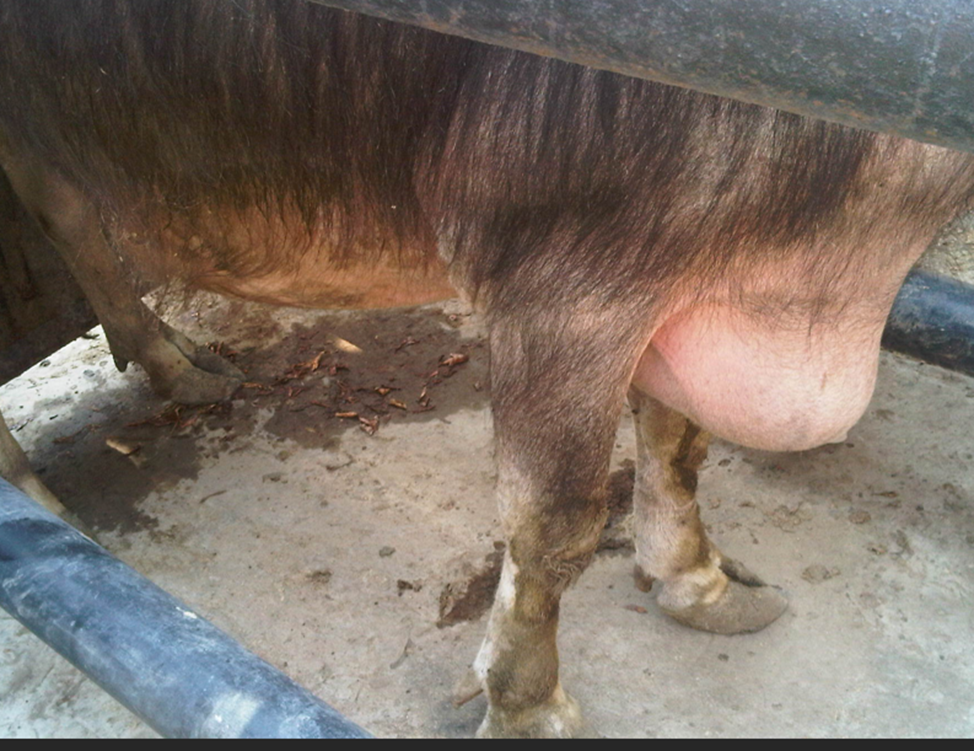
Ventral edema and abduction of forelimb in a cow with TRP and TP
Chronic Stage:
- Emaciation, chronic weight loss
- Pale mucous membranes
- Ascites, edema of ventral body parts
- Laboured breathing
5. Diagnosis
Clinical Diagnosis:
- Characteristic posture and pain responses (pain test)
- Signs of cardiac involvement (brisket edema, jugular distension and pulsation)
- Use of Mine detector
Laboratory Diagnosis:
- Leukocytosis with a left shift
- Elevated fibrinogen and total protein
- Anemia at chronic stages
Imaging:
- Ultrasonography:
- Pericardial fluid
- Fibrin strands in pericardium
- Radiography:
- Metallic foreign body in reticulum
- Diaphragmatic penetration
6. Differential Diagnoses
- Endocarditis
- Simple TRP (traumatic reticuloperitonitis without cardiac involvement)
- Congestive heart failure from other causes
- Pleuropneumonia
7. Treatment
Medical Management:
- Oral magnet (if not already given) to trap metallic objects
- Long-acting antibiotics:
- Penicillin
- Oxytetracycline
- NSAIDs (e.g., flunixin, ketoprofen)
- Diuretics in cases of fluid accumulation
- Pericardiocentesis: to relieve pressure (rare in field settings)
- Keep the animals feeding with fore limbs at upper level
Surgical interference:
- Left-flank rumenotomy to remove foreign body from reticulum
- Pericardial drainage
8. Prognosis
- Guarded to poor in most cases, especially if heart failure signs are evident.
- Prognosis is better if diagnosed early and treated before cardiac tamponade develops.
- Most cases with brisket edema or extensive fibrinous pericarditis do not recover.
9. Prevention
- Prophylactic oral magnets for all replacement heifers and adult cattle
- Use of magnets in feed processing equipment
- Avoid feeding contaminated feed (baled hay with scrap metal or fencing)
- Proper disposal of metal materials in cattle areas
- Regular inspection of feedlots and pastures
