
كتاب
UPPER AND LOWER EYELIDS AFFECTION
- VIII- Traumatic eyelid injuries
The eyelids have an excellent blood supply, and injuries to them heal rapidly when repaired correctly.
The considerations to ensure an optimal outcome
1. The eyelids are susceptible to severe edema and distortion after even relatively minor injury
2. preferable to treat eyelid injuries as soon as possible.
3. When an eyelid injury complete examination for concurrent injuries to the cornea, sclera, and nasolacrimal apparatus in particular, and to the globe as a whole.
4. the nasolacrimal puncta should be identified and cannulated, and the nasolacrimal apparatus flushed to ensure patency.
5. Sutures in the eyelids must be kept away from the globe
6. The margin should always be accurately reapposed with a
standard two-layer closure .
7. Bacterial flora in the conjunctival sac and surrounding area
may readily invade this area a course of systemic antibiotics with good spectrum of activity against grampositive organisms (such as amoxicillin-clavulanic acid or a cephalosporin) is instituted.
8. Severe pruritus and self-trauma may occur during wound healing, an Elizabethan collar and postoperative use of warm packs and analgesics will minimize this problem and are essential.
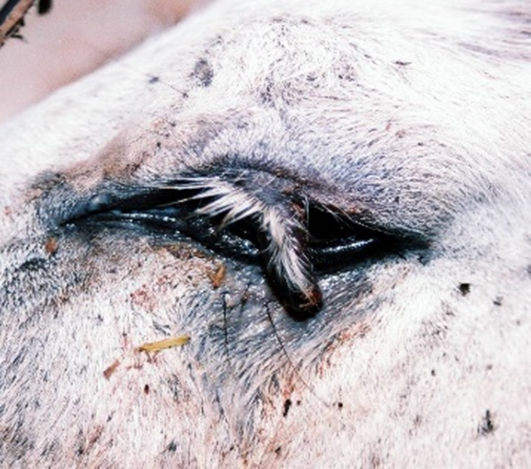
Fig.25: Flap wound of the upper eyelid in a donkey.
Treatment
1- Copious irrigation and cleaning of the wound with boric acid solution 2% or warm normal saline.
1- Removal of any blood coagulum or foreign body.
2- Minimal debridement of the wound.
3- Suturing of the wound to restore the anatomic and functional
4- Surgical preparation and clipping should be gentle to prevent further edema.
5- A standard two-layer closure with soft, braided suture can then be used to close the eyelid laceration as for all other incisions involving the eyelid margin .
6- Systemic and topical antibiotics should be used perioperatively. Postoperatively, an ophthalmic ointment is preferred as it provides lubrication and protects the cornea during wound healing.
7- Topical corticosteroids are usually unnecessary and should be avoided if there is coincident corneal ulceration.
8- Systemically administered NSAIDs and application of warm packs may minimize pain and swelling, and an Elizabethan collar is essential to prevent self-trauma.
9- effort should be made to repair damage to the nasolacrimal apparatus as soon as possible after injury.