
Book
Metabolic disorders in Ruminant, Fat Cow Syndrome ,Fatty liver syndrome
- Pathogenesis
Fat Cow Syndrome involves a complex interplay of metabolic events:
1. Reduced feed intake occurs as calving approaches (due to hormonal changes and rumen compression).
2. NEFAs flood the bloodstream, derived from excessive adipose tissue mobilization.
3. The liver uptakes NEFAs but becomes overwhelmed.
4. Excess NEFAs are stored as triglycerides in hepatocytes, causing hepatic lipidosis.
5. Fat infiltration leads to:
- Impaired gluconeogenesis
- Reduced detoxification
- Lowered immune competence
- Decreased hepatic function overall
6. Secondary ketosis frequently develops due to reduced glucose production and enhanced fat metabolism.
Severe FCS can lead to liver rupture, hepatic failure, and death.
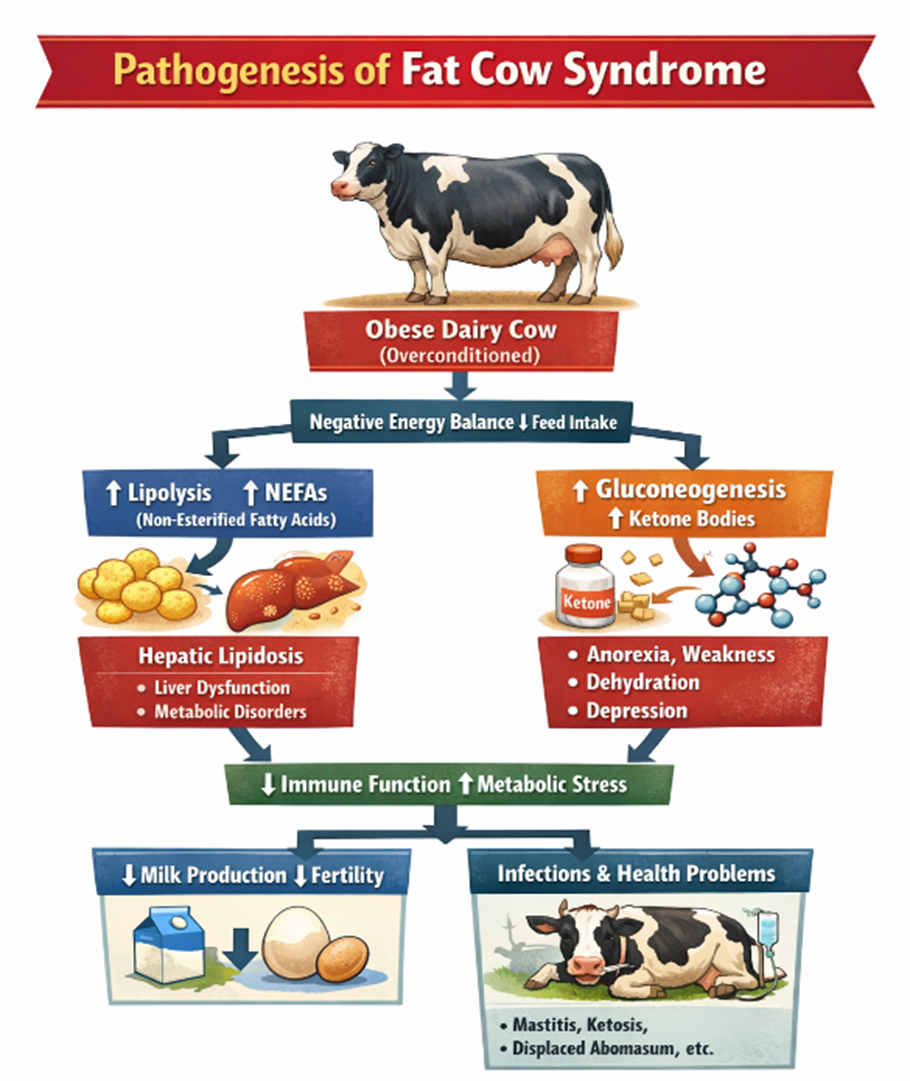
Pathogenesis of Fat cow syndrome (adapted from Herdt, 2000)
