
كتاب
LACRIMAL SYSTEM
- Lacrimal sac histoplasmosis
Dacryocystitis occurs in donkeys due to infection by Histoplasma species. The disease is very common in some localities in Egypt and is usually observed unilaterally but the other eye may get the infection after sometime from the first one.
Symptoms:
The medial part of the lower eyelid at the medial canthus of the eyeball becomes swollen and the conjunctiva gets inflamed. The lower punctum is dilated and transformed into rounded aperture. The lower eyelid is turned out at the medial canthus. A granulomatous tissue starts to protrude through the puncta lacrimalis of the lower eyelid and extends toward the cornea. These tissues are fleshy, rosy red in color, friable and easily detachable with moderate bleeding. Severe epiphora and blepharospasm are detected. Mucopurulent discharge may be observed in some cases. Long standing dacryocystitis may be complicated by maxillary sinusitis and purulent discharge is extruded from the nostril of the affected side.
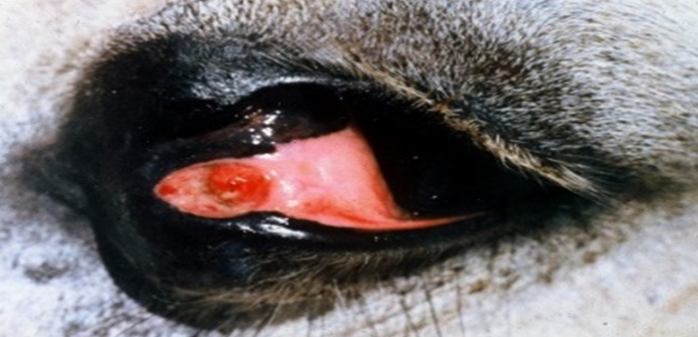
Fig.13:Lacrimal sac histoplasmosis in a donkey.
Treatment:
The treatment is mainly surgical. The lacrimal sac is squeezed by digital pressure in early cases and retrograde flushing is performed. In advanced cases the granulomatous tissue are excised with a blunt scissors. The lacrimal sac is opened through the medial canthus, the content is squeezed and the lumen is curetted. Flushing is performed several times daily for 10 successive days with antibiotics and fungicidal solutions. Recovery is usually obtained but recurrences have been recorded in many cases.
