
Book
NICTITATING MEMBRANE (THIRD EYELID)
- ANATOMY
It’s a mobile, protective, and glandular structure lying between the cornea and the lower eyelid in the medial portion of the inferior conjunctival sac. Which is consists of the following:
1- T-shaped cartilaginous “skeleton” essential rigidity to the third eyelid, the “horizontal” arm lies parallel to and about 1.5mm from the leading edge of the third eyelid, The “vertical” arm runs perpendicular to the free edge and at its base is encircled by the gland of the third eyelid.
2- Conjunctiva covering the surfaces of the cartilage and gland on both bulbar and palpebral surfaces, Its tightly adherent at the free margin of the third eyelid but looser over the base and gland.
3- Numerous superficial lymphoid follicles under the bulbar surface (which are pinkish red, are normally present beneath the conjunctiva on the bulbar surface of the third eyelid).
4- The gland of the third eyelid. (Seromucoid and produces up to 50% of the normal tear film in dogs).
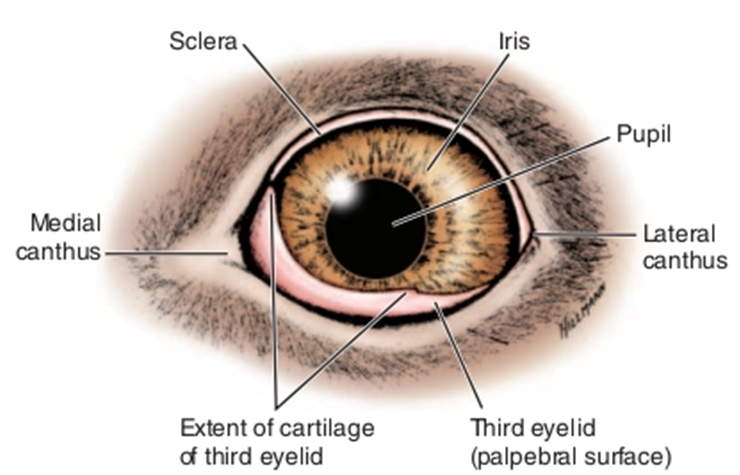
Fig.1: Diagram of the eye showing normal position of the third eyelid. (Evans, 1993).
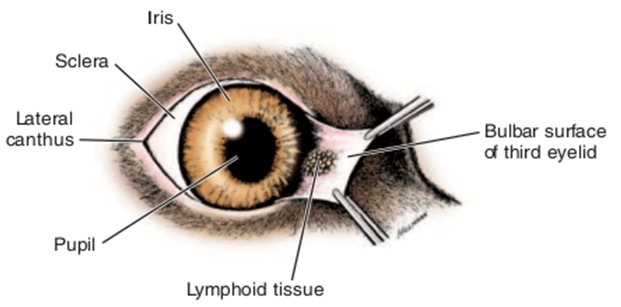
Fig.2: manually everted to show normal lymphoid follicles on the bulbar surface. ( Evans , 1993).
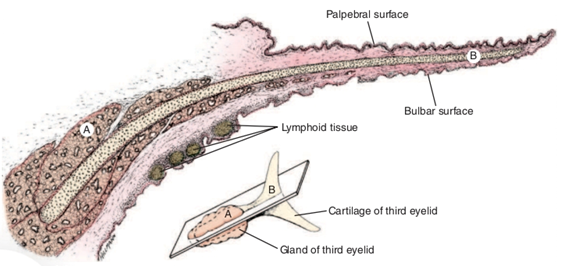
Fig.3: Transverse section of the third eyelid. A, Gland of the third eyelid; B, cartilage of the third eyelid. (Evans, 1993).
Functions of the third eyelid
1- Distribution of the precorneal tear film.
2- Protection of the cornea.
3- Production of aqueous and immunoglobulin for the tear film.
Removal of the third eyelid or its gland predisposes to the following problems:
1- Increased corneal exposure, drying of the cornea, corneal trauma, and chronic keratitis.
2- Chronic conjunctivitis (purulent and frequently resistant to treatment).
3- Decreased tear production.
