
Book
Most common fish viral diseases
- Spring Viremia of Carp (SVC)
Definition:
It is an acute highly contagious viral disease affecting common carp, koi and other cyprinid fish characterized clinically by high mortalities, abdominal distention, and hemorrhaging on the skin and gills.
Etiology:
Spring viremia of carp, it is caused by spring viraemia of carp virus (SVCV), a rhabdovirus of the type species, Carp sprivivirus, in the genus Sprivivirus (Dixon & Stone, 2017).
Mode of transmission:
The transmission of SVCV is horizontal (Fijan, 1988) through direct contact with infected fish, contaminated water with shedding virus. The virus has been retrieved from ovarian fluid (Békési and Csontos, 1985), however vertical transmission remains unproven.
Susceptible host:
Cyprinid species as common carp and koi carp
Other fish species as Nile tilapia and rainbow trout.
Clinical Signs:
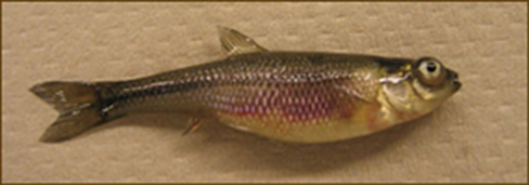
loss of equilibrium, dark coloration, exophthalmia, hemorrhages on the skin, fins and vent, abdominal distension or dropsy and a protruding vent often with trailing mucoid fecal casts.
PM lesions:
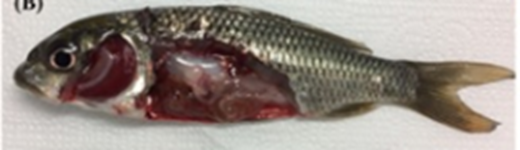
Enlargement of spleen and kidneys, petechial hemorrhages in internal organs and muscles, adhesin of internal organs my occurred, presence of ascetic fluid in the abdominal cavity, degeneration of gills, congestion of intestine and focal hemorrhage of swim bladder. Intestine inflamed and filled with mucous,
|
|
|
Histopathological lesions
Necrosis of the internal organs, enlargement of melanomacrophage centers in spleen, lymphocyte infiltration in the swim bladder. Renal tubules are clogged with casts, and the cells undergo hyaline degeneration and vacuolation.