Book
Fungal diseases
- Differential diagnosis of fungal diseases
|
P.O.C. |
Aspergillosis |
Candiasis |
Favus |
||
|
Definition |
Mainly affects the respiratory
system, but some infections spread to other visceral organs, affecting
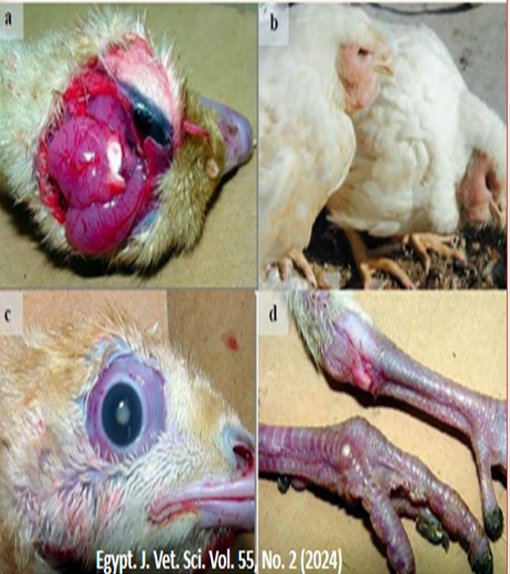
most domestic and wild birds. *Dermatitis *Mycotic Osteomyelitis & Arthritis *Ophthalmitis *Encephalitis *Pulmonary Aspergillosis |
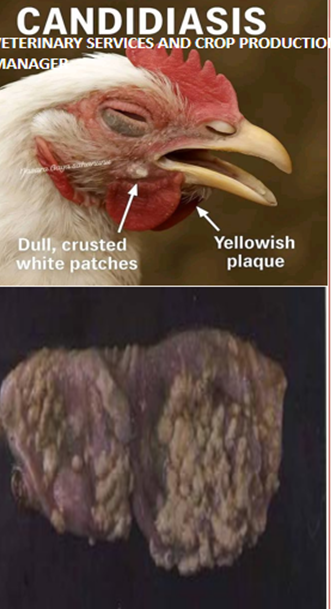
Worldwide organism primarily affects the upper digestive tract of all birds and is characterized by whitish thickened areas of the crop and proventriculus, erosions in the gizzard, and inflammation of the vent area. |
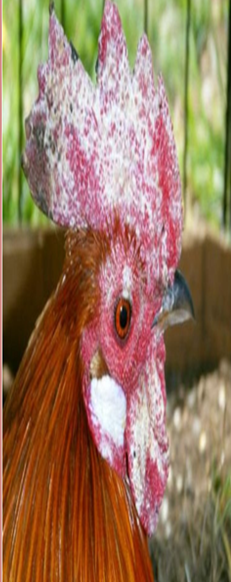
Chronic dermatomycosis, the comb is often affected, in severe cases the disease spreads to the feather portion of the body. |
||
|
Etiology |
There are many different kinds of: aspergillus
(Aspergillus fumigatus and A. flavus are the two major agents
while Aspergillus niger, Aspergillus candidus, Aspergillus glaucus,
Aspergillus nidulans are among the species isolated as opportunistic
pathogens. |
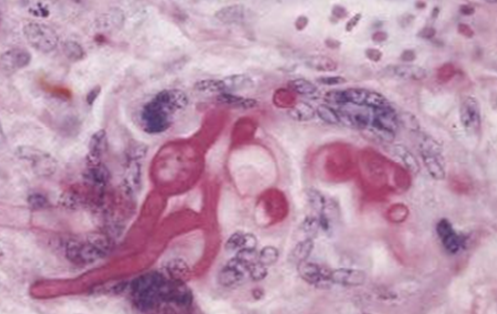
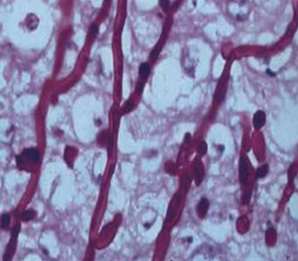
yeast-like fungus (Candida albicans) which is a dimorphic yeast appear as round or oval budding yeasts on surface epithelium or branching with pseudo-hyphae in deeper tissue |
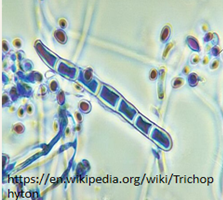
Trichophyton gallinae (Achorion gallinae). |
||
|
Susceptibility |
in the brooder stage in domestic birds (chicks, Quails, pheasants, Turkey, Pigeon and ducks) in the form of an acute out-break in young chicks adult birds occasionally may be affected as sporadic cases. infect chicks and turkey poult at or below 10 days of age but may affect birds up to 10 weeks. Turkeys highly susceptible than chickens. |
² Chickens, turkeys, pigeons, pheasants, quail and grouse are species most commonly get affected as well as other domestic animals and humans. ² Poultry of all ages are susceptible to the effects of this organism. |
all ages under poor manage-mental conditions |
||
|
Mode of transmit-ssion |
The bird comes in contact with the organisms through contaminated feed, litter or premises. Egg borne disease: the fungi penetrate the egg shell due to contamination of egg shell with fungi during incubation and may lead to embryonic mortality or hatched infected chicks and infection to recently healthy hatched chicks by inhalation of spores this is called Hatchery borne disease.
not contagious and does not spread from one bird to another. ( Most healthy birds can withstand repeated exposure to these organisms when there is count within the permissible limit). Inhalation of large amounts of the infectious form
of the mold or reduced resistance of the bird apparently results in
infection. |
by ingestion of the causative organism in infected feed, water or environment. Unsanitary and unclean water troughs are an excellent reservoir of the Candida organism. The disease does not however, spread directly from bird to bird (not contagious). The organism grows especially well on corn, so infection can be introduced by feeding moldy feed. |
Infection spreads from one bird to
another by direct contacts. |
||
|
Clinical signs |
The disease is observed in one of two
forms: B- chronic condition affecting adult
birds: |
no specific symptoms Affected caged layer hens become obese and anemic. Some birds exhibit a vent inflammation that resembles a diarrhea induced condition having whitish in crustations of the feathers and skin around the area. Feed consumption may decrease by ten to twenty percent. |
Lesions usually develop first on the comb, as the fungus spreads. white spots developed the surface of which scales off, and the comb may appear as through sprinkled with flour. The skin becomes thickened in the affected area and covered with scale and crusts especially around the feather follicles. |
||
|
|
méningitis (a), dermatitis (b), uveitis (c) and arthritis (d) |
|
|
||
|
PM |
hard nodular areas in the lungs and an infection of the air sacs. Sometimes the air sac lesions are similar to those produced by infectious sinusitis or CRD. In some birds, colonies of mold growth can be seen on the air sac membranes which appear as yellowish nodules and cloudy air sacs. Necrotic foci may be found on liver, spleen, kidneys, proventriculus and other organs. Sometimes fungus may invade blood stream reaching the brain showing white to yellow necrotic foci. Ophthalmitis may occure and lead to blindness |
Are mostly confined to the crop, proventriculus and gizzard. The crop and proventriculus have whitish thickened areas that are often described as having a "turkish towel" appearance or pseudodiphtheritic membrane with necrotic batches with eroded mucosal surface. |
A moldy odor may be detected. |
||
|
Microscopic |
Aspergillosis |
Candidiasis |
Favus |
||
|
Direct microscopic detection by taking small portion of the nodules in kOH 10% on a microscopic slide covering with cover slide then apply genital heating mixed with ink dye lactophenol to show
blue stained separated branched hyphae |
round
cell and hyphae
|
branching fungal hyphae and Arthrospores.
|
|||
|
Lab. diagnosis |
Sabouraud’s agar at 35 c antibacterial drugs as chlormephenicol could added to suppress any bacterial growth. |
||||
|
The flat colonies are initially
white and turn blue green as conidia begin to mature. |
Colonies are whitish, creamy and highly
convex with yeast odor after 1-2 days at 37c. |
slow-growing, flat-to-powdery white-to-cream colonies that often produce a characteristic pink-to-red diffusible pigment into the agar. |
|||
|
Prevention and control |
avoiding
moldy litter, feed hoppers and watering places or premises are fertile area
for fungal growth of moulds unless frequent moving of utensils. |
||||
|
The disease can usually be prevented
by: |
An inexpensive, yet effective, water treatment is the continuous addition of household chlorine bleach to the drinking water at the rate of 5 parts per million (ppm). |
|
|||
|
Treatment |
Many broad-spectrum antibiotics will enhance this disease; therefore, they should not be used until after control of this condition is completed. |
||||
|
|
Tetracycline Sorbate at dose of 200
mg/L of drinking water for 5 days or Miconazole. |
Addition of Nystatin (100 g/Ton) or copper sulfate (2-3 lb/Ton) to the feed for seven to ten days should control moniliasis beside an adequate amount of Vitamin A.Methyl violet choline chloride and vitamin K prevent crop mycosis. |
Remove the crust and apply topical antifungal |
||