Book
Nile tilapia propagation
- Summary
Tilapia is a highly versatile fish that is farmed worldwide, particularly Nile tilapia holding a great economic promise to provide food and nutritional security and create rural employment. In Egypt, Nile tilapia is the primary cultivable species. The Egyptian aquaculture is directed by three types of fish which comprising more than 95 % of total production; tilapias represent (75.54 %), mullets (12.74 %), and carps (6.59 %). Recently, Egypt's tilapia production was estimated to have exceeded 1.1 million tonnes that accounts for over 9 % of global aquaculture production. There are two main types of grow-out systems to culture fish up to marketable size; intensive or semi-intensive. Semi-intensive production in earthen ponds is the most applied aquaculture system in Egypt, accounting for over 80% of total aquaculture output. In case of semi-intensive tilapia production, fish relies on natural food for early fry rearing. Meanwhile, the intensive method of tilapia production uses concrete ponds and tanks, and fish require nutritionally complete feeds.
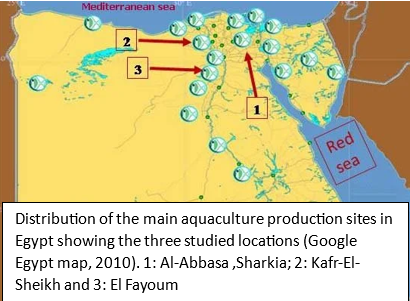
In Egypt most tilapia farms are located in Kafrelsheikh, Beheira, Dakahlia, Sharkia and El Fayoum Governorates.