
Book
Nile tilapia propagation
- Grow-out systems for Nile tilapia
Fish welfare and the surrounding environment can be significantly impacted by the production strategy utilized to raise Nile tilapia. fish can be cultured in Land based facilities such as ponds and rice fields or Water based system were using of existing water bodies such as cages and pens. Commercial systems may earthen ponds, along with cages, tanks, raceways and recirculating systems, depending on the location and climate (El-Sayed & Fitzsimmons, 2023).
5.1. Earthen pond culture systems
Earthen ponds in fish farms consist of:
1-Rearing ponds are larger (0.06-0.1 hectare in size and 1.5 to 2.0 m in depth.
2-Auxiliary ponds
· Brood stock segregation ponds.
· Spawning ponds.
· Nursery ponds for newly hatched fry.
· Holding ponds for fry.
· Storage ponds for marketable fish.
Site selection for earthen pond construction is one of the most important factors should receive great attention
1-Pond Topography
The shape and location of the pond affects construction cost, drainage, and water quality.
The Best topography is:
- Land slope: Gently sloping land 1-3% is ideal. Flat land also used but needs more excavation.
- Location: Elevated area above flood level. Easy to fill and drain by gravity.
- Access: Close to farm roads for feed, harvesting, and equipment.
2-Pond Soil
Soil controls water retention, seepage, and pond fertility.
The most suitable soil type for fish ponds:
- Texture: heavy clay soil (Heavy clay soil contains over 35% fine clay particles (lutum) and forms a dense, sticky mass that drains very slowly), Clay-loam or silty-clay (fine-textured earth types contained 30-40% clay content with high nutrient levels and strong water-holding capacities, but they differ in particle makeup and how they handle moisture)
- Permeability: Low seepage rate <3 mm/day and holds water without liner.
- pH: 6.5 to 8.0. If too acidic <5.5 add agricultural lime. If too alkaline >8.5 use gypsum.
- Organic matter: 2-5%. Good for natural food production.
- Avoid: Sandy soil >70% sand - high seepage. Peaty soil - acid and unstable. Saline-sodic soil - causes high pH and poor productivity.
Quick field test in Egypt: Take wet soil and make a ball. If it holds shape and can be rolled into a ribbon means good clay-loam soil.
The Ball and Ribbon Test (Texture)
This hand test estimates the amounts of sand, silt, and clay in soil
· Take a tablespoon of soil in your palm and remove any stones or roots.
· Add drops of water gradually and knead the soil until it feels like moist putty or plasticine.
· Try to squeeze it into a smooth ball.
· Push the ball between your thumb and forefinger, squeezing it upward to form a thin ribbon and results as follow:
- If it cannot form a ball, it is sand (common in newly reclaimed desert lands in Egypt).
- If it forms a short, weak ribbon that breaks quickly (< 2.5 cm), it is loam or sandy loam.
- If it forms a long, flexible ribbon (> 5 cm), it is clay (common in the Nile Delta and Valley).
3- During site selection it’s important to take in consideration the following:
- Sources of electricity, Manpower (workers).
- Transportation methods.
- Markets.
- Site security.
- Potential impact on surrounding environment.
Earthen Pond preparation:
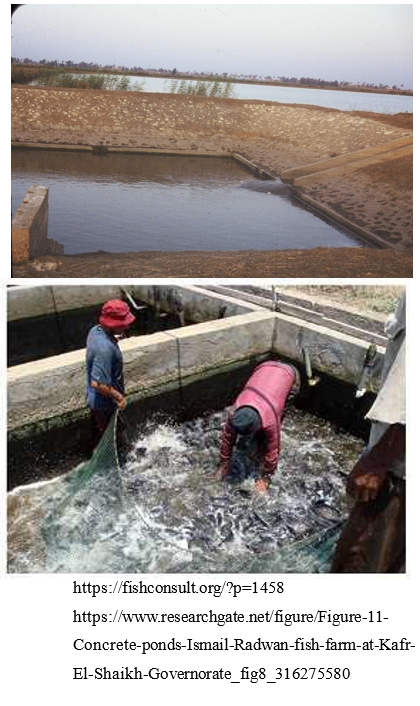
- Size: The most important factors affecting and determining rearing pond size are:
- Quantity of water and extent of land available.
- Cost of construction per unit area.
- Time required for filling and draining the pond.
- Shape is affected by:
- Topography of the area should be entirely above the water table to prevent ground water from seeping into the pond, to assure complete draining of the pond at harvest, and to facilitate both water fill and drain by gravity.
- The method of fish harvesting.
- The ratio between the length of embankments and the area covered by water, A rectangular shape of the pond (length: width in 3:1) is considered to be ideal.
- Pond depth: The minimum depth of pond is usually 0.8-1.8 m, (allow adequate light penetration and increase pond productivity) and increased to 2.5-3.5 m when water supply is seasonal. Shallow pond showed aquatic plants develop, and water temperature increase in early afternoon hours at summer.
- Pond bottom must be sloped about 1-2% toward deeper drain end to facilitate water drain. Harvesting sump is the deepest area near the outlet usually about 10-20 cm and occupying 0.5- 1% of the total pond area. This harvesting sump able to collect all fish before harvesting. In concrete ponds it called catch basins.
- Water inlet and Water outlet
- Embankments: the width it depends on types of vehicles, equipment that pass over it (6 m), secondary one 4 m, the height of embankment generally about 0.5 m higher than the anticipated water level, and the inner slope of the it (height/width ratio 1:2) and the outside slope (height/width ratio 1: 2.5) to prevent erosion due to wave of water.
3. Source of Water
Water quality and quantity is the most critical factor in Egypt.
A Study showed highest survival and growth of larvae with mixed water. Ground water alone is too cold and low in nutrients. Drainage water alone has high ammonia and pollutants (Ali et.al,2020) briefly: Mixed water: A ratio of 1:1 ground water to agricultural drainage water is preferable for Nile tilapia survival and growth. Ground water / Tubewell: Good quality but low in natural food, cold in winter 18-20°C, high pumping cost and needs fertilization. Agricultural drainage water: Must be tested for ammonia, heavy metals, pesticides, industrial waste and usually needs aging 7-10 days in reservoir pond (need reservoir/storage pond per 5-10 production ponds). Also, Nile canal water used in some areas but depends on season and upstream use.
- Water parameters for breeding and rearing of Nile tilapia in Egypt:
1. Temperature
For rearing Nile tilapia fish, the optimal range is 26°C to 30°C.
For growth of fry and juveniles 25°C to 29°C is recommended, with best growth 27°C to 30°C.
For breeding, spawning starts above 24 °C , but best results are at 28-30°C.
2. Dissolved Oxygen (DO)
In earthen ponds DO was recorded between 5.4 to 7.9 mg/L.
The optimum for intensive culture aim for >5 mg/L.
3. pH
The general optimal range for rearing Nile tilapia is 7.0 to 8.0.
Tilapia can tolerate a wider range of 5.5 to 9.0 without major effects on growth, but for breeding and hatchery work must keep it at 7.0 to 8.5.
4. Salinity
Nile tilapia is freshwater fish but tolerates brackish water. For fry rearing in Egypt, best growth was at 5 to 10 ppt. It is recommended not above 10 ppt.
Growth is reduced above 8 ppt and mortality increases above 14 ppt.
For breeding, best fecundity and hatchability at hatcheries in Egypt usually use <5 ppt (fresh to low-brackish water).
5. Ammonia, and alkalinity and hardness.
-For healthy tilapia, Total Ammonia Nitrogen (TAN) should ideally remain below 0.5 mg/L, and un-ionized ammonia (NH3) must stay below 0.02mg/L (with optimal levels 0.01 mg/L).
-Water hardness measures calcium and magnesium mineral levels, while alkalinity measures the capacity of water to neutralize acid, mainly via carbonates and bicarbonates
Alkalinity should be >20 mg/L CaCO3, and hardness <50 mg/L CaCO3 for good culture conditions.
Hardness-to-Alkalinity Ratio: Ideally, total hardness should equal or exceed total alkalinity (a ratio of 1/1 or higher) to keep the pH stable and prevent high pH spikes during heavy photosynthesis.
5.2. Cage culture system
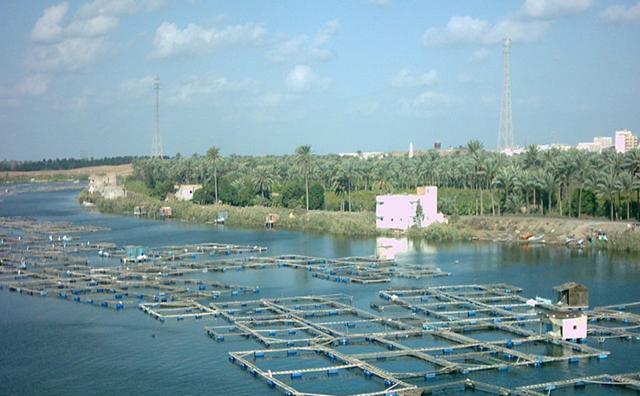
Nile tilapia is also cultured in cages installed in freshwater rivers, irrigation canals, reservoirs and Lakes compared to pond culture, investment in cage farms is lower than that of pond culture. Moreover, there is sufficient water flow and no accumulation of metabolic waste, overcome problem of overpopulation, easy management and harvesting. However, the cost of food is high because natural food plays a least role in Tilapia nutrition in cage culture (El-Sayed, 2019).
Risk of disease and parasites, fish escaping from the cages, a greater chance of poaching, and a high potential for environmental pollution were also reported disadvantages for cage culture. Small sized fish (0.25 g) are stocked in 2 mm mesh nylon cages at densities (3000/m3) that grow up to 10 g in 6 weeks. Then transfer this fish into cages with 4 mm mesh cages at socking densities 2500 fish/m3 to grow up to 25 g fingerlings in 4 more weeks. In four weeks, 50–60 g fingerlings can be produced by stocking these fish at a rate of 1,500 fish/m3. Start by giving the fish powdered feed containing 30%–40% crude protein, three to four times daily for satiation, then become bigger, feed them with pellets containing 28%–32% protein (Salin and Yakupitiyage, 2023).
5.3. Raceways culture
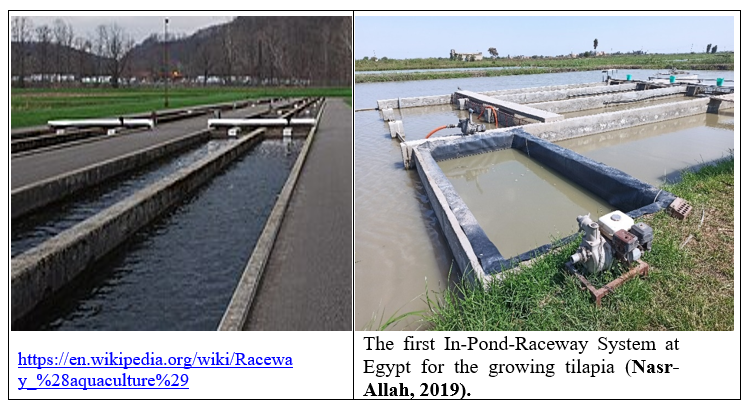
Tilapias are also cultured in tanks and raceways of varying sizes and shapes. This system depends on continuous, high-volume water exchange to keep optimal water quality at high stocking densities. The advantages of raceways are effective removal of solid waste, easy harvesting and fish sampling, and control water parameters. Stocking density in raceways ranges from 160-185 kg/m3.
The In-Pond Raceway System (IPRS) is a fish culture technology developed to increase production efficiency and yield (Vignesh et al., 2024). In this system, raceway cells are constructed in a bigger earthen pond, and the water is continuously circulated through the raceways. The large pond acts as a natural biofilter to treat waste-product and maintain the water qualities. The first In-Pond-Raceway System was established by WorldFish at Abbassa - Sharqia Governorate Egypt for the growing tilapia (Nasr-Allah, 2019). The system was composed of two production cells (12x3x1.5 m) that were installed in one feddan pond at stocking rate of 200 fish/m3 with average cell production 3398 kg/cell.
Nile tilapia harvesting
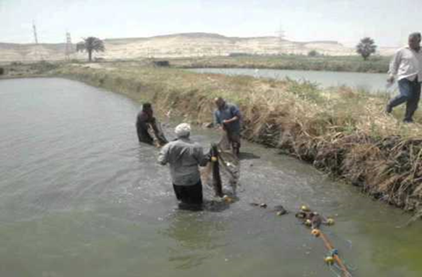
Nile tilapia are usually ready for harvest after 5 to 8 months, once they reach a market size of 300 to 500 grams.
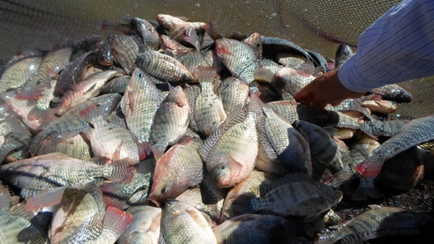
Complete harvests are necessary in ponds and are done by seining in combination with draining because it is difficult to use seining alone as tilapia escaping seine nets. Meanwhile, partial harvests of tanks, raceways and recirculation systems, which maximize production are applied.
The pond should be dried between each production cycles or treated with pesticides to kill tilapia fry to avoid remainder to the next production cycle.