Book
Newborn Measurement guide
- Determination of Gestational Age
Definition of Gestational Age:
It is the period or number of weeks that the fetus spends inside the mother’s uterus from the beginning of pregnancy until birth.
Importance of Determining Gestational Age:
- Classification of newborns into full-term, premature, or post-term infants.
- Developing an appropriate treatment plan based on gestational age with early detection and management of possible complications.
- Comparing intrauterine growth of newborns with standard growth rates according to gestational age.
Methods Used to Determine Gestational Age:
Before Birth:
Calculated from the first day of the mother’s last menstrual period or by ultrasound examination.
After Birth:
Using the New Ballard Score, one of the most commonly used methods to determine gestational age during the first hours after birth by assessing neuromuscular and physical maturity.
Conditions:
- The infant should be calm and clinically stable.
- The nurse should record infant data: name, age, examination time, and gestational age.
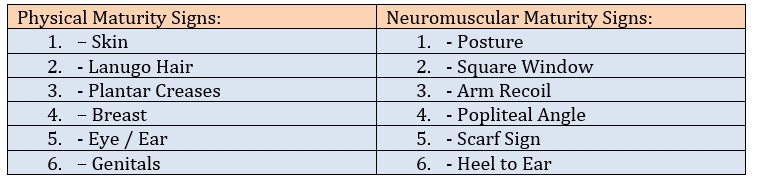
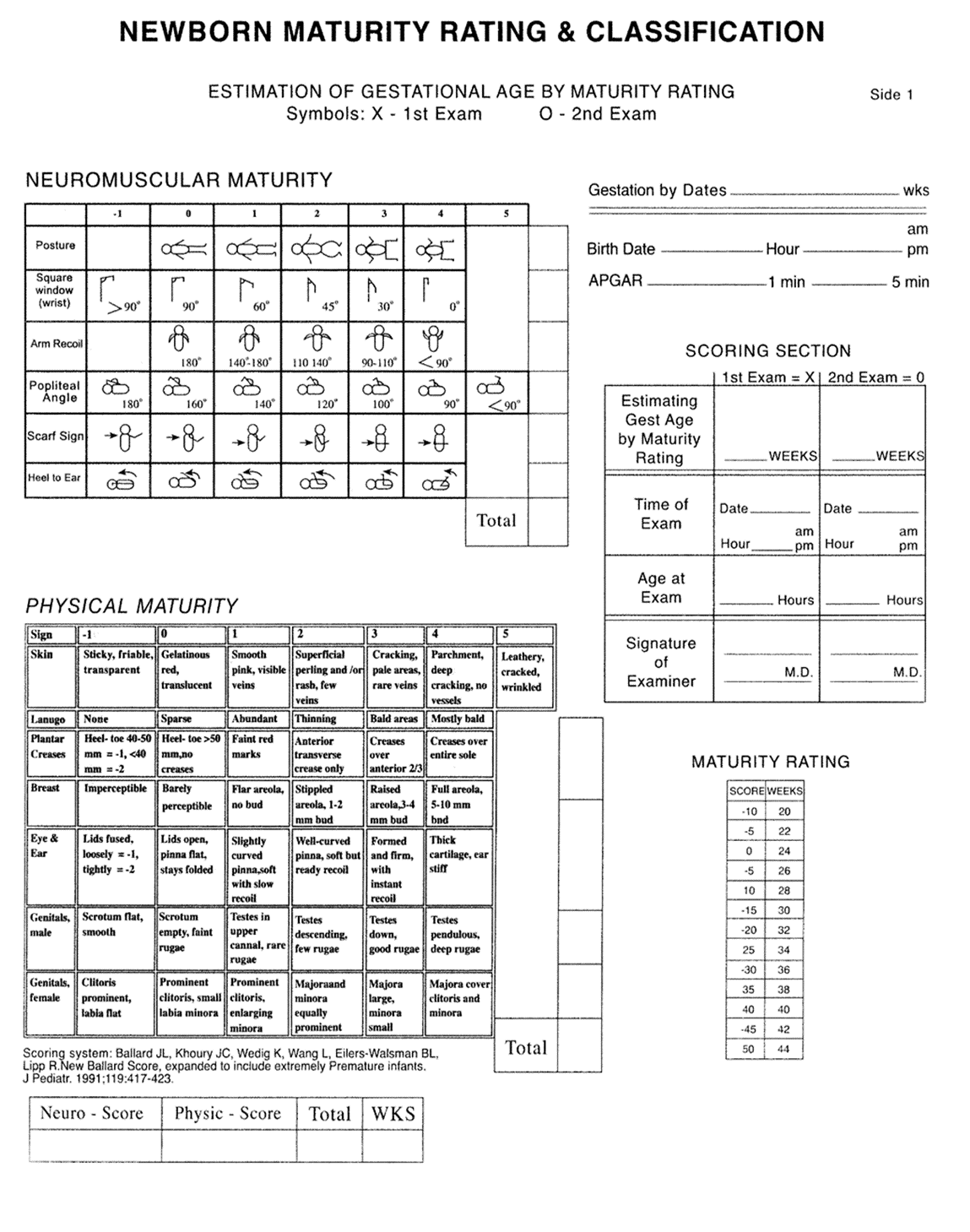
First: Assessment of Neuromuscular Maturity Signs of the Newborn
This assessment includes the following:
1. Posture
The infant’s posture is observed while lying supine, and the score is given according to the closest matching image.

2. Square Window
The hand is flexed toward the wrist, and the angle between the palm and the forearm is measured. The score is assigned according to the closest matching image.

3. Arm Recoil
The infant is placed in a supine position. The arm is flexed for five seconds, then fully extended and released. The spontaneous flexion of the arm at the elbow is observed. The angle at the elbow joint is assessed, and the score is assigned according to the closest matching image.

4. Popliteal Angle
The infant is placed supine with the diaper removed, ensuring that the pelvis is flat against the bed. One leg is flexed toward the abdomen until the infant relaxes, then the leg is gently extended. The angle behind the knee is measured, and the score is assigned according to the closest matching image.

5. Scarf Sign
The infant is placed supine. One arm is gently pulled across the chest toward the opposite shoulder until resistance is felt. The score is assigned according to the closest matching image.

6. Heel to Ear
The infant is placed supine with the pelvis flat against the bed. One foot is gently pulled toward the ear until resistance is felt. The score is assigned according to the closest matching image.

Second: Assessment of Physical Maturity Signs of the Newborn
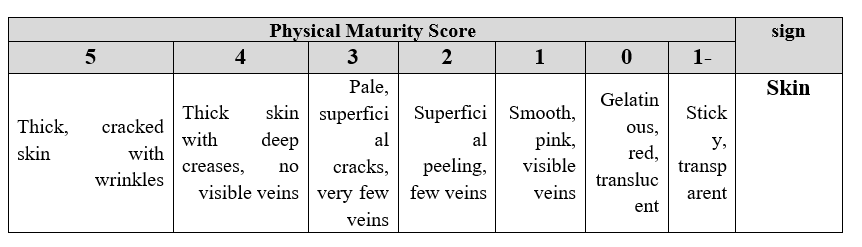
1. Skin
The skin is observed for color, thickness, and transparency of visible veins.
2. Lanugo Hair
Fine, downy hair present on the forehead, shoulders, arms, back, and legs. It is abundant in preterm infants and minimal or absent in full-term infants.

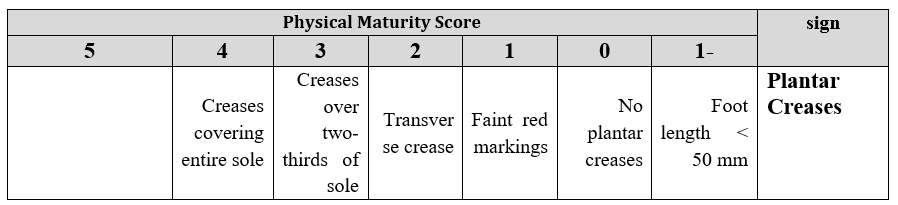
3. Plantar Creases
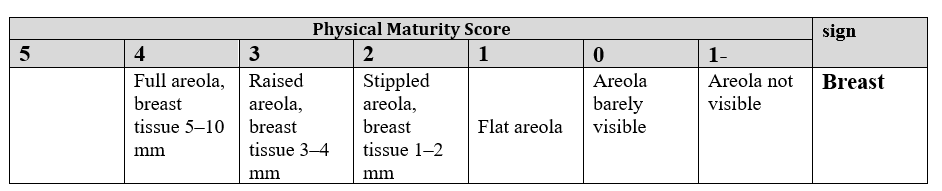
4. Breast
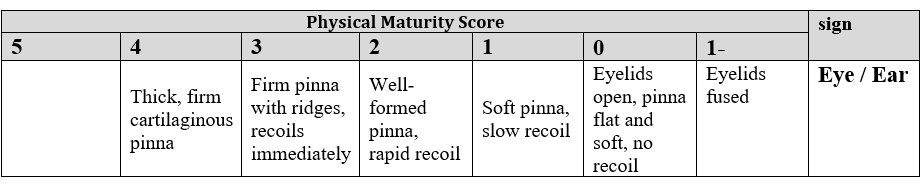
5. Eye / Ear
6. Genitals
Male Genitalia

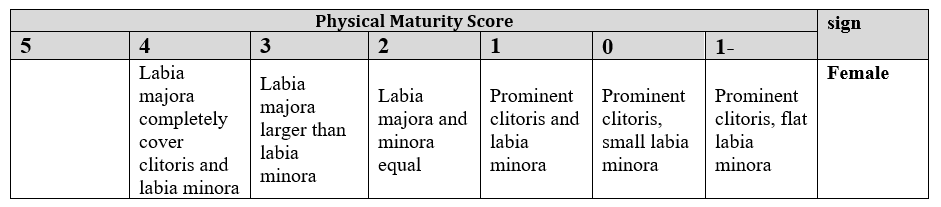
Female Genitalia
Third: Calculation of Gestational Age
- The total score of neuromuscular and physical maturity is calculated.
- The total score is compared with the maturity rating chart to determine gestational age in weeks.
Fourth: Classification of the Newborn
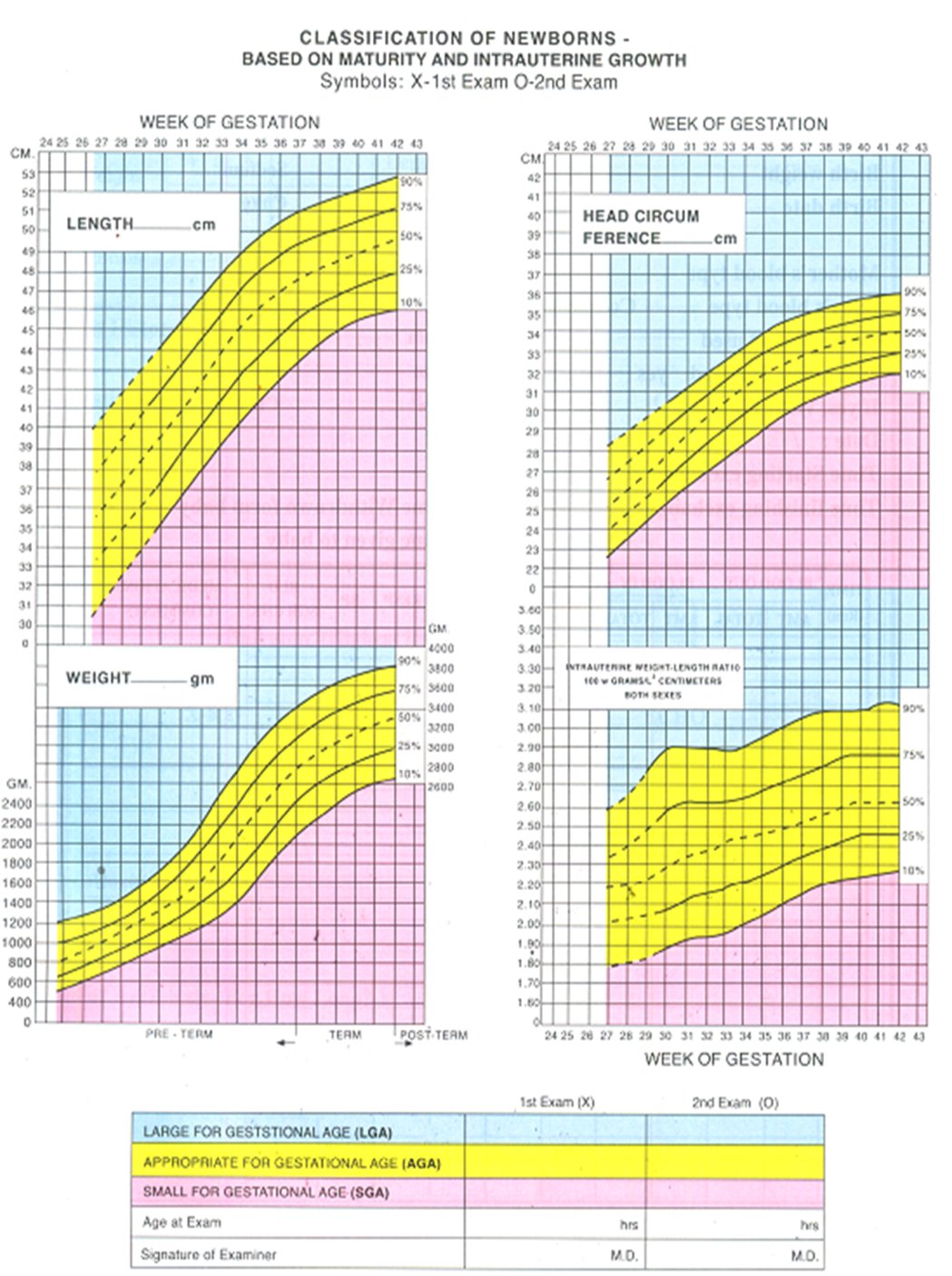
- Weight (grams), length, and head circumference (centimeters) are measured and recorded.
- Weight, length, and head circumference are compared with gestational age using intrauterine growth charts.
- Newborns are classified according to gestational age and weight for gestational age.
Firstly: According to Gestational Age
|
Born before 37 weeks of gestation. |
|
|
Full-Term Infant |
Born between 37 and 42 weeks of gestation. |
|
Post-Term Infant |
Born after 42 weeks of gestation. |
Secondly: According to Weight for Gestational Age
|
SGA |
Weight below the 10th percentile |
|
AGA |
Weight between the 10th and 90th percentiles |
|
LGA |
Weight above the 90th percentile |
Exception in Gestational Age Assessment
If the newborn is clinically
unstable during the first hours after birth or affected by maternal sedative
medications that interfere with neuromuscular assessment, only the physical
maturity score may be calculated and multiplied by two to obtain the total
score.
Once the infant becomes more alert and stable within 72 hours, neuromuscular
maturity should be reassessed to determine the accurate gestational age.