
Book
Procedural Guide For Colostomy Cases
- Nine Types of Colon Surgeries
Colon surgery types vary depending on the medical necessity and the location within the colon. Here are some common types of colon surgeries:
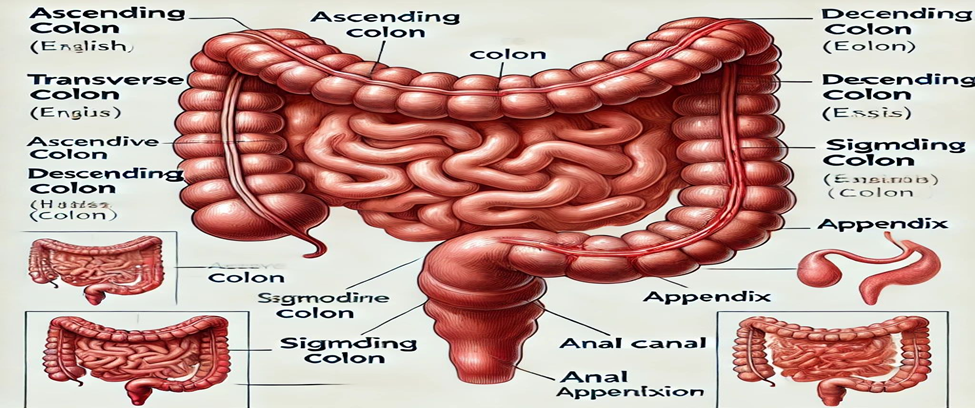
Right Hemicolectomy
This is the first type of colon surgery where the right half of the colon is removed. This procedure involves removing the ascending colon, which connects to the end of the small intestine. The surgeon then sutures the remaining parts of the small intestine to the transverse colon. Conditions that may require this surgery include:
- Diseases or injuries
- Diverticulitis
- Cancer
- Inflammatory bowel disease (IBD)
- Polyps, which may become cancerous
Image (6) shows the procedure of right hemicolectomy.
Left Hemicolectomy
This surgery is primarily used to treat colon cancer and may also be recommended for other conditions, including inflammatory bowel disease (IBD), diverticulitis, or ruptures. In this procedure, the descending colon, which is connected to the rectum, is removed. The surgeon then sutures the transverse colon to the rectum. Image (7) shows the left hemicolectomy procedure.
Partial or Subtotal Colectomy
In a subtotal colectomy, only a portion of the colon is removed, and the ends of the remaining colon are reconnected. The surgeon removes one-quarter to one-third of the colon. This procedure is used to treat colon cancer, IBD, trauma, polyps, or diverticulitis.
Low Anterior Resection
Low anterior resection is a type of colon surgery used to remove rectal cancer. In this surgery, the portion of the rectum that contains cancer is removed. The surgeon then reconnects the remaining part of the large intestine to the rectum, allowing normal stool passage.
Perineal Resection
Perineal resection is a common type of colon surgery to remove cancer from the rectum or anus. During this surgery, the following are removed:
- The rectum
- The anus
- The lower part of the colon
Since the rectum and anus are removed, the surgeon will create a stoma at the end of the colon, which may be temporary or permanent, and it will be covered by a bag that collects stool. The stoma is typically managed through colostomy care.
Total Proctocolectomy
This surgery involves the removal of both the colon and rectum. After removing these parts, the body needs a new way to eliminate stool. In cases of IBD, such as Crohn’s disease or ulcerative colitis, a ileostomy is often performed. In this procedure, part of the small intestine is brought through the abdominal wall to form a stoma, and stool exits the body through this stoma, collected in a pouch worn on the outside of the body. The ileostomy may be temporary or permanent, depending on the circumstances.
If you need more information or further clarifications, feel free to ask!
Colon and Rectum Surgeries
Sigmoid Colon and Rectum Resection
This type of surgery, shown in Image (8), involves the removal of the sigmoid colon and rectum. It is typically recommended for certain diseases or cancers affecting the sigmoid colon or rectum.
J-Pouch Surgery (Ileal Pouch-Anal Anastomosis - IPAA)
A common procedure performed following or during a colectomy (removal of the colon) is the Ileal Pouch-Anal Anastomosis (IPAA), also known as J-pouch surgery. In this surgery, the end of the small intestine (ileum) is fashioned into a "J" shape to serve as a temporary reservoir for stool. This pouch acts similarly to a rectum and is connected to the anus, enabling the patient to have regular bowel movements. This procedure is typically performed for patients with ulcerative colitis, although it can also be used for certain Crohn's disease cases.
Ileal Pouch Anal Anastomosis (IPAA)
Another surgical option is the Ileal Pouch Anal Anastomosis (also called the pull-through procedure). After the colon and rectum are removed, a section of the small intestine is connected directly to the anus. This procedure is often done in conjunction with a temporary ileostomy until healing is complete. The connection is designed to restore bowel function and allow the passage of stool through the anus, with a temporary diversion for waste until the pouch heals.
Total Colectomy
A total colectomy involves the removal of the entire colon but may leave the rectum in place. This procedure is often performed for conditions such as ulcerative colitis or Crohn’s disease. A J-pouch or ileostomy is commonly created to allow the patient to eliminate waste. If the rectum is also removed, an ileostomy is often performed as part of the total colectomy. After this surgery, stool can be passed via the anus or through the stoma, depending on the extent of the procedure.
