Book
Surgical Patient Positioning Guide
- Prone Position (Lying on the Stomach)
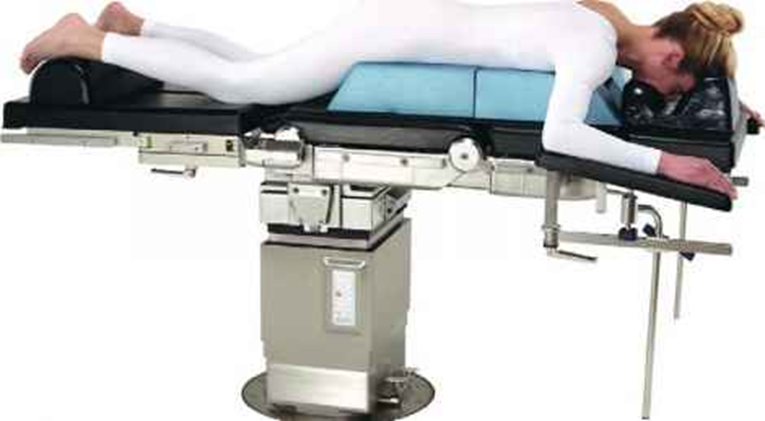
Prone Position (Lying on the Stomach)
This position is used for surgeries involving the lower thoracic region, spine, legs, and sometimes the rectal area.
- The patient lies on their stomach, with pillows placed to relieve chest pressure and allow proper breathing.
Additional Requirements:
- Safety strap
- Pillow under the ankle and feet
- Arm board (if needed)
- Elbow support (if needed)
- Pillow under the head
- Rolls under the armpits and chest
Steps:
1. Once the anesthesiologist gives approval, carefully and slowly turn the patient onto their stomach.
2. The anesthesiologist assists in repositioning the head and shoulders.
3. One person supports the pelvis while another lifts and turns the upper body into position.
4. Another person holds the legs and turns them at the same time as the shoulders and pelvis.
5. Arms should remain at the patient's sides, ensuring no pressure is placed on the lower arm.
6. Place support rolls under the armpits and chest to relieve pressure on the abdomen and facilitate breathing.