
Book
Surgical Patient Positioning Guide
- Kidney Position (Lateral Position)
This position is used for kidney and lateral abdominal surgeries.
Key Features:
- The patient is placed in a lateral (side-lying) position.
- The kidney region is positioned over the table’s break point.
- When the table is flexed, the surgical area is fully extended, providing better exposure.
- The body remains straight from the shoulders to the pelvis.
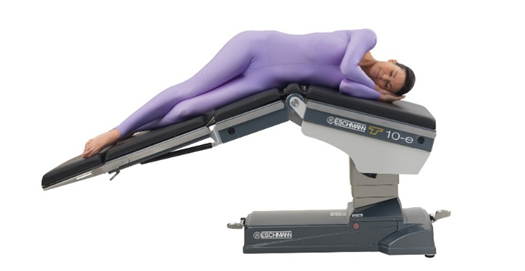
Additional Requirements:
- Arm support
- Safety strap over the pelvis (hip area)
- Pillow between the knees
- Pillow between the ankles
- Safety strap on the lower leg
Steps for Kidney (Lateral) Positioning:
1. Once the patient is anesthetized and the anesthesiologist approves movement, carefully turn the patient onto the unaffected side.
- The back should be at the edge of the table, with the kidney region positioned over the table’s break point.
2. The anesthesiologist provides support for the head and shoulders during positioning.
3. One arm is placed under the pelvis, while the other rests on top of the pelvis to help lift and position the patient.
4. Legs are positioned as follows:
- The lower leg is bent, while the upper leg remains straight.
5. Place a large pillow between the legs and another pillow under the ankles for support.
6. Secure the legs with a safety strap over the knees.
7. Position the lower arm on a padded arm support and secure it at the wrist with a wrist strap.
8. Raise and bend the upper arm at the elbow, placing it under the patient’s head for support.
9. Place a pillow under the patient’s head for comfort.
10. Position a backrest behind the patient and secure it to the operating table.
11. Use additional padding if needed for extra comfort.
12. Place a chest support in front of the patient and secure it to the operating table.
- This should be well-padded to prevent chest bruising.
13. Secure the patient’s body with another safety strap over the pelvis.
14. Flex the operating table at the midpoint to optimize kidney exposure.
- If a kidney elevator is available, use it to lift the area between the ribs and the iliac bone as needed.
- The head should be slightly tilted downward.
15. Before closing the surgical incision, return the table to a straight position to allow for better tissue approximation.
